



Green Velvet Desk Chair
A green velvet desk chair brings tactile warmth and a solid wooden frame to any study.
Green Velvet Desk Chair
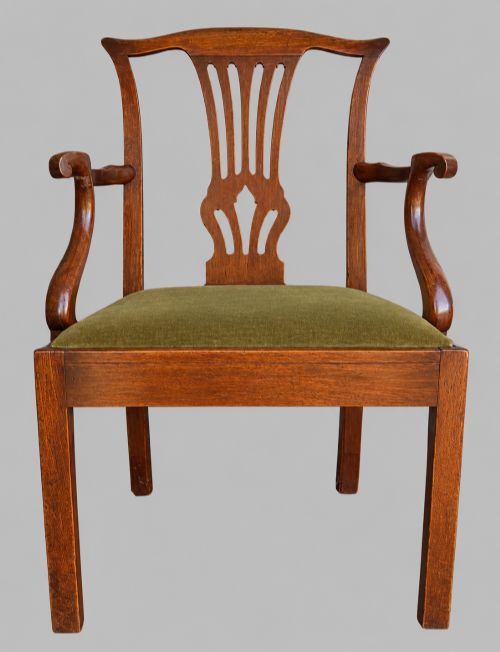
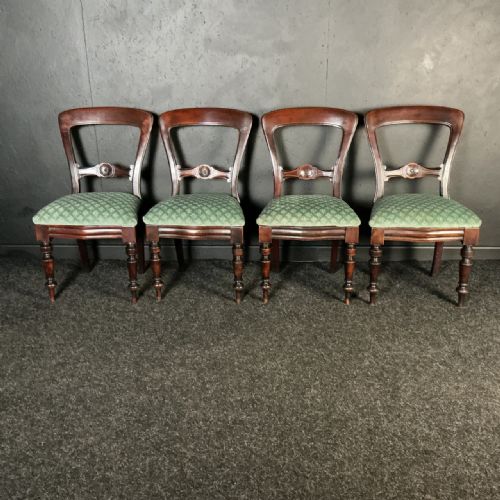
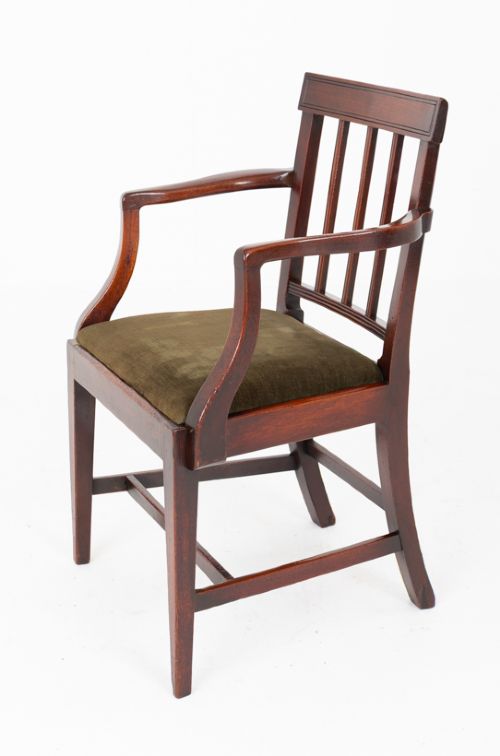
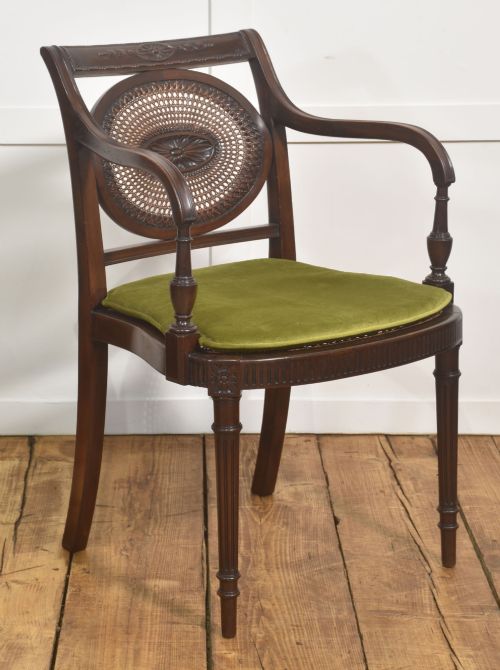
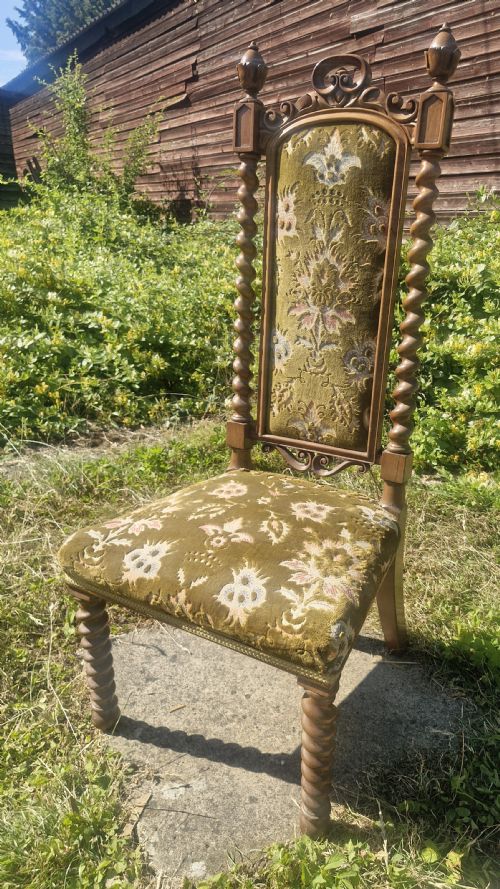
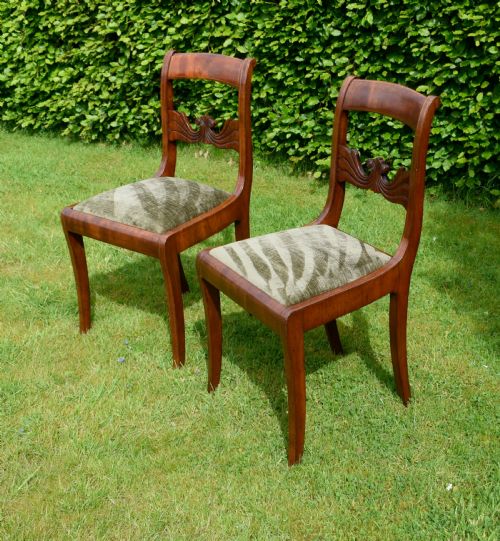
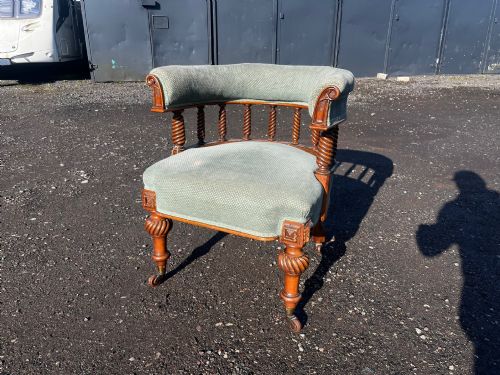
When you search for a green velvet desk chair, you encounter a selection of seating forms spanning the eighteenth, nineteenth, and early twentieth centuries. These pieces combine utilitarian seating frames, such as elbow chairs, carvers, and study armchairs, with soft textile upholstery.
The materials recorded on this page range from solid mahogany, walnut, rosewood, and hardwood frames to brass and textile elements. Period styles include Georgian, Regency, Victorian, Edwardian, and Sheraton Revival designs.
Most examples originate from the Victorian and Edwardian eras, alongside earlier Georgian forms. Buyers select these chairs for domestic studies, libraries, and home offices where historic timber and pile fabrics create a distinct workspace atmosphere.
How they were made
Cabinetmakers constructed the supportive frames using dense timbers like mahogany, walnut, and rosewood. These hardwoods were often carved, turned, or inlaid to reflect the prevailing style of the period.
Upholsterers applied textile and velvet coverings over padding to the seats and backs. Metal components such as brass fittings occasionally supplemented the wooden structures.
An eighteenth-century Chinese export hardwood corner armchair brings an eccentric and curvaceous silhouette right to the writing desk.
What varies in quality
The grade of timber selection and the precision of the joinery set finer examples apart from simpler utilitarian seating. Carved ornamentation and inlay work demonstrate the skill applied by the cabinetmaker.
The integrity of the frame construction and the quality of the textile upholstery determine the durability and visual impact of the chair.
J. & T. Scott·George Bartholomew & Co.
The Green Velvet Desk Chair Glossary
- Elbow chair
- An armchair featuring low arms designed to support the elbows while seated. These pieces frequently serve desk and library functions.
- Carver
- A dining or desk chair with arms, historically positioned at the head of a table or used at a writing surface. They match simpler side chairs in a dining set.
- Rosewood
- A dense, heavily figured tropical hardwood favoured for high-end cabinetmaking during the nineteenth century. Its dark grain provides a polished surface finish.
Green Velvet Desk Chair: Frequently Asked Questions
Are these chairs comfortable for daily desk work?
Many historic armchairs provide sturdy support and padded velvet seating suitable for modern workspaces. Their ergonomic dimensions reflect nineteenth and eighteenth century proportions.
Buyers often add supportive cushions if they require extra height or softer seating for long working hours.
How do I identify a Victorian desk chair?
Victorian examples frequently utilise walnut or mahogany woods with heavier carved details and robust proportions. Styles from this era range from mid-nineteenth century rosewood frames to later tub armchairs.
Examining the construction methods and timber ageing helps distinguish Victorian pieces from later Edwardian reproductions.
Can I mix these chairs with modern desks?
Historic timber chairs pair effectively with contemporary desks by adding textural contrast and period character. The rich tones of mahogany and walnut complement both minimalist and traditional office spaces.
Ensuring the desk height matches the arm clearance of the chair remains the main practical consideration.
What maintenance does velvet upholstery require?
Velvet pile surfaces benefit from regular gentle brushing to prevent crushing and maintain the fabric sheen. Keeping upholstered seating away from direct sunlight preserves the depth of the green colour.
Professional cleaning ensures the textile survives years of regular use in a study.