

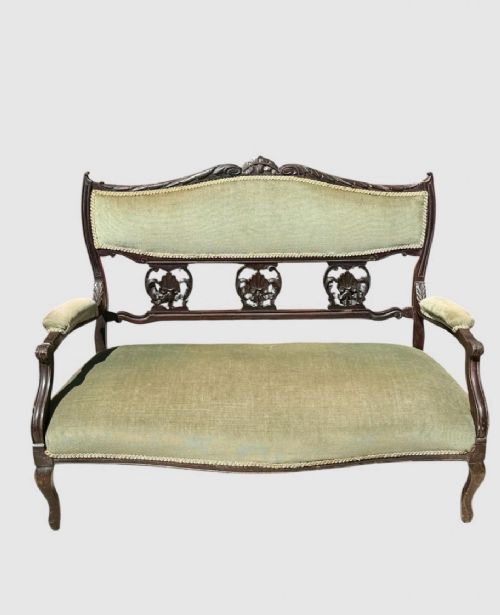


Green Upholstered Bench
A green upholstered bench brings tactile depth and rich colour to a room, ranging from compact footstools to expansive window seats.
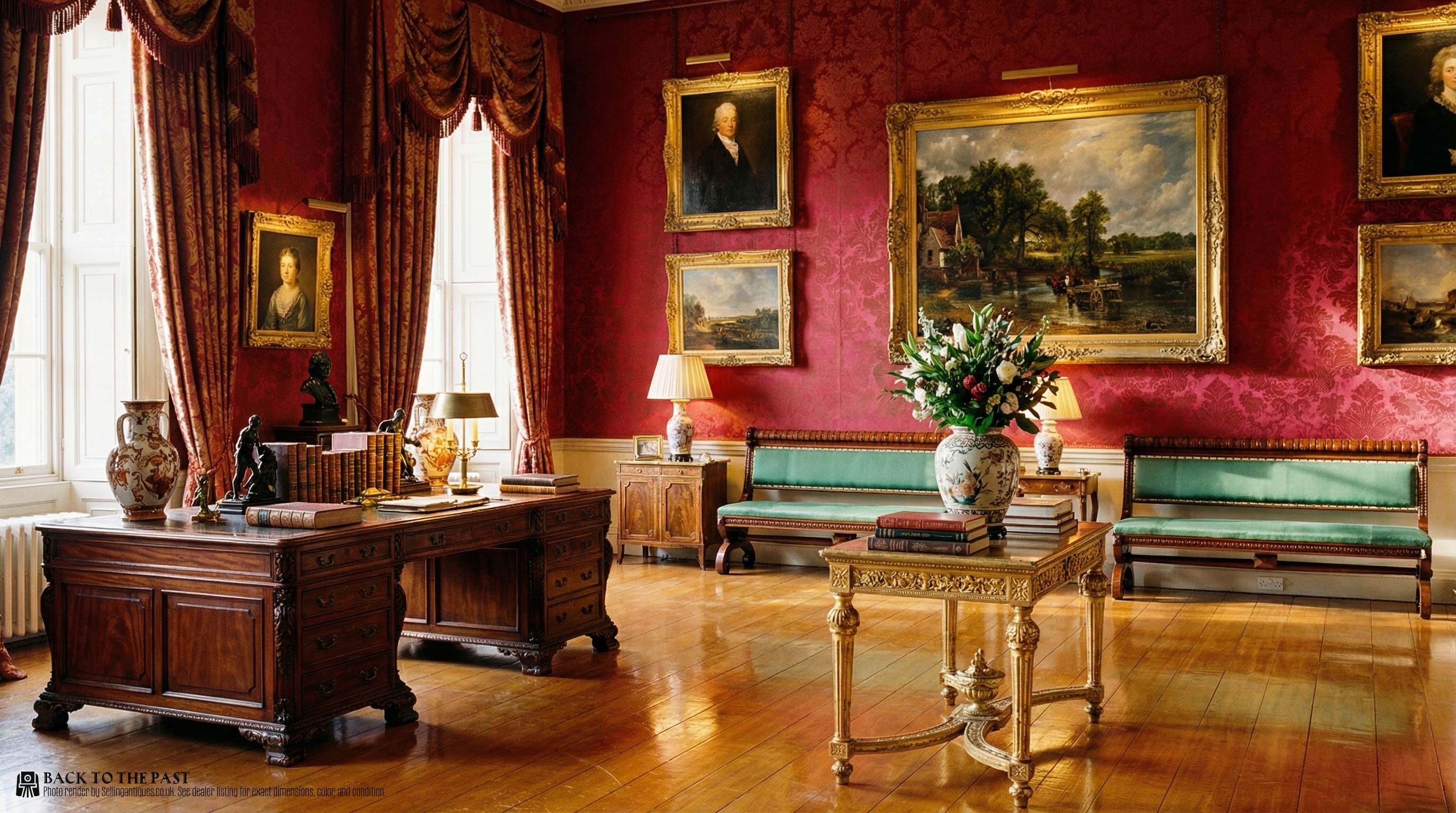
Green Upholstered Bench
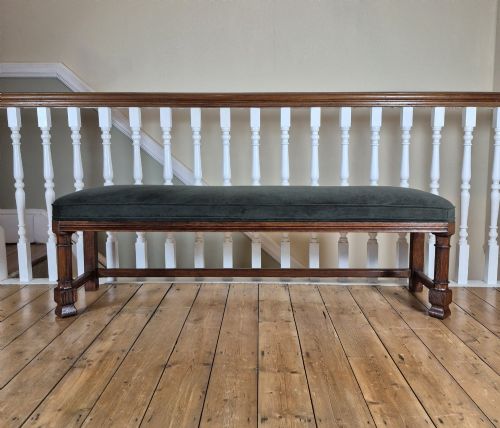
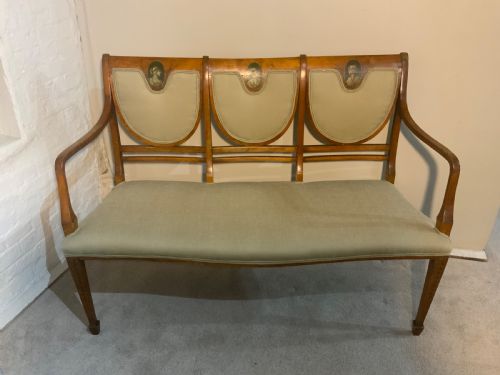
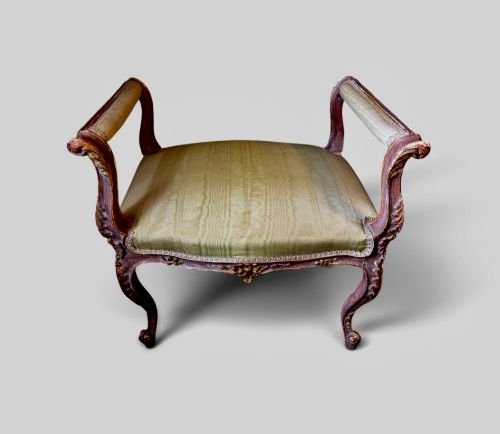
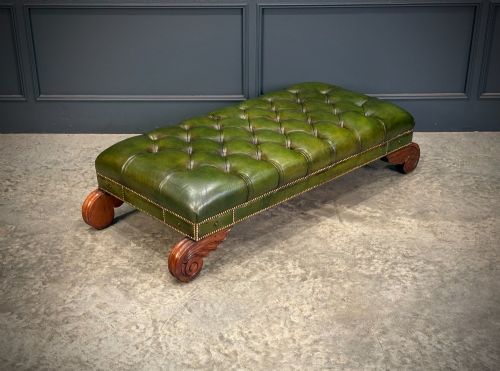
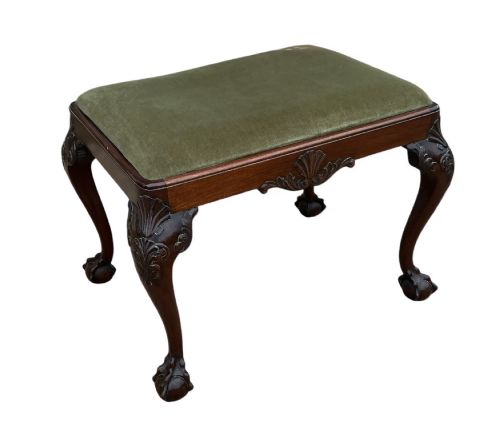
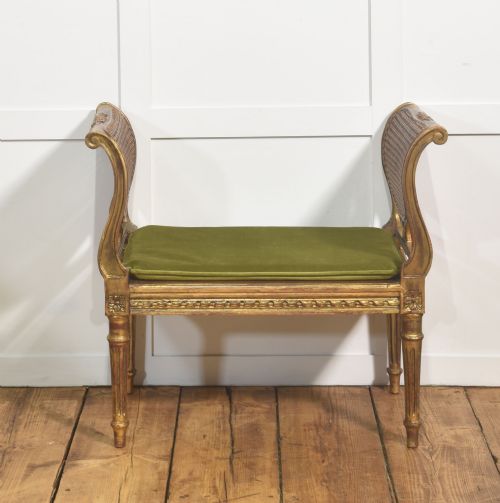
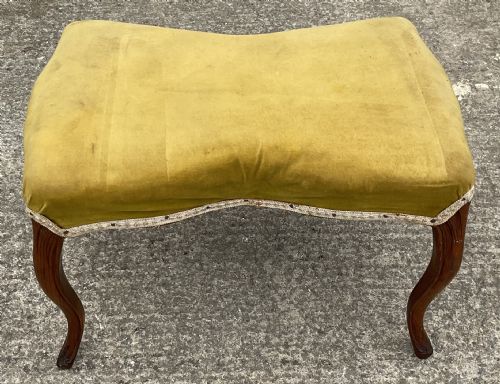
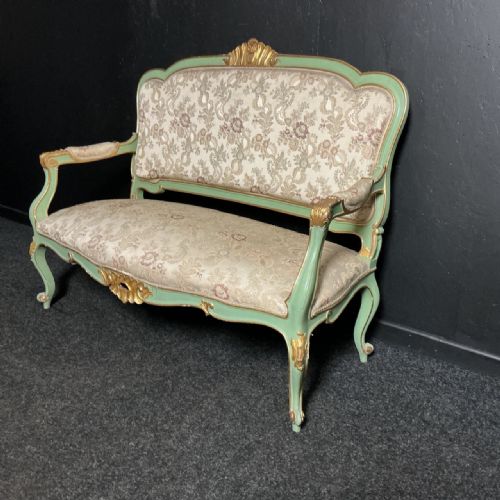
A green upholstered bench encompasses a varied group of seating forms, including footstools, window seats, long benches, and two-seater settees. These pieces emerge across several periods, most notably the Victorian era, the Edwardian period, and the Regency years.
The materials span mahogany, walnut, oak, and giltwood frames paired with velvet, leather, silk, and woven fabric. Buyers frequently encounter Victorian walnut framed examples alongside early twentieth-century window seats and dressing stools.
Materials and Construction
Makers built the structural frames from hardwoods such as mahogany, walnut, oak, and rosewood, often shaping the wood through carving or turning. Giltwood and painted finishes also appear on French and English pieces from the nineteenth and early twentieth centuries.
Upholstery techniques involve securing textiles like velvet, leather, and silk over padding. Brass hardware or buttoning appears on specific pieces such as club fenders and footstools.
The listings here feature walnut, mahogany, oak, and giltwood frames upholstered in velvet, leather, silk, and plain fabric.
Evaluating Quality
Quality rests in the precision of the frame carving, the structural stability of the timber joints, and the integrity of the proportions. Finer examples display well-drawn lines, such as fluted legs or elegant curves.
The selection of covering materials and the execution of the upholstery work also differentiate standard utilitarian seating from pieces designed with greater decorative ambition.
Harry & Lou Epstein
The Green Upholstered Bench Glossary
- Window seat
- A long, narrow bench designed specifically to fit within a window recess. These forms often feature upholstered seats and supportive end arms.
- Club fender
- A low, U-shaped hearth seat framed in brass or metal with upholstered top cushions. Victorian examples typically flank a fireplace to provide fireside seating.
- Giltwood
- Timber coated with a thin layer of gold leaf. This finish appears frequently on decorative frame surfaces from the nineteenth century.
- Ottoman
- A fully upholstered seat or box bench without a back. Nineteenth-century variants sometimes incorporate a reversible box daybed design.
Green Upholstered Bench: Frequently Asked Questions
Where should I place a window seat?
Window seats suit alcoves, hallways, or the foot of a bed where long, narrow seating fits the floor plan.
Their shallow depth allows them to utilise peripheral spaces without obstructing movement through a room.
How do I care for leather upholstery?
Leather requires minimal intervention beyond gentle dusting and occasional conditioning to maintain the material's suppleness.
Keeping antique leather away from direct heat sources prevents the surface from drying and cracking over time.
What distinguishes a stool from a bench?
Stools generally provide compact, single-person seating or foot support, whereas benches offer extended length for multiple occupants.
Longer forms often incorporate architectural elements like fluted legs or decorative end rails.
How do I identify a Victorian piece?
Victorian seating frequently utilises walnut or mahogany with carved ornamentation, reflecting the revival styles popular during the nineteenth century.
Heavier timber construction and buttoned upholstery also characterise pieces from this extensive period.