
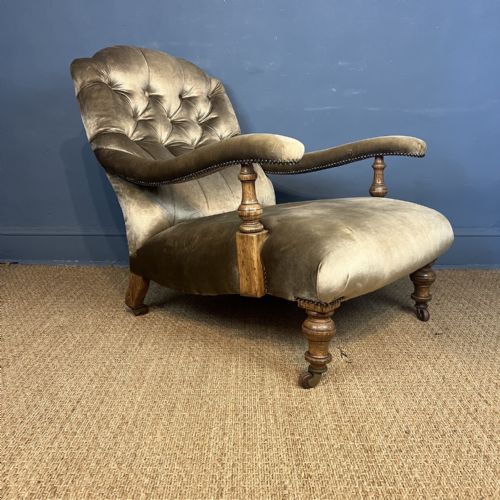
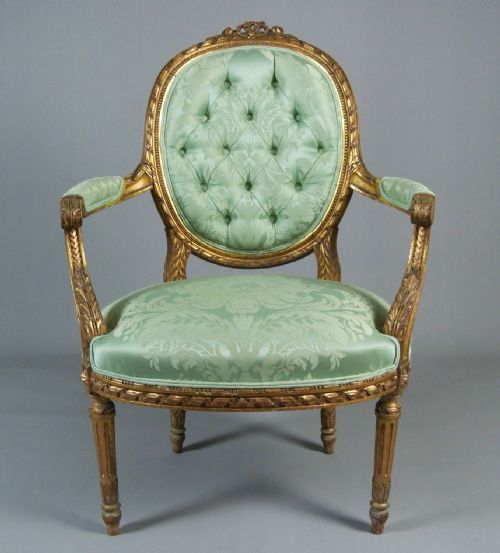
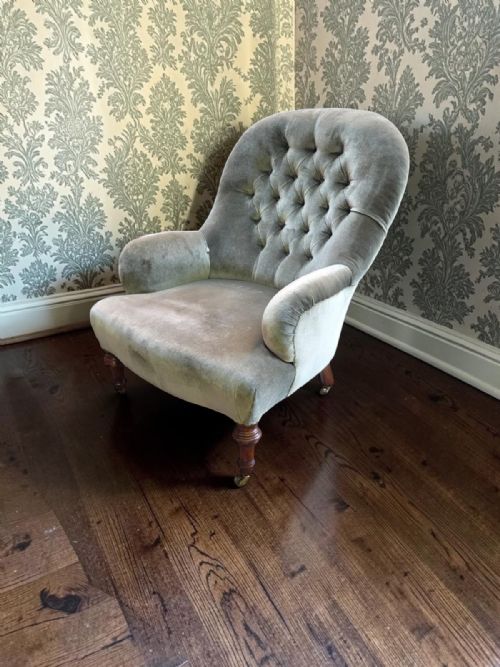
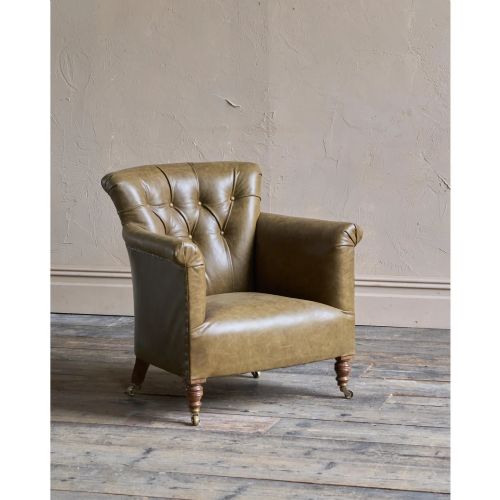


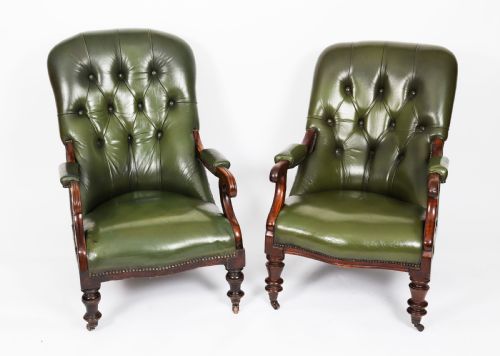

Green Tufted Armchair
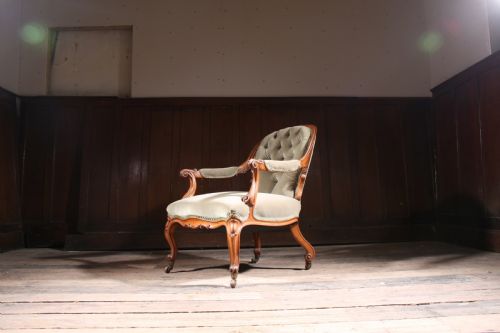
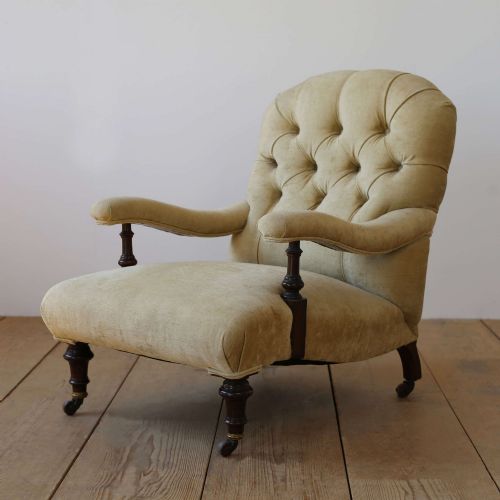
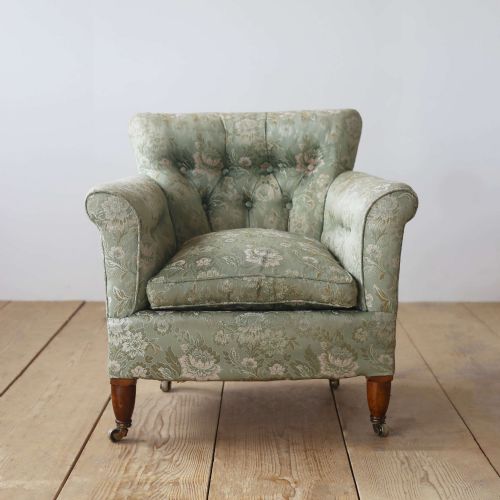
A green tufted armchair brings distinct period character to a room, offering deep buttoned comfort wrapped in rich upholstery.
Green Tufted Armchair
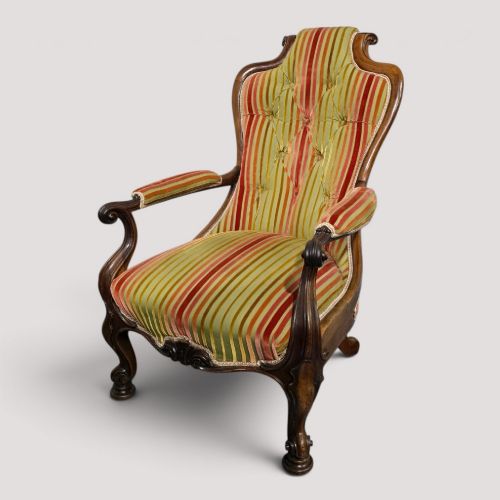
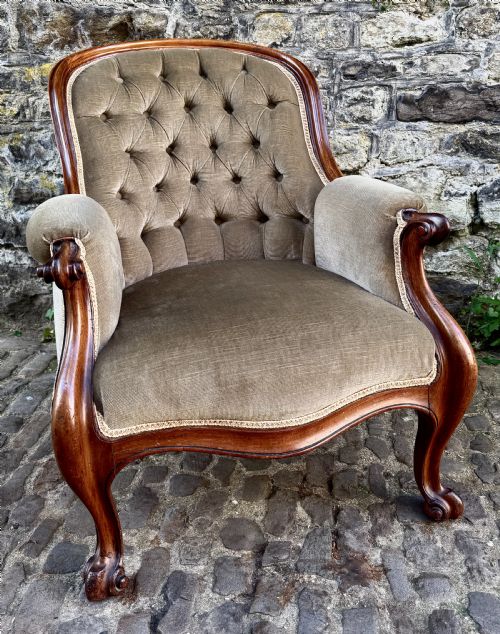
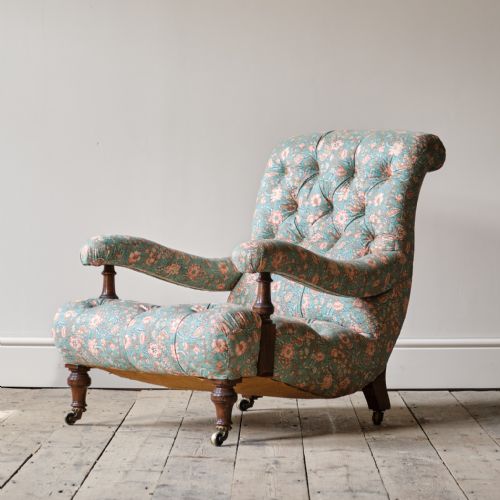
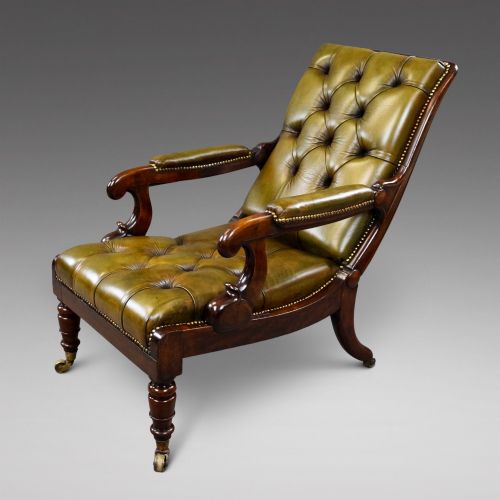
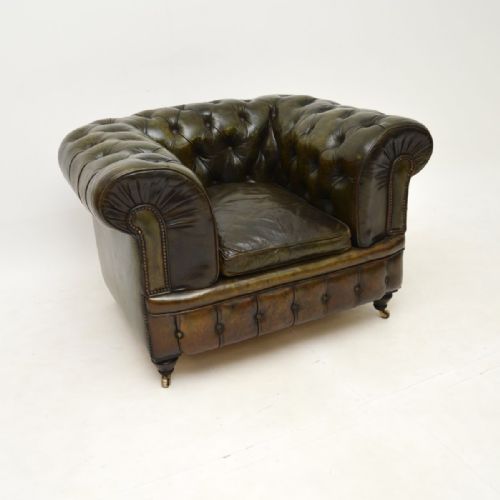
When you search for a green tufted armchair, you encounter a variety of forms spanning the eighteenth, nineteenth, and early twentieth centuries, including library chairs, gentleman's chairs, and Chesterfield styles. The nineteenth century yields the strongest representation, particularly Victorian examples featuring deep buttoning.
These seating options appear in several timber frames such as mahogany, walnut, oak, and rosewood, often complemented by brass castors or carved details. You will find them grouped alongside desk chairs, rocking chairs, and salon suites on this page.
Materials and construction
Craftsmen built the underlying frames using sturdy hardwoods like mahogany, walnut, and oak, frequently shaping exposed wood elements through carving or turning. These structural timber frames support sprung interiors and padding designed for daily use.
Upholstery relies on traditional textiles, predominantly leather and velvet alongside various fabrics and linen. Deep tufting or buttoning secures the padding firmly to the frame, creating the characteristic dimpled surface.
The available seating spans the eighteenth, nineteenth, and early twentieth centuries across multiple regional styles.
Evaluating craftsmanship and condition
Quality reveals itself in the rigidity of the timber frame and the precision of the joinery beneath the upholstery. Finer pieces display crisp hand-carving on the wood and careful weight distribution across the legs and brass castors.
The standard of the leather or velvet and the regularity of the tufting distinguish superior examples from ordinary ones. Original period upholstery and well-preserved frame patination elevate the standing of an armchair.
Thomas Chippendale·Howard and Sons·Holland and Sons·C. Hindley and Sons·Jas James Shoolbred
The Green Tufted Armchair Glossary
- Button back
- Upholstery style where buttons are pulled deep into the padding to form a geometric diamond pattern. This technique secures the internal stuffing and adds texture.
- Library chair
- Sturdy armchair designed for reading rooms, typically featuring padded arms and supportive backrests. They often utilise mahogany or walnut frames.
- Giltwood
- Timber treated with a thin layer of gold leaf or gilt powder. This finish appears on decorative framework from eighteenth-century and later periods.
- Castors
- Small wheel attachments fitted to the base of chair legs. They allow heavy library and armchair models to move smoothly across floor surfaces.
Green Tufted Armchair: Frequently Asked Questions
What periods do these armchairs come from?
The listings span from the eighteenth century through the Victorian era up to the early twentieth century. You will encounter Georgian, Regency, William IV, and Edwardian examples.
Victorian pieces form a large share of the selection, reflecting nineteenth-century manufacturing methods and popularity for buttoned upholstery.
Which woods are used for the frames?
Makers utilised dense hardwoods such as mahogany, walnut, oak, and rosewood to construct sturdy chair frames. Giltwood and ebonised timber also appear on specific decorative models.
These materials provide the necessary structural integrity to support sprung seats and heavy leather or velvet coverings.
How do I identify a library chair?
Library chairs are built for comfort and extended reading, featuring substantial upholstered armrests and supportive backs. They frequently incorporate mahogany or walnut frames with leather upholstery.
Many examples include brass castors on the legs to facilitate movement around a study or library.
What is button back upholstery?
Button back upholstery involves pulling twine or thread through padding and securing it with buttons to create a tufted surface. This technique forms a distinctive diamond pattern across the backrest.
It was widely employed on Victorian gentleman's chairs and Chesterfield armchairs to keep internal stuffing evenly distributed.