




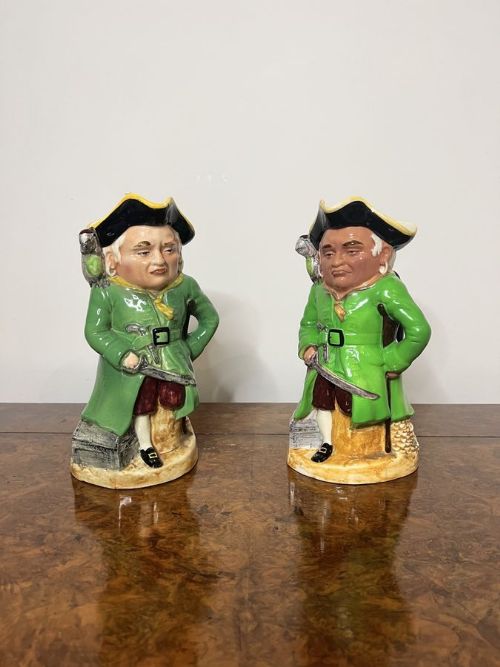


Green Pottery Pitcher
A green pottery pitcher brings tactile richness to a table, offering deep ceramic glazes shaped through diverse historical periods.
Green Pottery Pitcher
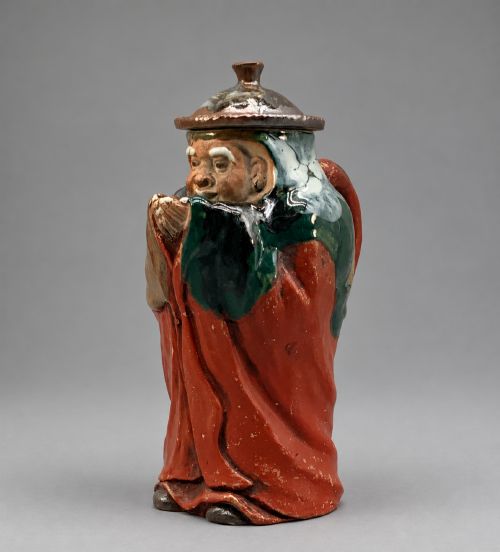
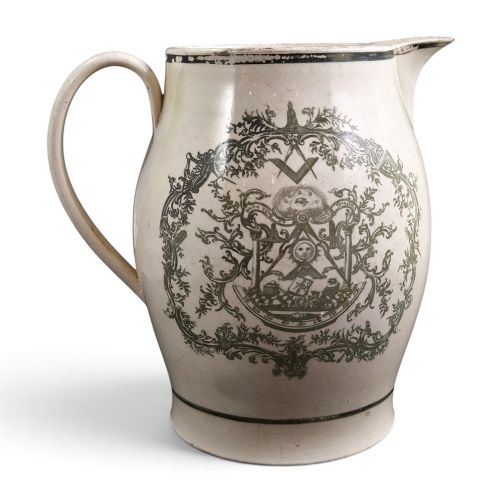
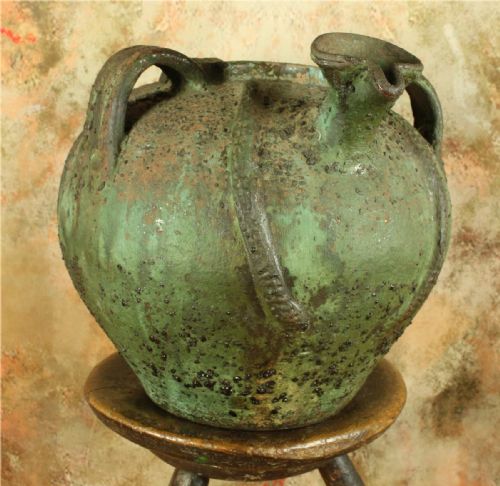
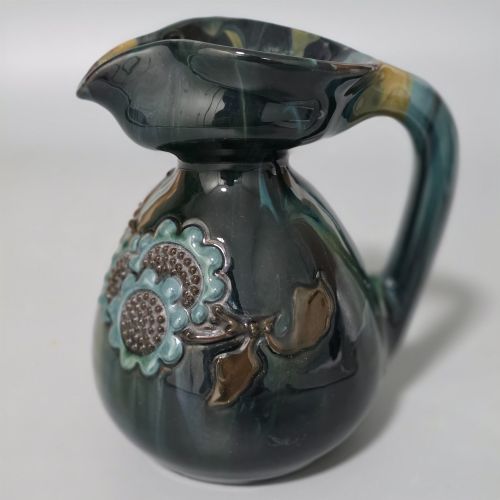
A green pottery pitcher is a functional or decorative vessel encountered in earthenwares, stonewares, and creamwares across multiple eras. These pieces range from Victorian majolica and Staffordshire tablewares to studio art pottery and French country oil vessels.
The selections span Georgian, Regency, and Victorian periods alongside Art Nouveau, Arts and Crafts, and early twentieth-century designs. Collectors meet various forms including ewers, lidded jugs, and figural pottery.
Origin points extend from English potteries and continental workshops to Japanese studios, showing a broad international appreciation for glazed ceramic surfaces.
Materials and construction methods
Potters shaped these vessels from clay bodies such as earthenware, creamware, and stoneware, utilising throwing and moulding techniques. Stoneware bodies offered increased density, while creamware provided a lighter base for coloured glazes.
Rich surface effects rely on specialised glazes, notably majolica techniques and flowing studio glazes. Firing temperatures varied by material, fixing the mineral colours into the ceramic surface.
Green Pottery Pitcher Retail Price Guide 2026
Typical asking prices for green pottery pitcher among the pieces listed under this phrase on Sellingantiques today, from the lower quarter to the upper quarter. They describe what is for sale here now, not the wider market.
Listings feature earthenware, stoneware, and creamware bodies spanning the eighteenth to the twentieth century.
Assessing craftsmanship and execution
Quality rests in the precision of the form, the depth and consistency of the glaze, and the clarity of moulded or painted details. Superior pieces display confident handling of handles, rims, and surface decoration.
The reputation of the maker and the artistry of the studio distinguish exceptional works from standard utilitarian output. Master potters achieved nuanced colour variations and balanced proportions that elevate simple vessels into notable decorative objects.
Doulton Lambeth·Sir Edmund Elton·William Moorcroft·Minton·Staffordshire·George Jones·Wedgwood·Keith Murray
The Green Pottery Pitcher Glossary
- Earthenware
- Porous pottery fired at lower temperatures, requiring a glaze to achieve watertightness. It serves as the primary body for many historical jugs.
- Majolica
- A type of earthenware coated with an opaque tin-glaze and painted with metallic oxide colours. It produces vibrant green and earth-toned decorative surfaces.
- Stoneware
- A robust, vitrified ceramic fired at high temperatures until non-porous. This material provides durability and a heavier weight to utilitarian pitchers.
- Creamware
- A refined, light-coloured earthenware developed in the eighteenth century. It forms a smooth pale base often paired with olive or green glazes.
- Ewer
- A large jug with a wide spout and curved handle, traditionally used for holding water or wine. Many decorative examples appear in nineteenth-century styles.
Green Pottery Pitcher: Frequently Asked Questions
How do I care for an antique pitcher?
Wash ceramic vessels gently by hand using mild soap and warm water, avoiding harsh scrubbing or dishwashers.
Display them away from direct sunlight and sudden temperature shifts to protect fragile historic glazes.
Were these pitchers used daily?
Many historic earthenware and creamware vessels served practical dining functions, holding water, cream, or ale.
Others, particularly elaborate majolica and studio art pieces, served primarily as decorative ornaments or display ewers.
What defines Arts and Crafts pottery?
Arts and Crafts ceramics emphasise hand-thrown forms, tactile studio glazes, and organic motifs like leaves and flowers.
They reflect a rebellion against mass production, valuing individual maker expression and natural materials.