



Green Pleated Lamp Shade
These green pleated lamp shade options bring character to a room, offering warm light through pleated textures and distinct historical materials.
Green Pleated Lamp Shade
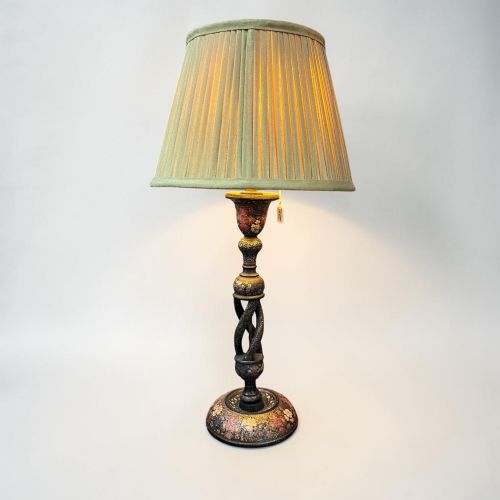
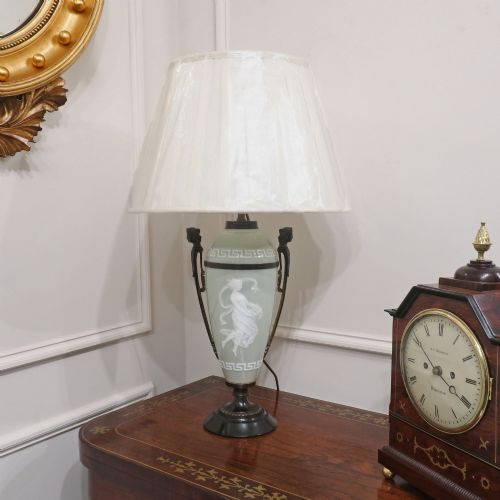
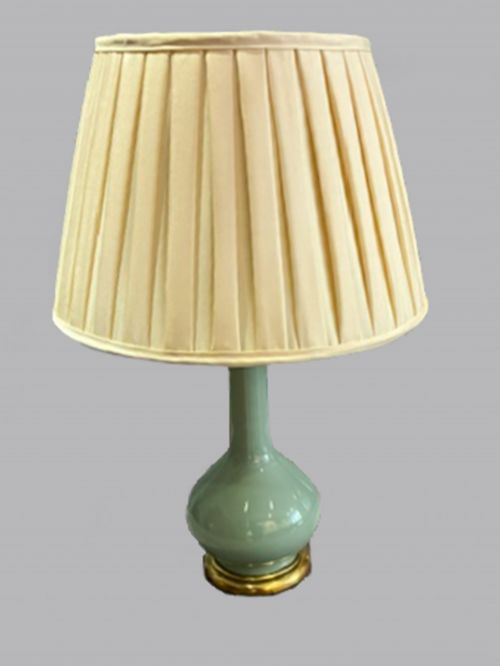
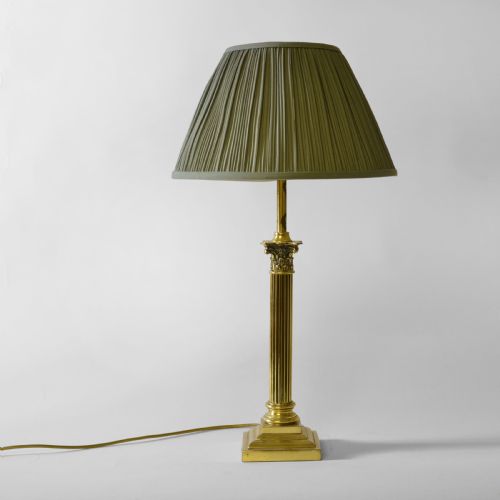
When you search for a green pleated lamp shade, you encounter a selection of lighting formed from converted vases, columns, and candle shades dating from the nineteenth century into the twentieth century. These objects combine historical lamp bases with fabric shades or specialised protective coverings like microscopic candle shades.
The assortment on this page draws on diverse origins, ranging from Victorian brass columns and Edwardian majolica to Chinese export porcelain and French neoclassical styles. Table lamps dominate the selection, accompanied by occasional ceiling lights and scientific instruments repurposed for illumination.
How they were made
Maker methods rely heavily on the combination of ceramics, brass, and fabric as recorded across the listed items. Porcelain and ceramic bodies such as celadon, famile verte, and majolica form the primary structures for the bases.
Metal components utilise brass and bronze for columns and mounts, while specialised pieces incorporate lacquered wood, papier-mâché, and delicate fabric shades to diffuse the light.
Green Pleated Lamp Shade Retail Price Guide 2026
Typical asking prices for green pleated lamp shade among the pieces listed under this phrase on Sellingantiques today, from the lower quarter to the upper quarter. They describe what is for sale here now, not the wider market.
The listings span periods from the early 19th century to the 1930s, featuring porcelain, brass, and fabric.
What varies in quality
Quality differences emerge in the hand-painted detail of ceramic bodies and the precision of brass casting on column bases. Pieces featuring intricate hand-painted Kashmiri work or detailed canton vase designs demonstrate superior craftsmanship compared to plain surfaces.
The integrity of original cases, such as those housing Victorian microscopy candle shades, alongside the preservation of original fabric and porcelain finishes, distinguishes finer examples within the range.
The Green Pleated Lamp Shade Glossary
- Celadon
- A pale green glazed ceramic originating in China that frequently forms the body of converted nineteenth century lamps.
- Famille Verte
- A Chinese porcelain palette dominated by green enamel colours, often seen on nineteenth century vases adapted for lighting.
- Corinthian Column
- A classical architectural column style in brass utilised for tall table lamp bases during the Victorian and Edwardian eras.
- Majolica
- A type of colourful lead-glazed earthenware popular during the Victorian and Edwardian periods for decorative lamp bases.
Green Pleated Lamp Shade: Frequently Asked Questions
What periods do these lamps come from?
The lighting options span from the early nineteenth century through the Victorian and Edwardian eras up to the nineteen thirties.
Most items originate from the Victorian period, alongside Edwardian examples and later twentieth century art deco designs.
How were these lamps originally used?
Many items began as decorative vases, scientific instruments, or structural columns before conversion into functional table lamps and ceiling lights.
Specialised items like the Victorian microscopy candle shade served precise technical functions in their original settings.
What materials make up the bases?
Bases are constructed from ceramic, porcelain, brass, bronze, lacquered wood, and papier-mâché.
Chinese export porcelain and majolica are particularly common among the ceramic options.
How do I identify different styles?
Styles range from French neoclassical and Chinoiserie to Art Deco and Anglo-Indian designs.
Examining the decorative motifs, such as Chinese celadon glazes or classical brass columns, reveals the specific stylistic influence.