
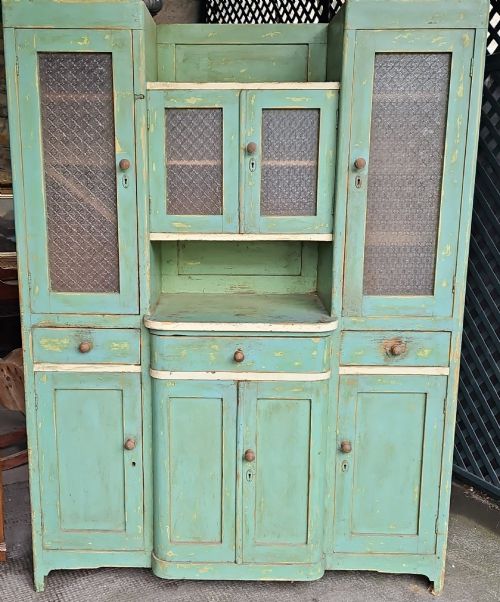


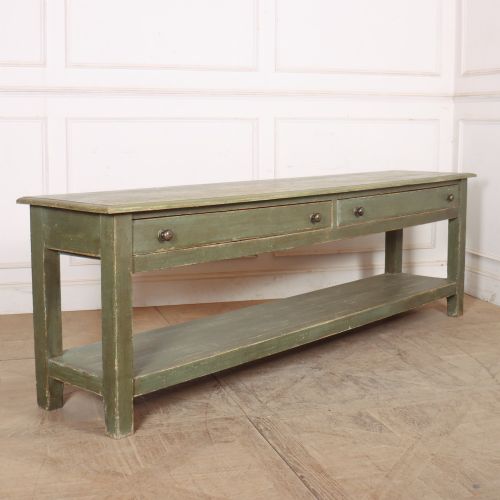


Green Painted Kitchen Dresser
A green painted kitchen dresser brings hardworking utility and rustic character into the home, combining open display shelves with deep storage cupboards.
Green Painted Kitchen Dresser
A green painted kitchen dresser serves as both a practical workspace and a display unit for domestic crockery and provisions. These items encompass regional forms such as English country house dresser bases, West Country glazed dressers, and tall kitchen cabinets.
The pieces on this page span from the eighteenth century through the Edwardian era and into the early twentieth century. Buyers will frequently encounter nineteenth-century English painted dresser bases alongside nineteenth-century potboard serving tables and farmhouse cupboards.
Origins stretch beyond England to include French provincial items, Danish kitchen cupboards, Alpine folk art examples, and Scandinavian country pieces. Each regional variation brings distinct proportions and timber choices to the traditional kitchen layout.
Materials and construction methods
Makers relied primarily on solid pine and mixed wood for the carcase and framing of each green painted kitchen dresser. Structural integrity relied on traditional joinery techniques, while surfaces received coats of oil- or water-based paint over time.
Hardware components typically feature brass pulls, iron hinges, and glass panels fitted to upper display doors. Potboard structures and open shelving frames provided sturdy platforms for heavy earthenware and kitchen provisions.
The listings demonstrate construction predominantly in solid pine and painted wood, spanning the eighteenth century to nineteen-ten.
Distinctions in craftsmanship and condition
Quality rests in the survival of original surface paint layers and the integrity of the underlying timber frame. Pieces retaining their historic potboards or untouched regional proportions command closer attention from collectors.
Construction details such as dovetailed drawer construction and the weight of the brass or iron ironmongery signal superior workshop standards. Alterations to hardware or later overpainting shift an item away from its original state.
The Green Painted Kitchen Dresser Glossary
- Potboard
- A lower slatted shelf beneath a dresser base designed for storing pots and pans off the stone floor. This feature appears frequently on eighteenth- and nineteenth-century English examples.
- Dresser Base
- The lower section of a kitchen dresser, functioning as a standalone sideboard or serving table with drawers and cupboards. These units often feature extended rectangular tabletops.
- Folk Art
- Decorative work created within a traditional community style, often seen in Alpine and regional farmhouse pieces. These items showcase vernacular carving and idiosyncratic paint treatments.
- Housekeepers Cupboard
- A large storage cabinet used in large domestic kitchens for linens and dry goods. They share construction traits with standard kitchen dressers and food cupboards.
Green Painted Kitchen Dresser: Frequently Asked Questions
How do I date a painted dresser?
Dating relies on examining the timber types, nail construction, and the layering of the paint finish. Eighteenth-century pieces often show hand-planed surfaces and pegged joints.
Later Victorian and Edwardian examples utilise machine-sawn timber and different fastening methods. Evaluating the wear patterns on potboards and drawer edges also helps confirm the period.
Where were these dressers used?
These pieces originated in farmhouse kitchens, sculleries, and country house pantries for daily food preparation and storage. They held crockery, dry ingredients, and heavy pots.
Regional variations served different domestic tasks across English counties, France, Scandinavia, and the Alpine regions. Their sturdy construction suited hardworking rural environments.
Are the paint finishes original?
Many pieces retain historic layers of paint that have weathered through decades of domestic use. Assessing the surface involves looking for natural craquelure and signs of wear around the handles.
Some items have undergone subsequent repainting during their working lives to suit changing household aesthetics. Original pigment remains a key factor for collectors seeking untouched condition.
How do I care for pine furniture?
Solid pine and painted surfaces require protection from direct sunlight and sudden humidity changes to prevent timber movement. Regular dusting with a dry cloth keeps the historic paint stable.
Avoid harsh chemical cleaners that can strip or soften the aged finish. Applying a microcrystalline wax can help preserve exposed wooden sections on tabletops.