


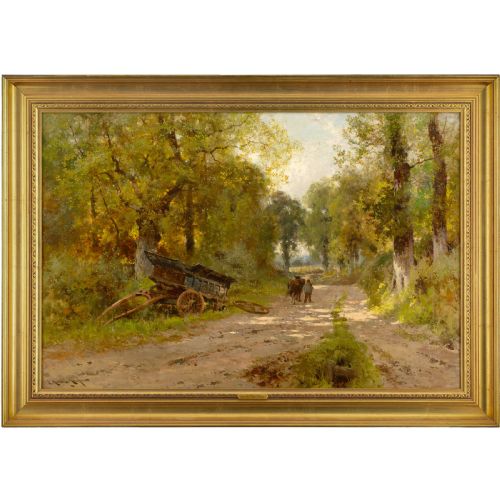
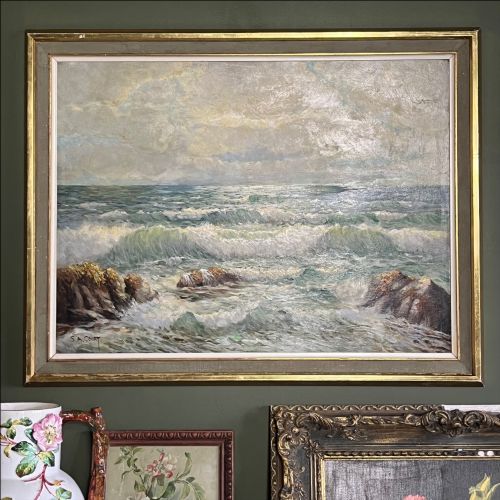
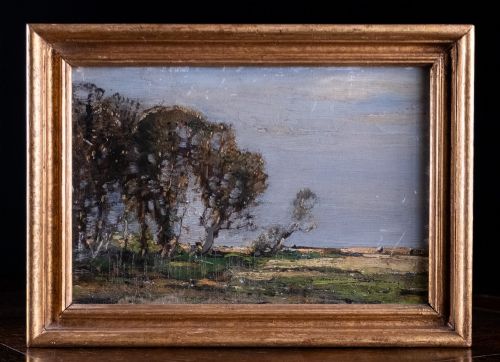
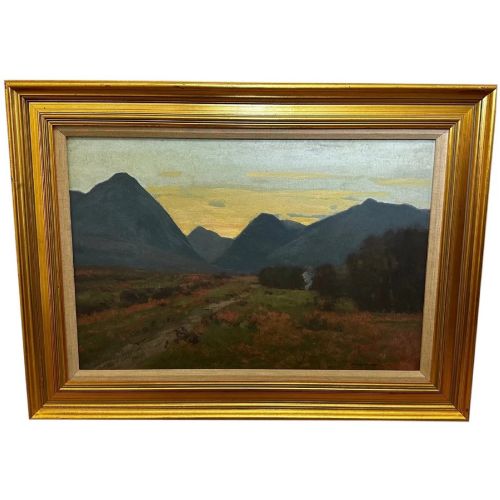
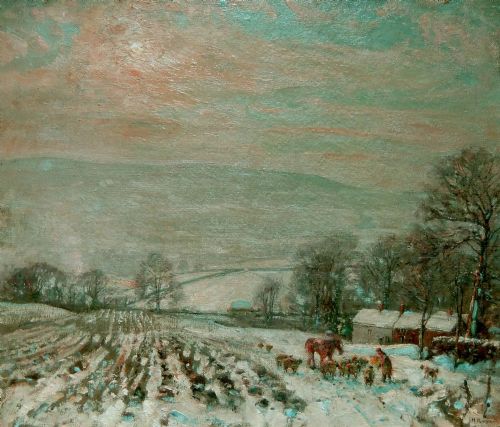
Green Oil Landscape
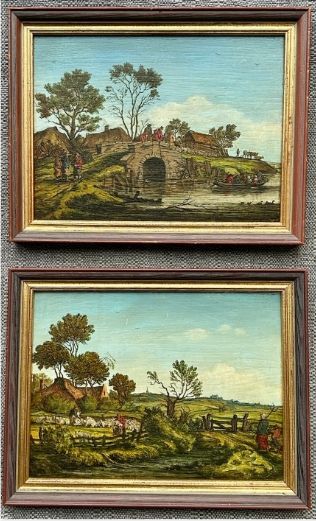
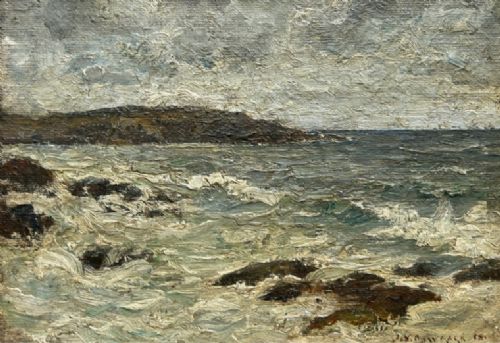
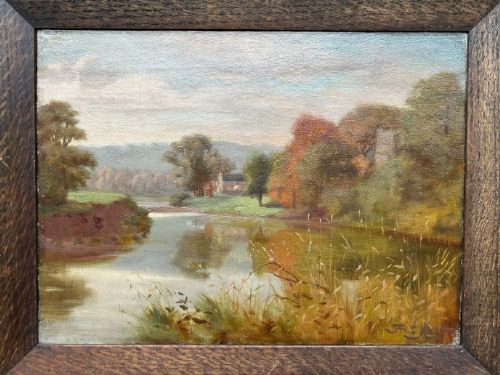
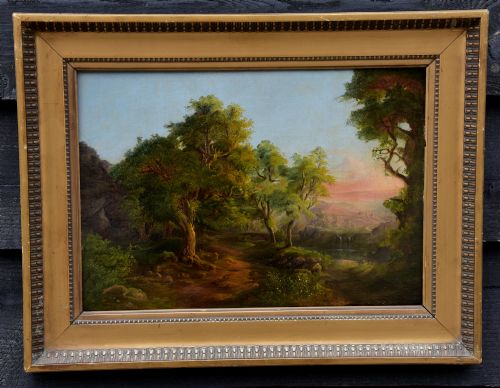
These green oil landscape works capture pastoral views and country scenes in pigment.
Green Oil Landscape
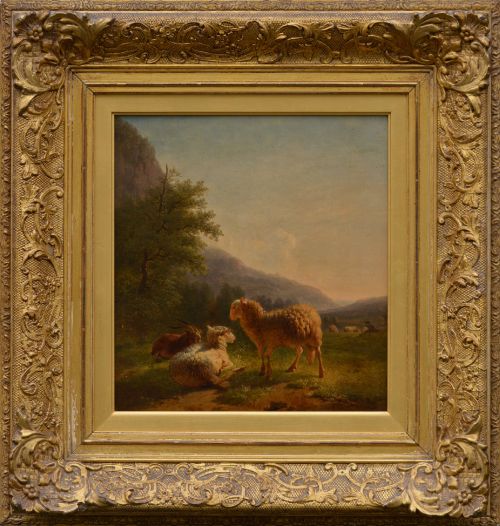
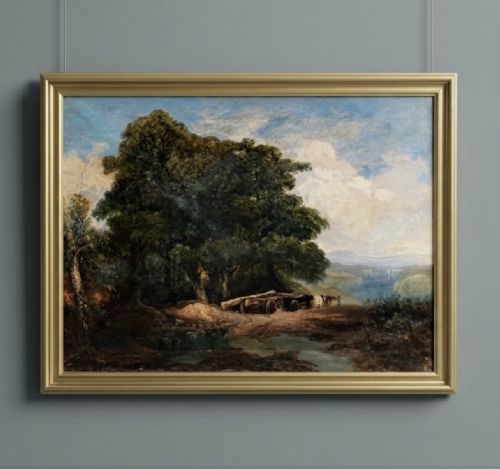
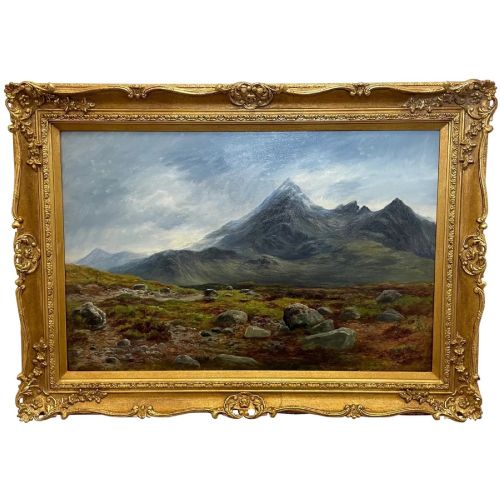
A green oil landscape presents pastoral, woodland, and river scenes rendered in oil paint on canvas, wood panel, board, or card. These works span centuries of artistic practice, showing rural views from Britain, Europe, and beyond.
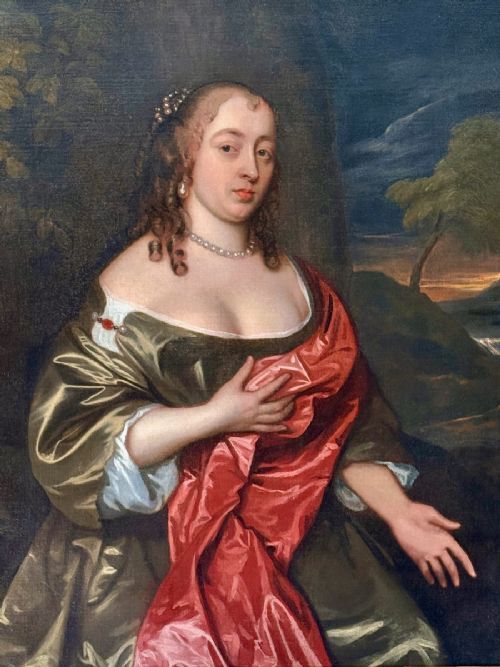
Buyers meet varied iterations ranging from 17th-century portraits set in expansive grounds to Victorian pastoral scenes, Edwardian woodland views, and mid-20th-century post-impressionist or naive interpretations. The selection frequently includes framed paintings and wall art by named regional artists as well as works by continental and British schools.
How they were made
Artists applied oil paint using brushes and occasionally impasto techniques onto stretched canvas, wood panels, or boards, sometimes working en plein air to capture natural light. Frames often utilised giltwood to complement the composition.
Support materials varied according to period and scale, with canvas supported by wooden stretchers for larger pieces, while smaller sketches utilised wood panels, card, or board.
Listings feature canvases, wood panels, and boards spanning the 17th through the mid-20th centuries.
What varies in quality
Quality rests in the handling of light, brushwork fluidity, and the depth of the composition within the landscape. Works displaying confident impasto or precise tonal control by established painters differ from provincial or naive examples.
The integrity of the original support, the stability of the oil paint surface, and the harmony of the framing contribute to the overall standing of each piece.
Eugène Verboeckhoven·Richard Sebastian Bond·William Beattie-Brown·Tom Campbell·Frederick Marriott·John Horace Hooper·Kershaw Schofield·George Houston·Herbert Royle·Robert Morson Hughes·Thomas W Lascelles·David Bates·Benjamin Barker of Bath·Charles Houben·Walter Heath Williams·Antonio DeVity·Lucy Pratt·Raymond Booth·Harald Foss·Alfred Wolmark·Eric Brown·David Green·Emanuel A Petersen·David Mead
The Green Oil Landscape Glossary
- Oil paint
- A slow-drying paint made by mixing pigments with oils such as linseed. It allows artists to blend colours smoothly and build rich surface textures.
- Canvas
- A closely woven heavy fabric stretched across a wooden frame to serve as a foundation for paintings. It remains a durable support for oil mediums.
- Impasto
- A technique where paint is laid on an area of a surface in very thick layers, usually thick enough that the brush or painting-knife strokes are visible.
- En plein air
- The act of painting outdoors to capture the actual light and atmosphere of a landscape directly. This method was widely adopted by 19th- and 20th-century artists.
- Wood panel
- A flat wooden board used as a rigid support for paintings prior to the widespread adoption of stretched canvas. Panels offer a firm surface for detailed brushwork.
Green Oil Landscape: Frequently Asked Questions
What periods do these paintings cover?
The available selection spans from the 17th century through the Victorian era and the early 20th century, extending to mid-20th-century post-impressionist examples.
Different centuries introduced distinct stylistic approaches, moving from formal romanticism and traditional pastoral compositions toward impressionist and naive interpretations.
What surfaces were used for these paintings?
Artists painted on a variety of grounds, most commonly canvas, wood panels, board, and card. Larger works typically utilised stretched canvas.
Wood panels and boards were frequently selected for smaller studies, en plein air sketches, and works produced by provincial schools.
How do I identify a regional school?
Listings often attribute works to British, Scottish, Flemish, French, or Italian schools based on subject matter, technique, and provenance. Landscape subjects frequently reflect the specific topography of regions such as Cornwall, the Scottish Highlands, or foreign coastal areas.
Signatures, framing styles, and artist biographies recorded in the titles provide further context for pinpointing the origin of each piece.
How should I display an oil painting?
These works are commonly displayed as framed wall art or fine art paintings in interior settings. Ensuring stable indoor humidity and avoiding direct sunlight helps preserve the oil paint and canvas.
Original giltwood frames often accompany the paintings, though period-appropriate replacement frames are also utilised to house the canvas safely.