


Green Marble Top Cabinets
Green marble top cabinets bring rich mineral colour and refined classical presence to an interior, combining heavy stone surfaces with warm timber frames.
Green Marble Top Cabinets
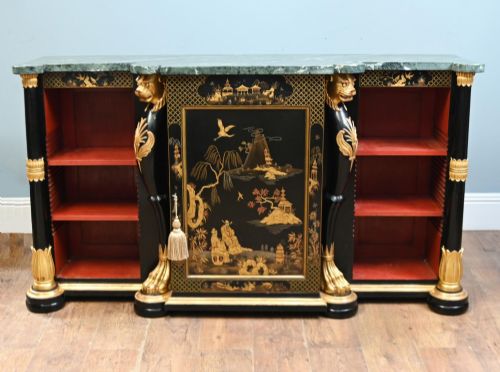
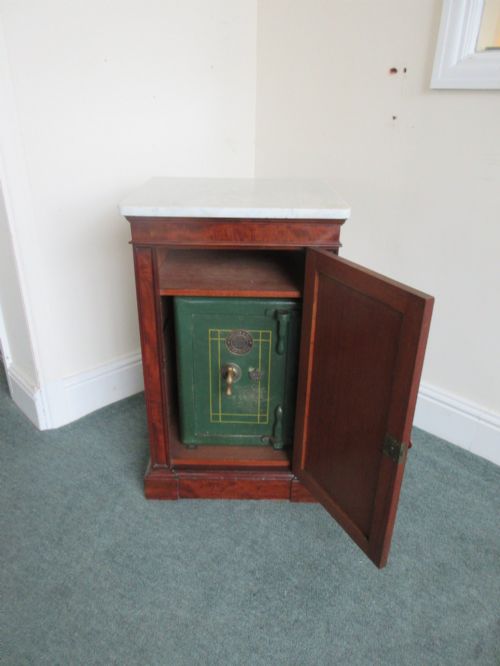
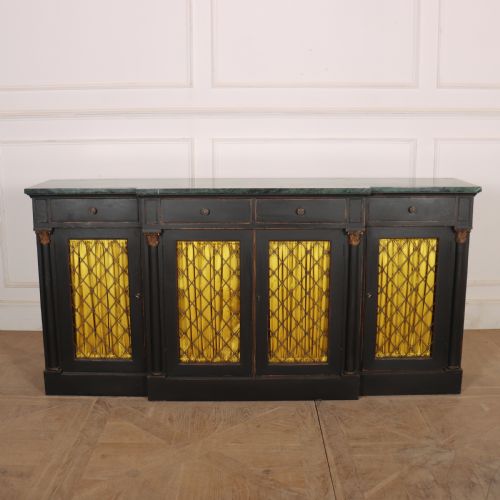
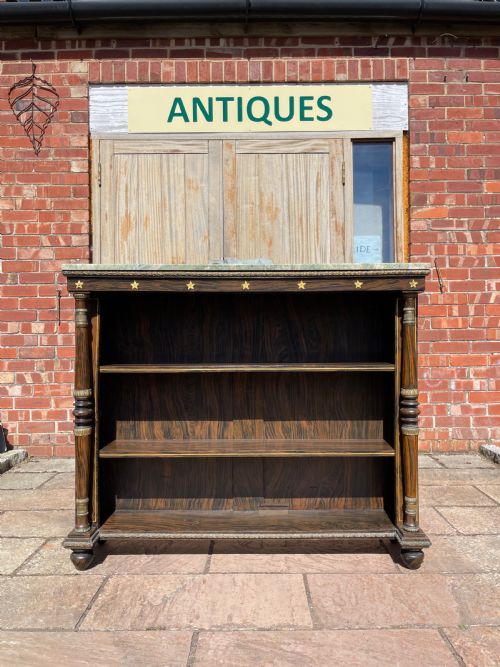
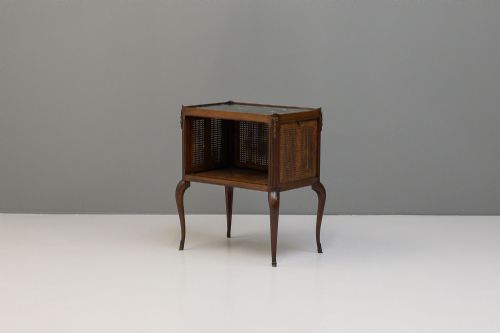
Green marble top cabinets encompass a variety of low storage forms including bedside cupboards, washstands, sideboards, and side tables that feature distinctive stone surfaces. The listings show examples spanning the Victorian, Edwardian, and Regency periods, alongside pieces dating to the nineteenth and early twentieth centuries.
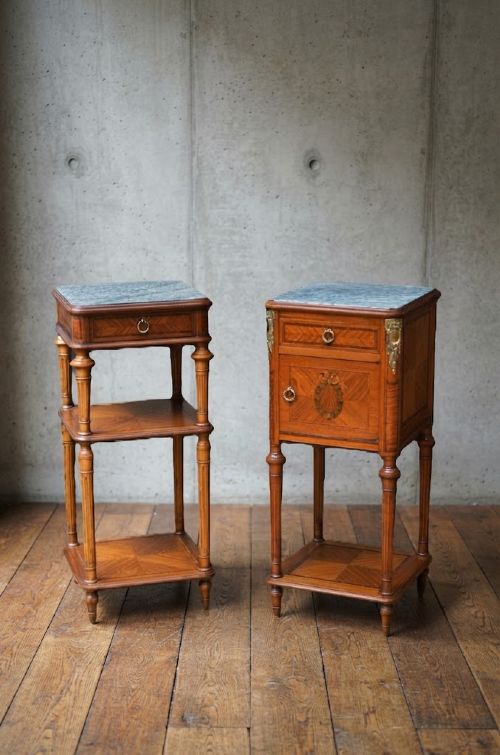
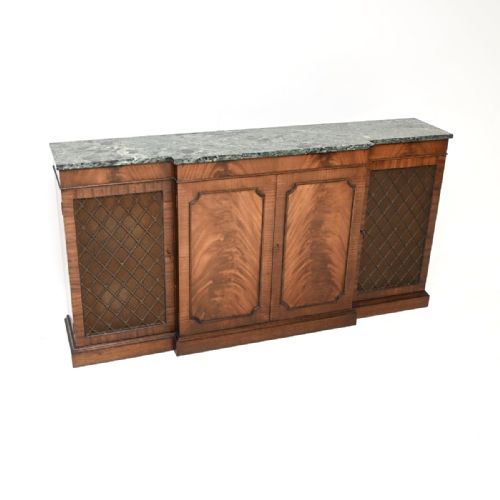
Most pieces combine timber structures with inset marble tops, sometimes taking the form of French commodes, English washstands, or compact bedside cabinets. Buyers will encounter both single items and matched pairs originating from English workshops and French cabinet-makers.
The styles range from restrained Regency and Arts & Crafts designs to elaborate Louis XVI Revival, French Neoclassical, and French Chateau aesthetics. Forms include demi-lune side cabinets, pedestal cupboards, and tall washstands equipped with stone counters.
Materials and Construction
Construction relies heavily on dense hardwoods such as mahogany, rosewood, kingwood, and satinwood, frequently shaped into breakfronts, commodes, and bedside tables. Timber carcases provide structural stability to support heavy stone slabs.
Marble slabs are cut, polished, and fitted directly into the wooden frames of tables and cupboards to create durable, waterproof surfaces suitable for washing or display. Brass and ormolu mounts, galleries, and grilles are frequently added to enhance the decorative scheme.
Marquetry and parquetry inlays appear on French examples, whilst other pieces utilise painted finishes, simulated graining, or rich ebony details to achieve contrasting textures.
Listings feature green marble top cabinets across Edwardian, Victorian, and Regency periods, alongside pieces from the broader nineteenth and early twentieth centuries.
Assessing Quality and Craftsmanship
Quality rests on the selection and matching of timber veneers, the precision of marquetry or parquetry patterns, and the integration of the marble top within the wooden carcase. Superior pieces display seamless joints, hand-cut dovetails in the drawers, and crisp brass or ormolu mounts.
The character and thickness of the green marble slab dictate the visual weight of the furniture, with well-figured stone elevating the piece. Finer examples balance elaborate French stylistic flourishes like Louis XV or Louis XVI Revival motifs with robust internal framing.
The Green Marble Top Cabinets Glossary
- Demi-lune
- Half-moon shape in furniture design. This curved profile is frequently seen on side cabinets designed to sit flat against a wall.
- Marquetry
- Decorative veneer applied to furniture in geometrical patterns or pictorial scenes. It uses thin slices of various coloured woods.
- Ormolu
- Gilt bronze ornamentation mounted onto furniture. This technique was widely employed in French cabinet-making during the nineteenth century.
- Parquetry
- Geometric mosaic woodwork used for floors and cabinet surfaces. It relies on contrasting wood blocks arranged in repeating patterns.
- Washstand
- A piece of furniture designed to hold a basin and jug, often fitted with a marble top to resist water damage.
Green Marble Top Cabinets: Frequently Asked Questions
Where were green marble top cabinets used?
These cabinets served multiple functions across the home, appearing in bedrooms as washstands and bedside tables, or in reception rooms as side cabinets and sideboards. Their durable stone surfaces made them practical for spaces requiring water resistance or sturdy display areas.
In grander townhouses and chateaux, they functioned as decorative side furniture in hallways and boudoirs. The combination of enclosed storage and stone tops suited both utilitarian tasks and the exhibition of decorative objects.
How do I date a green marble top cabinet?
Dating relies on identifying the underlying stylistic vocabulary, such as Regency proportions, Victorian mass, or Edwardian lightness. Timber choice also offers clues, as rosewood and heavy mahogany give way to satinwood and lighter painted finishes in later periods.
Examining construction methods inside the drawers and cabinets reveals period-specific joinery techniques. Hardware such as brass mounts, handles, and grilles helps narrow down the decade of manufacture.
Are these cabinets English or French?
The inventory includes items from both English and French traditions, each displaying distinct regional characteristics. French pieces often feature kingwood, marquetry, and revival styles like Louis XVI, alongside ormolu mounts.
English variants tend towards mahogany, rosewood, and simpler Arts & Crafts or Regency forms. Washstands and side cabinets from English makers frequently prioritise practical utility alongside refined timber framing.
How do I care for a marble top?
Marble requires gentle cleaning with warm water and a neutral soap to preserve the polish and prevent staining. Acidic substances like citrus or vinegar should be kept away from the stone to avoid dulling the surface.
Periodic wiping and careful handling of heavy objects placed on the counter will maintain the stone. The wooden frame beneath benefits from standard furniture wax suited to mahogany or rosewood.