


Green Man Carved Oak
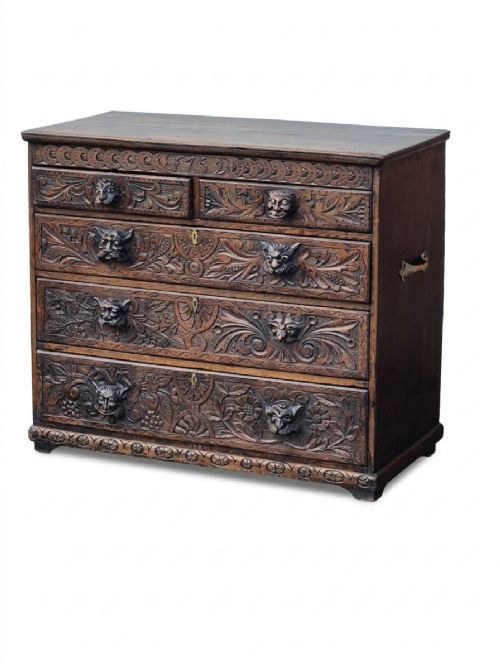
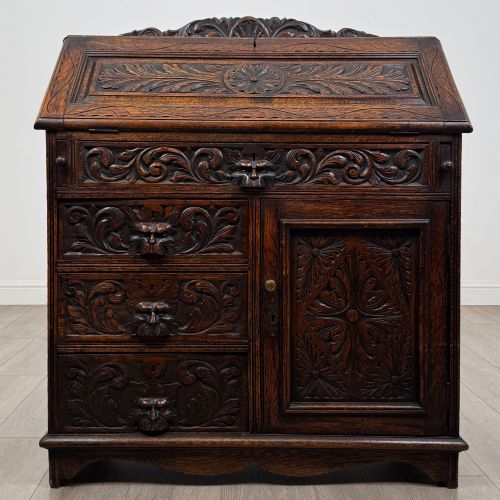
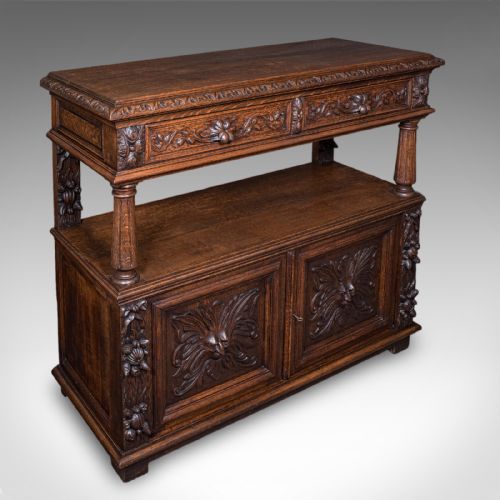
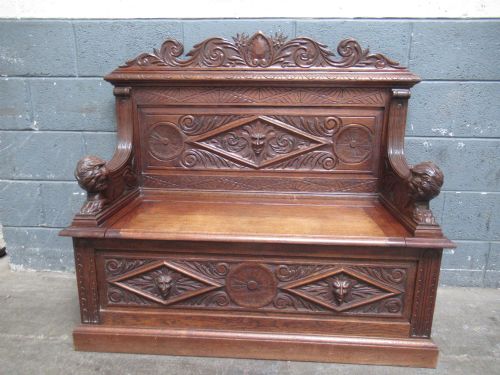
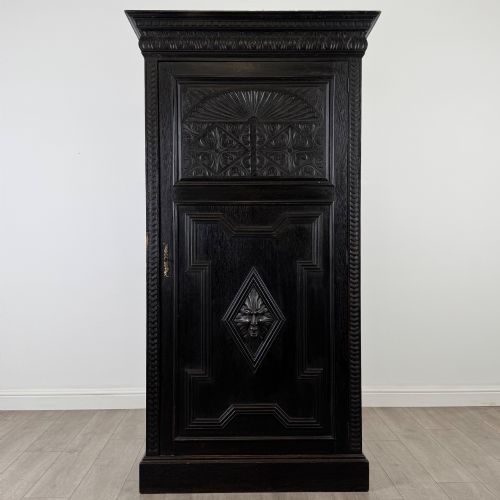
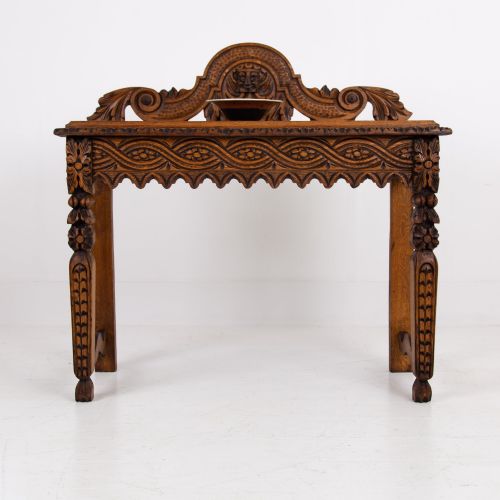
When you search for green man carved oak, you find substantial nineteenth-century furniture dominated by foliate mask reliefs.
Green Man Carved Oak
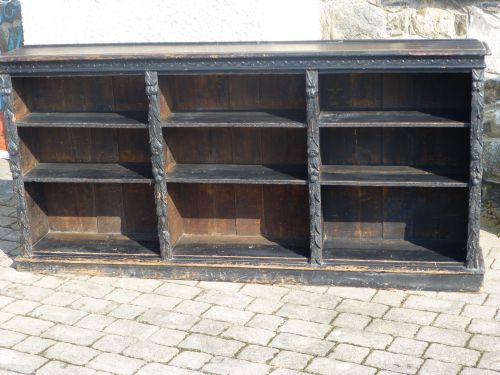
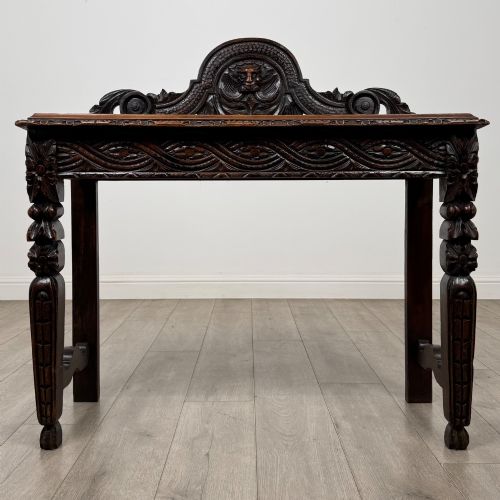
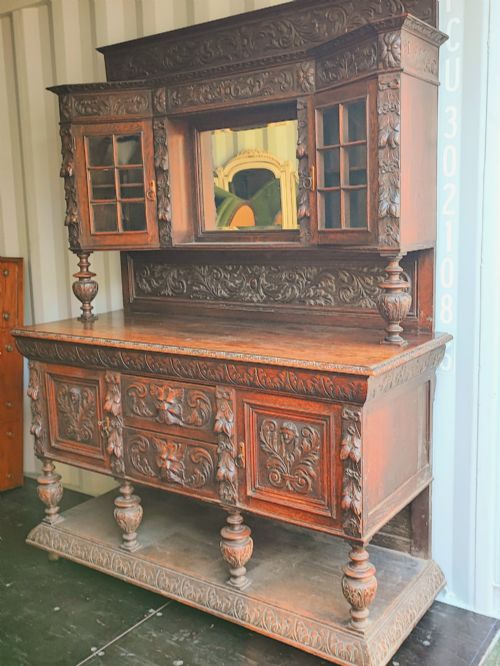
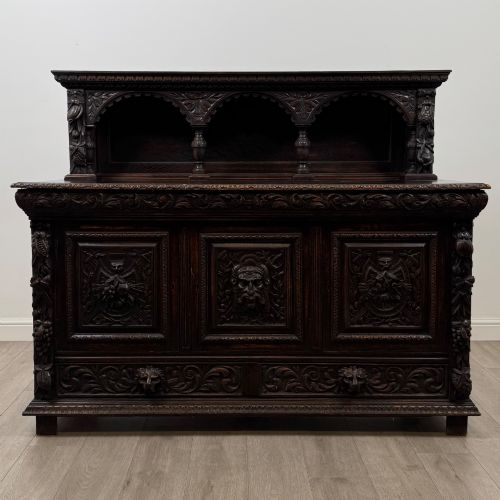
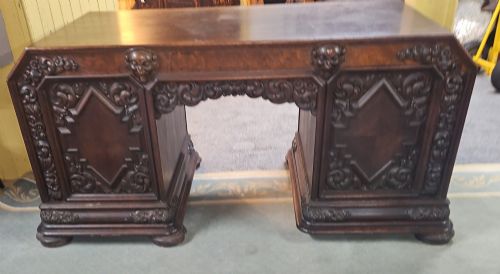
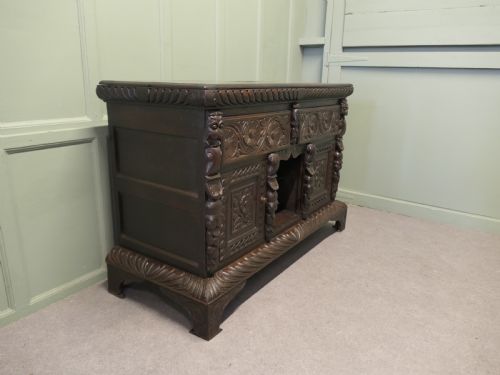
Green man carved oak items encompass heavy architectural furniture such as sideboards, bookcases, hall stands, and desks produced during the Victorian period. These pieces feature distinct anthropomorphic foliage masks where human faces merge with leaves, vines, or branches.
The majority of surviving examples date from the nineteenth century, particularly the later decades when Gothic Revival and Renaissance Revival tastes revived sixteenth-century decorative motifs. Buyers most frequently encounter hall benches, writing desks, and side tables adorned with these deep relief carvings.
How they were made
Cabinetmakers utilised solid oak and ebonised oak as the primary timber, allowing deep chiselling and undercut foliage without splintering. Secondary materials such as brass fittings, mirrored glass, and leather writing inserts frequently accompany the heavy woodwork.
Carpenters employed traditional mortise and tenon joinery to support the substantial weight of large bookcases, sideboards, and partner desks. Relief carving was executed by hand directly into the structural panels or applied as distinct decorative mouldings.
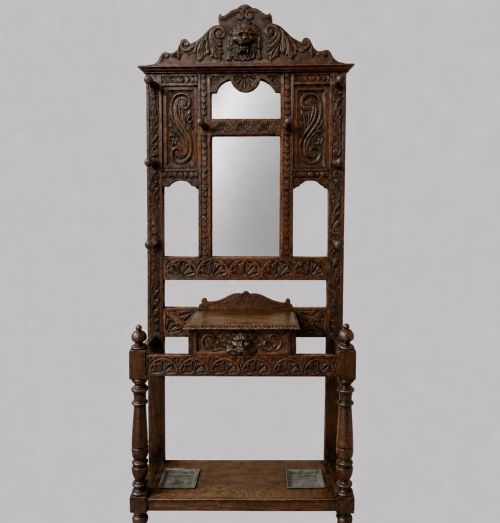
Some nineteenth-century hall stands cleverly combine green man masks with brass umbrella drip trays and carved rabbits.
What varies in quality
Proportion and architectural integrity dictate the standing of a piece. Finer items integrate the mask motifs naturally into the structural design of desks and sideboards rather than applying heavy ornamentation as an afterthought.
Winterhalder and Hofmeier
The Green Man Carved Oak Glossary
- Grotesque
- A style of decorative art characterised by fantastical combinations of human and animal forms intertwined with foliage. In these pieces, the term specifically describes the elaborate facial masks.
- Gothic Revival
- An architectural and decorative movement drawing inspiration from medieval design. This aesthetic heavily influenced nineteenth-century cabinetmakers.
- Foliate
- Consisting of or decorated with leaves or leaflike motifs. It describes the natural elements surrounding the central face carvings.
- Partners Desk
- A large double-sided writing table designed for two people to work opposite one another. These frequently feature carved masks on the pedestals.
- Mule Chest
- A traditional storage chest featuring one or more drawers at the base beneath the main compartment. Surviving examples sometimes display carved mask panels.
Green Man Carved Oak: Frequently Asked Questions
What is a green man carving?
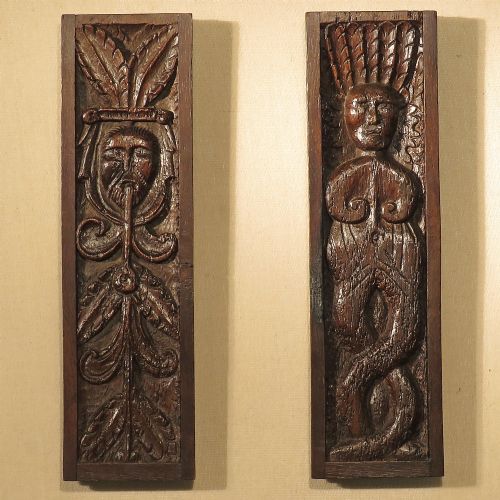
A green man carving depicts a human face emerging from or sprouting foliage, symbolising rebirth and the cycle of growth.
Cabinetmakers integrated these masks into panelled furniture, particularly during the nineteenth-century revival periods.
How do I care for carved oak?
Solid oak furniture requires stable indoor humidity and minimal direct sunlight to prevent the timber from splitting.
Regular dusting with a dry cloth preserves the intricate recesses of the foliate mask carvings without building up wax.
Are these pieces strictly Victorian?
While the vast majority date from the nineteenth-century Gothic Revival, the decorative motif originates from earlier architectural traditions.
Sixteenth-century panels occasionally appear, though nineteenth-century reinterpretations dominate the marketplace.
Where were these pieces used originally?
Heavy sideboards, hall stands, and benches furnished the grand reception rooms and entrance halls of large Victorian residences.
Partner desks and bookcases served private libraries and studies where imposing woodwork projected authority.