

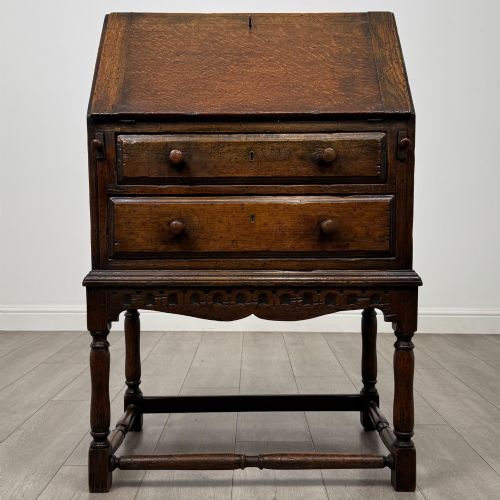

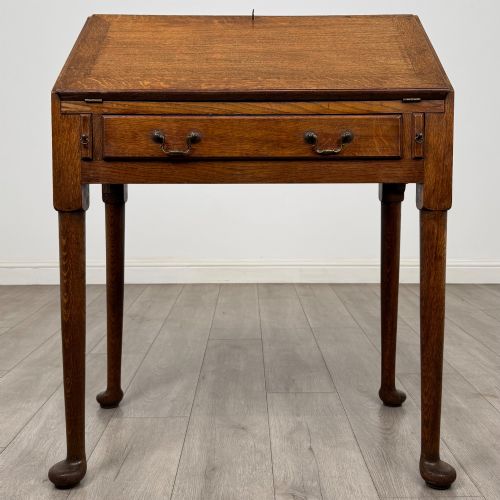
Antique Oak Drop Front
These antique oak drop front pieces combine a practical writing surface with concealed compartments, making them a functional choice for everyday study or writing.
Antique Oak Drop Front
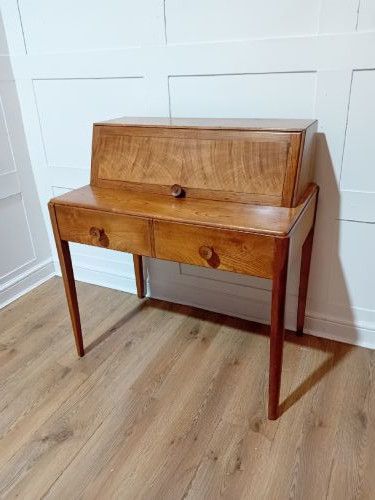
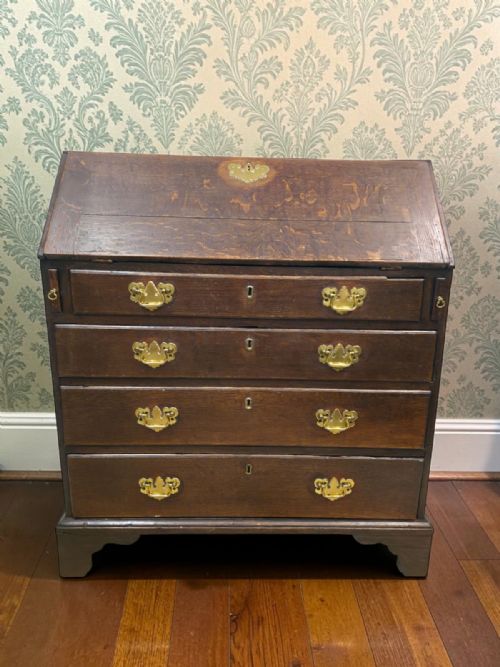
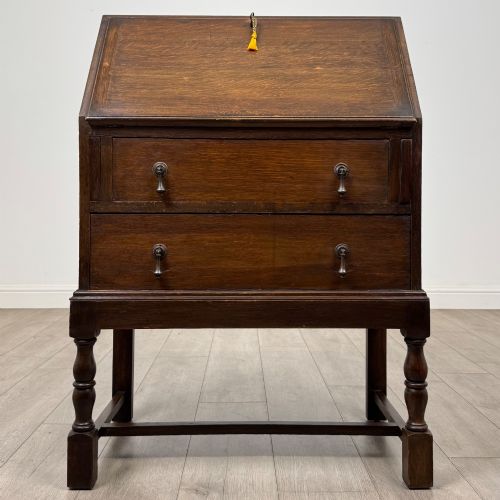
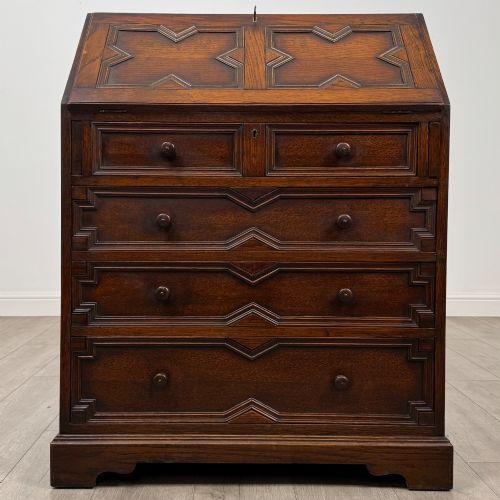
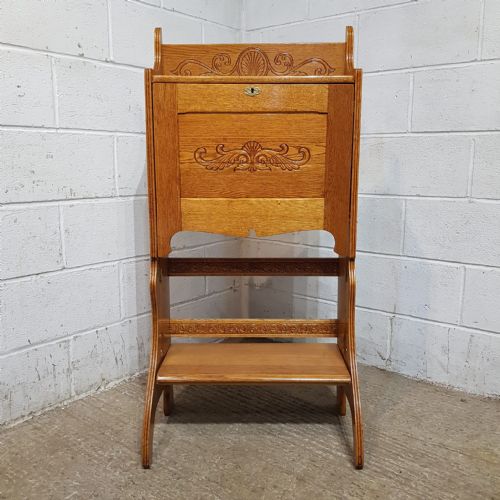
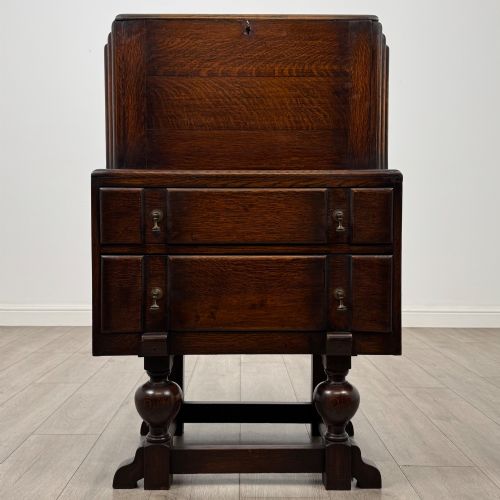
An antique oak drop front desk or bureau serves as a compact writing station featuring a hinged flap that lowers to create a desktop. These pieces range from early provincial examples to later Edwardian revivals and twentieth-century interpretations.
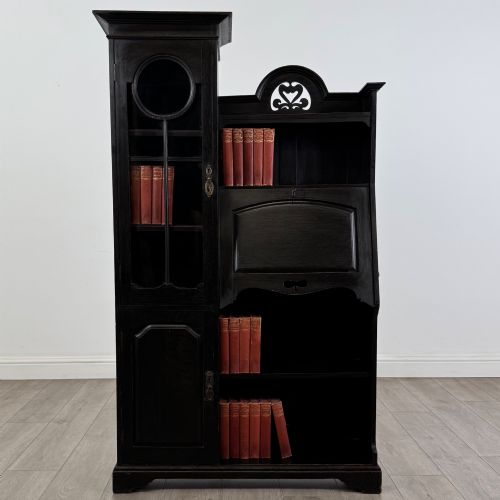
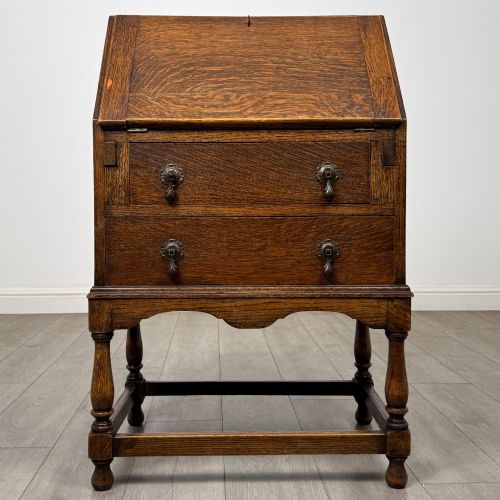
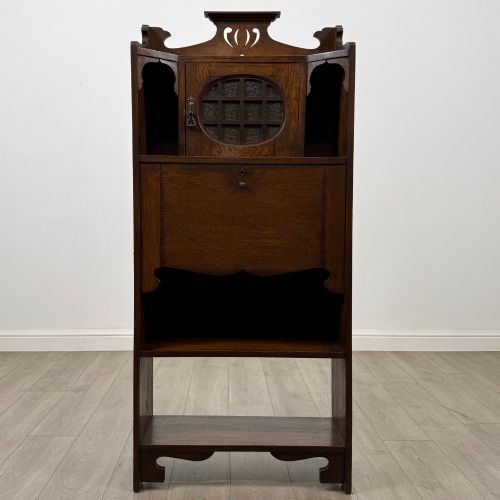
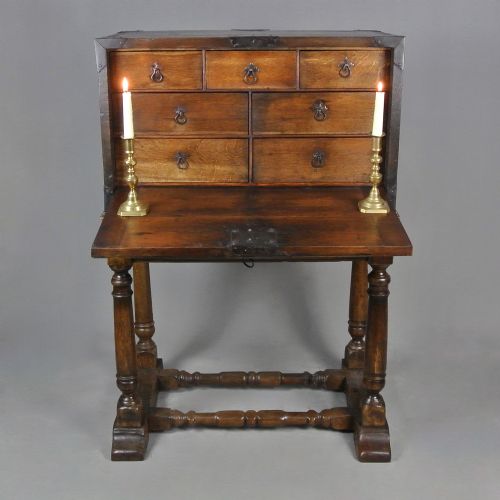
The selection here encompasses various forms including standard bureaux, bureau bookcases with upper shelving, and smaller fall front writing desks. Oak is the primary timber across the periods, appearing alongside related forms such as strong boxes and secretaire chests.
Origins span multiple centuries, with pieces originating from the seventeenth, eighteenth, nineteenth, and twentieth centuries. Buyers frequently encounter Edwardian revivals alongside Georgian originals and Arts and Crafts pieces.
How they were made
Cabinet makers constructed these pieces primarily using solid oak timber, frequently applying brass hinges, handles, and escutcheons to secure the drop front and drawers. Secondary materials such as glass, iron, and leather appear in specific forms like glazed bookcases and writing surfaces.
Joinery techniques ranged from vernacular framing on seventeenth-century pieces to refined dovetailing on eighteenth-century drawers and carved ornamentation on Jacobean and Arts and Crafts revivals. Surfaces display natural grain variations, sometimes enhanced with ebonised details or golden finishes.
Object types span bureaux, bureau bookcases, fall front writing desks, and related oak chests of drawers.
What varies in quality
The sophistication of the internal compartment arrangement distinguishes standard production from finer examples. Elaborate pigeonholes, small drawers, and secret compartments indicate higher workshop investment.
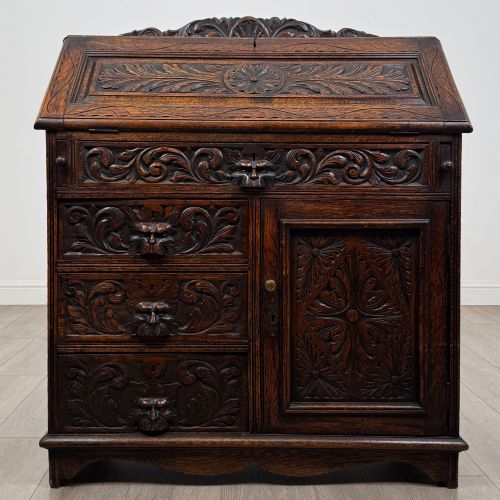
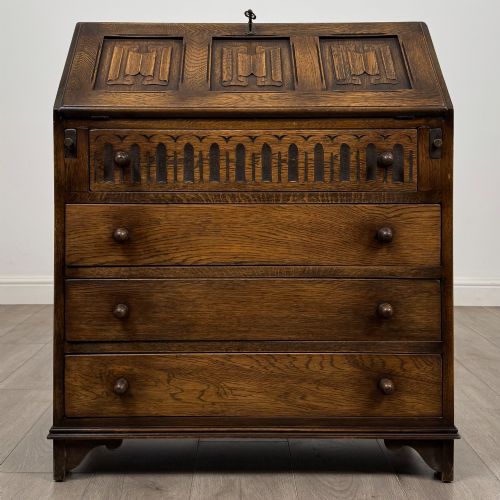
Carving depth and execution separate vernacular furniture from skilled cabinet work. Crisp linenfold, green man motifs, or geometric panelling reflect the maker's hand, while the integration of original brass hardware preserves historical integrity.
Arthur Basil Reynolds·Stanley Webb Davies·Robert Mouseman Thompson·Harris Lebus·Larkin
The Antique Oak Drop Front Glossary
- Bureau
- A writing desk with a sloping hinged lid that covers compartments and small drawers. This form evolved significantly from the seventeenth century onward.
- Fall front
- A hinged panel that drops from a vertical position to form a horizontal writing surface. It conceals the interior pigeonholes when closed.
- Linenfold
- A style of carved wooden panelling resembling folded linen cloth. This motif appears frequently on revival pieces from the Edwardian period.
- Parquetry
- Geometric mosaic woodwork used for decorative veneer on surfaces. It demonstrates advanced woodworking skill on period pieces.
- Secretaire
- A piece of furniture containing a writing drawer or compartment disguised as a standard drawer. These often feature drop fronts or pull-out writing slabs.
Antique Oak Drop Front: Frequently Asked Questions
What is an antique oak drop front?
An antique oak drop front is a writing desk featuring a hinged writing surface that folds down for use. When closed, the sloping or vertical front conceals a fitted interior of drawers and pigeonholes.
These pieces were utilised for correspondence and document storage in homes and offices. They remain practical additions to modern studies and living spaces.
How do I date an oak bureau?
Dating relies on construction methods, hardware, and stylistic details. Seventeenth and eighteenth-century pieces often show hand-cut dovetails and vernacular framing, while Edwardian examples frequently draw on earlier revival styles.
Examining the internal timber, drawer construction, and brass fittings helps establish the period of manufacture. Comparing the piece to dated examples provides further clarity.
Were these desks used for writing?
These desks served primarily for correspondence, bookkeeping, and record keeping. The drop front provided a stable horizontal surface for quill and paper.
Inside, the compartments held stationery, inkwells, and important documents. Today, they function well as compact laptop desks or writing tables.
How do I care for antique oak furniture?
Maintaining antique oak involves keeping the timber away from direct heat sources and sudden humidity changes. Regular dusting with a soft cloth preserves the finish.
Occasional application of appropriate wax feeds the wood without building up residue. Avoid harsh chemical cleaners that can strip the historic surface.