
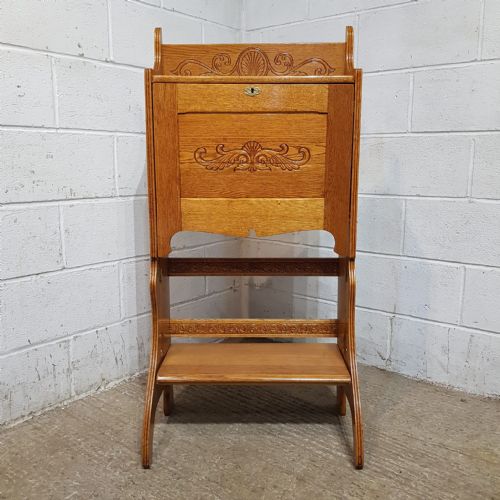


Carved Oak Drop Front
These carved oak drop front pieces combine practical writing surfaces with robust timber construction, offering enduring utility for the home.
Carved Oak Drop Front
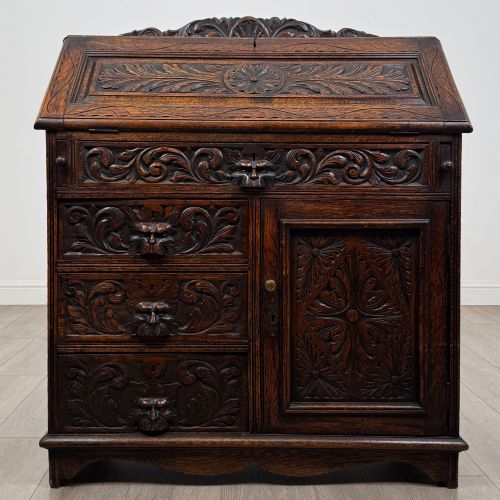
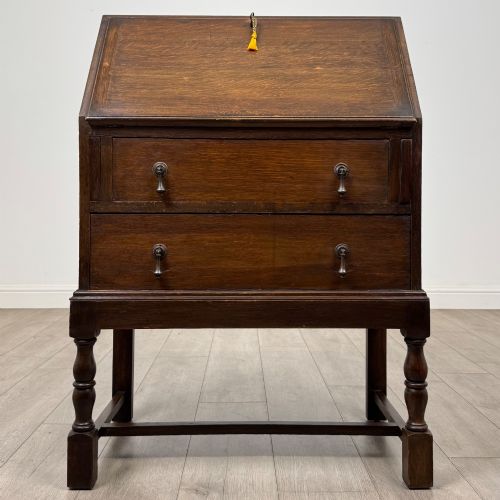
When you search for carved oak drop front furniture, you encounter a selection of writing bureaux, desks, and cabinets designed with folding writing flaps. These items span multiple periods, ranging from the seventeenth century through to the mid-twentieth century.
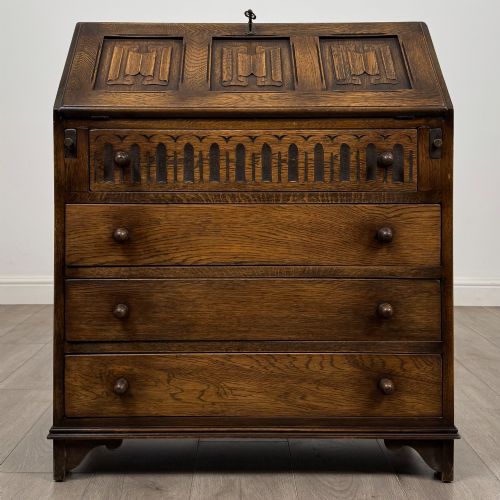
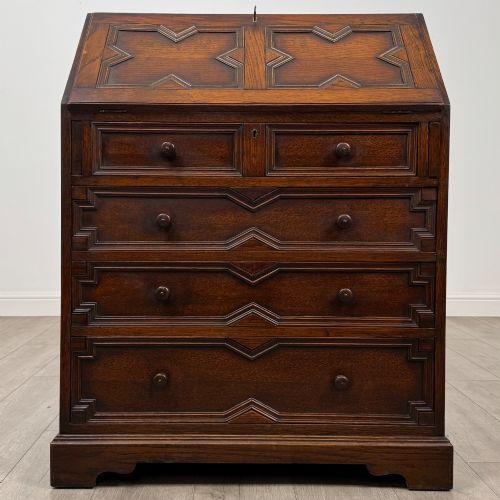
The versions most commonly met on this page include Edwardian and 1920s writing bureaux featuring decorative linenfold or Jacobean revival carving. They frequently combine fitted internal compartments with external drawers for storage.
Originating as functional writing furniture, these pieces bridge the gap between heavy storage units and accessible working desks. Their enduring appeal lies in the combination of solid timber construction and practical drop front mechanisms.
What varies in quality
The standard of carving dictates much of the visual appeal, moving from stiff, mechanical nineteenth-century machine work to crisp, deep hand-chiselled details on earlier seventeenth-century pieces.
Internal complexity also separates standard items from superior examples, with fitted pigeonholes, secret compartments, and moving interior elements marking out better-executed desks.
Timber selection plays a crucial role, distinguishing uniform modern oak boards from richly figured burr pollard oak or vernacular planks showing deep natural grain.
A solitary nineteenth-century coal bucket found its way into the archive amongst all the writing desks.
Robert Mouseman Thompson
The Carved Oak Drop Front Glossary
- Bureau
- A writing desk equipped with a sloping flap that folds down to reveal a fitted interior of pigeonholes and small drawers. This form became popular for domestic administration from the seventeenth century onwards.
- Drop front
- A hinged panel that lowers to a horizontal position to serve as a writing surface. It conceals internal compartments when closed.
- Linenfold
- A style of relief carving imitating folded parchment or linen cloth. It appears frequently on panels of Tudor revival and Edwardian furniture.
- Secretaire
- A cabinet or bookcase incorporating a pull-out or drop-down writing drawer. It combines the display function of upper shelving with enclosed desk space.
Carved Oak Drop Front: Frequently Asked Questions
What is a drop front desk?
A drop front desk is a piece of furniture featuring a hinged writing flap that opens forward to create a horizontal desk surface. When closed, the flap conceals drawers and pigeonholes.
These desks were designed to keep correspondence and writing materials neatly tucked away when not in use, making them practical for smaller domestic spaces.
How do I date an oak bureau?
Dating an oak bureau involves examining the style of the carving, the method of drawer construction, and the type of secondary timbers used inside. Seventeenth-century pieces typically show vernacular hand-tooling, whilst Edwardian and 1920s examples often display revival styles like Jacobean or linenfold.
Hardware such as brass handles and hinges also provide strong clues, as manufacturing techniques shifted significantly from hand-cast brasses to stamped metal components over the centuries.
What is the difference between a bureau and a secretaire?
A traditional bureau is built specifically around a sloping or vertical drop front flap that opens to reveal an internal writing desk. A secretaire usually refers to a drawer within a larger bookcase or chest that pulls out and folds down to serve the same purpose.
Both forms achieve the same practical aim of providing a concealed writing space within a storage cabinet.
Where should I place an oak bureau in my home?
An oak bureau suits studies, living rooms, and bedrooms where its compact footprint and enclosed storage can be fully utilised. The drop front provides an instant workspace that shuts away clutter at the end of the day.
Keep solid oak furniture away from direct heat sources and strong sunlight to prevent the timber from drying out or warping over time.