
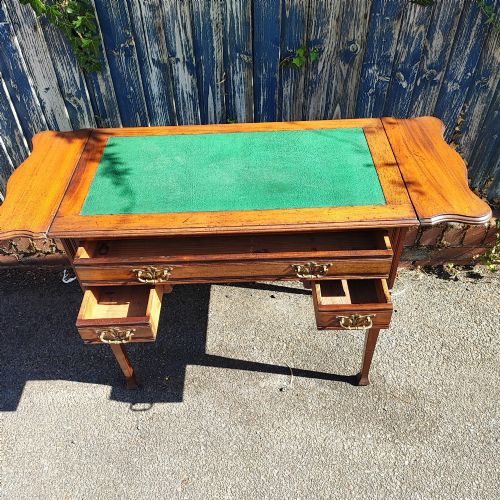
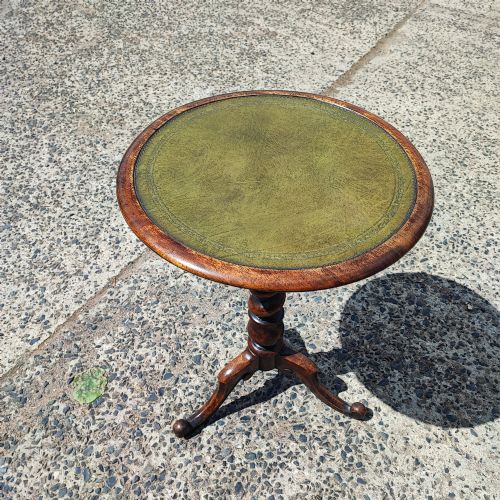
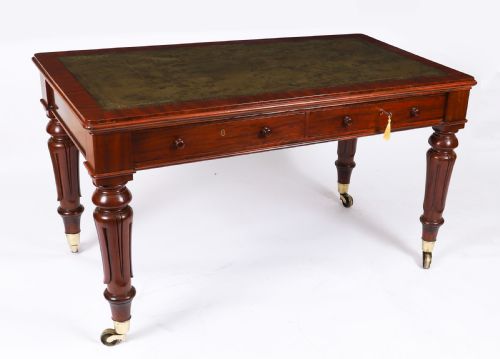
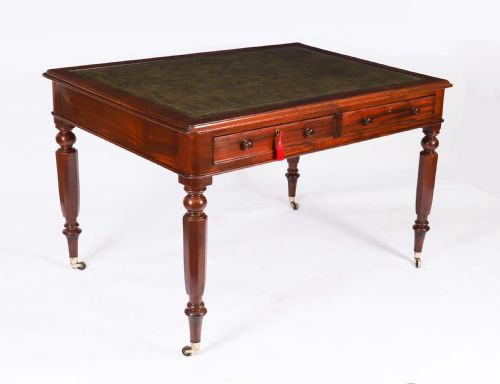


Green Leather Side Table
Green leather side tables combine practical surfaces with coloured hide in compact forms suited to sitting areas.
Green Leather Side Table
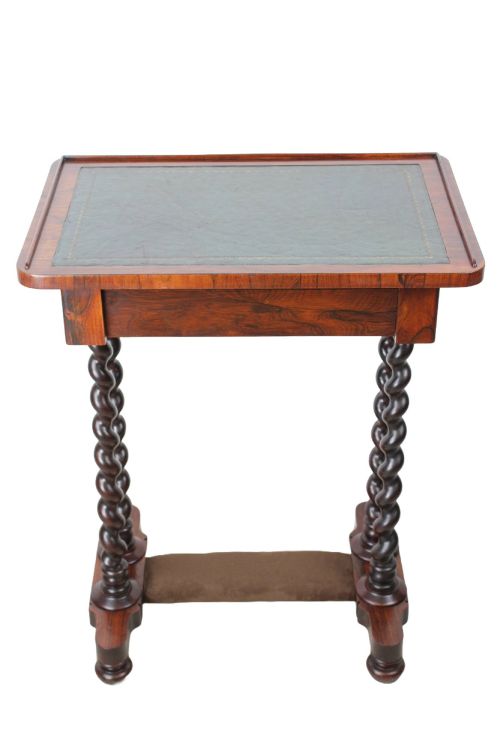
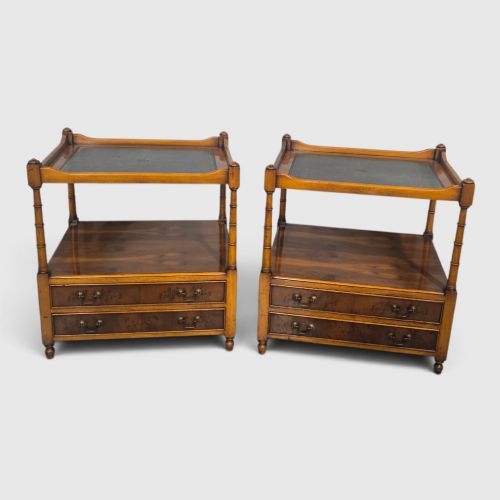
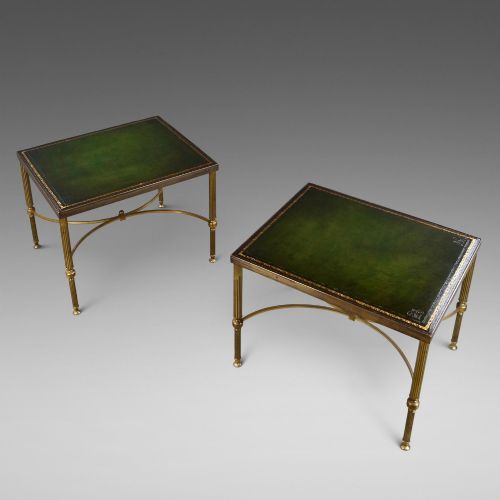
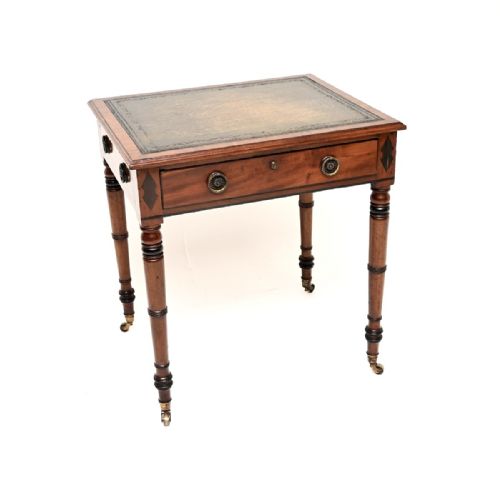
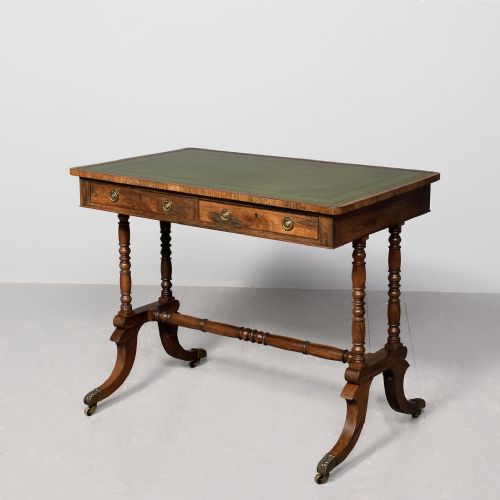
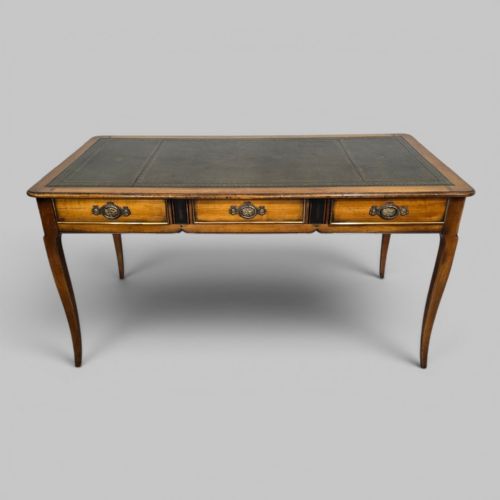
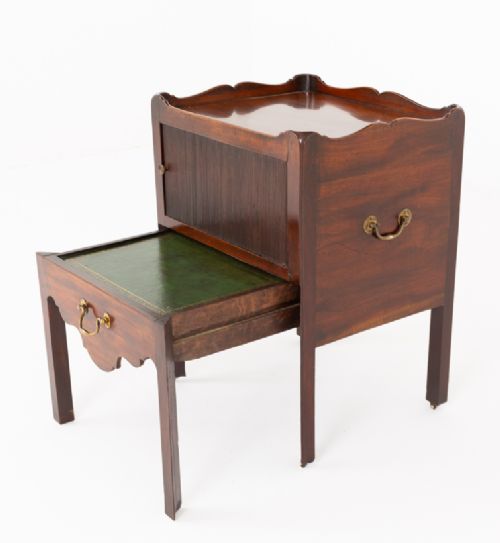
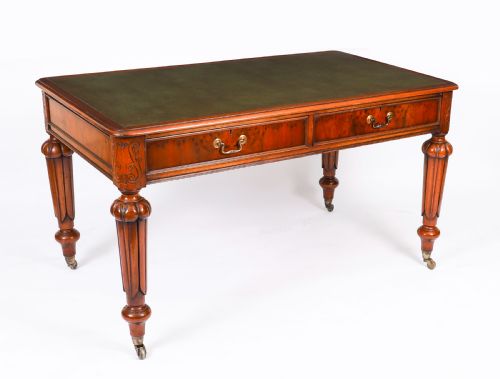
A green leather side table brings together a timber frame and a durable hide writing or display surface. When you search for a green leather side table, you encounter pieces designed for versatile placement beside chairs or within studies.
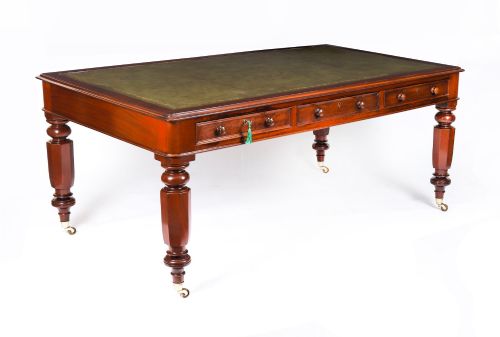
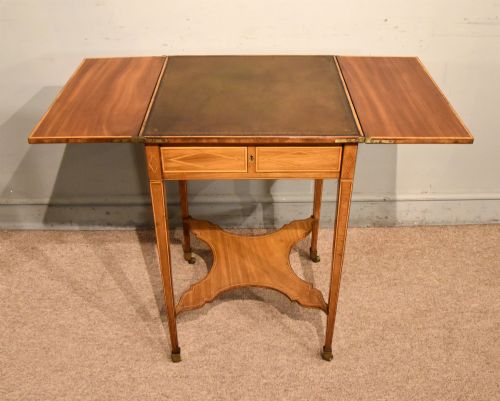
The selections span the nineteenth century and the Edwardian period, drawing on Victorian, Regency, and Georgian design influences. Alongside dedicated side tables, you find writing tables, lamp tables, and small desks sharing leather top surfaces.
Timbers such as mahogany, oak, walnut, and rosewood form the structural framework, occasionally paired with brass details. The archive records similar early twentieth century examples featuring leather and brass construction.
How they were made
Cabinet makers utilised solid and veneered timbers including mahogany, oak, walnut, burr walnut, and rosewood to construct the frames and pedestals. These woods were shaped, carved, or inlaid with lighter species to achieve specific period aesthetics.
Writing surfaces incorporated panels of leather, frequently coloured green and finished with gilt tooling around the perimeter. Brass fixtures such as castors, handles, and gallery rails appeared on selected pieces to add functional and decorative contrast.
Green Leather Side Table Retail Price Guide 2026
Typical asking prices for green leather side table among the pieces listed under this phrase on Sellingantiques today, from the lower quarter to the upper quarter. They describe what is for sale here now, not the wider market.
Listings span the nineteenth and early twentieth centuries, featuring mahogany, oak, walnut, rosewood, and leather.
What varies in quality
The refinement of the timber selection dictates the visual impact of each piece, distinguishing straight-grained mahogany or figured burr walnut from simpler utility woods. Subtle details such as fine crossbanding and precise inlay work elevate the standard of cabinet making.
The handling of the leather top, particularly the crispness of the blind or gold tooling and the thickness of the hide, separates standard items from finer productions. Integrated structural elements like dovetailed drawer construction and original brass hardware further define the caliber of the piece.
T Wilson
The Green Leather Side Table Glossary
- Partners desk
- A large double-sided desk designed for two people to work opposite one another, frequently fitted with cupboards or drawers on both flanks.
- Drum table
- A circular library table containing a revolving or stationary top surrounded by frieze drawers, often raised on a central pillar and tripod base.
- Lowboy
- A small side table or dressing table with one or more rows of drawers beneath the working surface, originating in the early eighteenth century.
- Crossbanding
- A strip of veneer laid perpendicularly to the grain of the surface it surrounds, creating a decorative border on table tops and drawer fronts.
- Gilt tooling
- Impressed gold leaf patterns applied to the margins of leather desk and table inserts to frame the writing area.
Green Leather Side Table: Frequently Asked Questions
What periods do these tables represent?
The pieces span the eighteenth, nineteenth, and early twentieth centuries, encompassing Georgian, Regency, Victorian, and Edwardian eras.
Design characteristics shift from earlier classical proportions toward later revival styles and practical domestic forms.
How were these tables used originally?
They served as functional surfaces for writing, reading, and holding lamps within studies, libraries, and drawing rooms.
Larger variants functioned as partners desks or centre library tables for professional and domestic correspondence.
What woods appear most often?
Mahogany forms the primary structure for many examples, accompanied by oak, walnut, burr walnut, and rosewood.
Inlaid details incorporate lighter timbers like satinwood and yew to accentuate the edges and drawer fronts.
Are the leather tops original?
Some pieces retain their early hide inserts with period tooling, while others feature replacement leather applied during conservation.
Green leather remains a characteristic finish found on both antique examples and early twentieth century variants.