

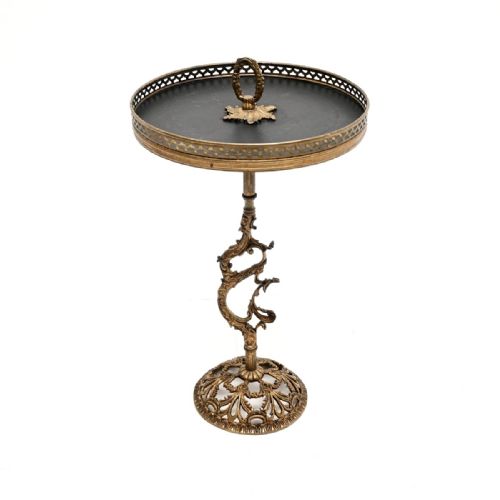
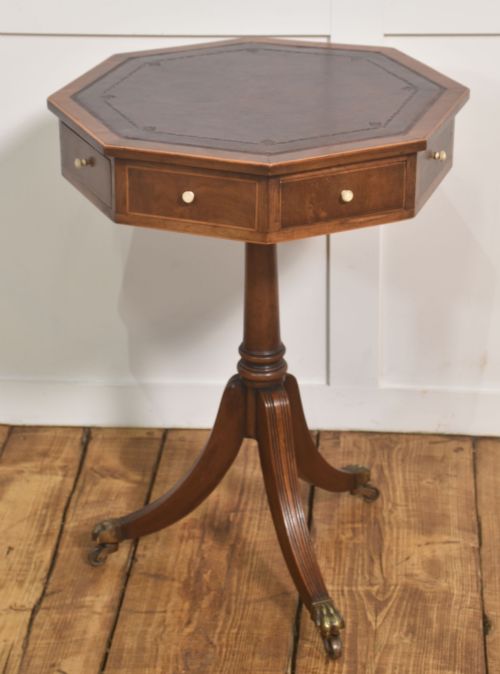
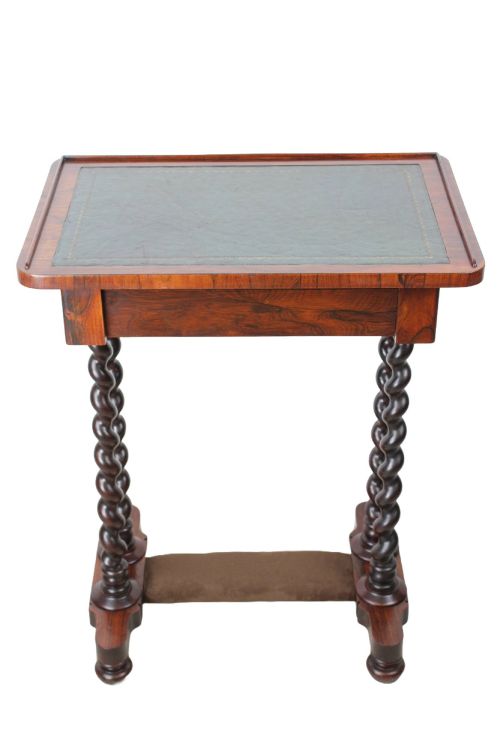
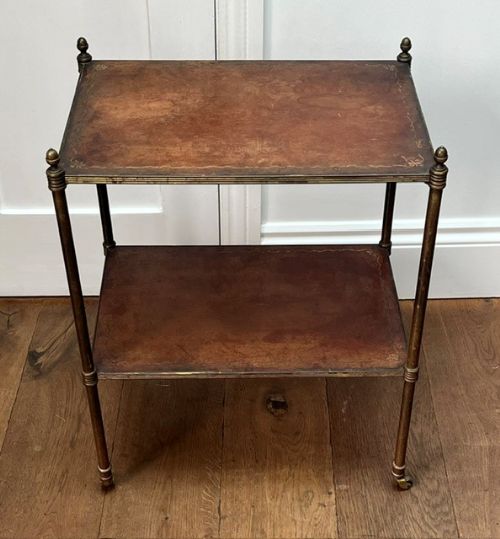


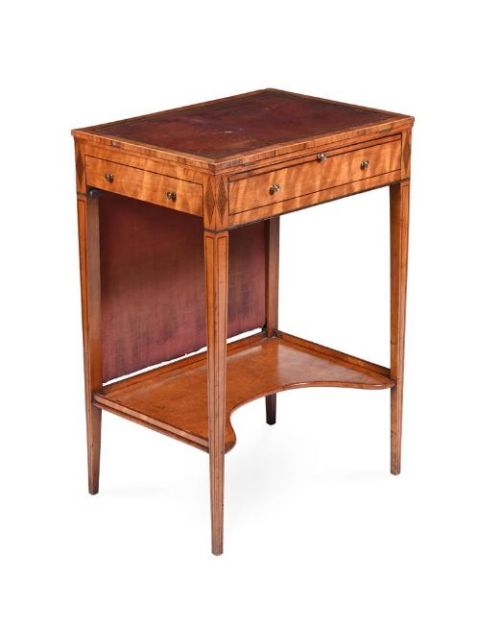


Leather Top Occasional Table
A leather top occasional table brings a finished writing surface to a corner, drawing together mahogany, rosewood, and tooled hides.
Leather Top Occasional Table
A leather top occasional table serves domestic spaces as a compact writing desk, lamp stand, or central display piece. The selections gathered here span the eighteenth century through to the early decades of the twentieth, encompassing compact wine tables and larger drum designs.
The materials paired with the leather include rich timbers such as mahogany, rosewood, walnut, and satinwood, occasionally accented by brass mounts or bamboo frames. Forms range from simple tripod bases and two-tier étagères to octagonal drum tables and complex games surfaces.
Construction and materials
Cabinetmakers constructed these pieces using dense hardwoods like mahogany and rosewood for structural stability, frequently applying veneers of satinwood or walnut to visible surfaces. Leather inserts, often finished with blind or gilt tooling, were secured directly into recessed wooden tops to create a durable writing surface.
Joinery techniques varied from traditional dovetailing in drawers to turned columns and tripod legs supported by brass feet or castors. Finer examples incorporate decorative elements such as marquetry, lacquered brass frames, or gilded details applied to the timber structure.
Leather Top Occasional Table Retail Price Guide 2026
Typical asking prices for leather top occasional table among the pieces listed under this phrase on Sellingantiques today, from the lower quarter to the upper quarter. They describe what is for sale here now, not the wider market.
One early twentieth-century table cleverly disguises itself as a bound stack of leather books complete with an inset silk-work top.
Distinctions in craftsmanship
Quality rests in the selection of timber grains and the precision of the joinery connecting the legs and top. Superior examples display crisp, hand-tooled detailing on the leather and well-figured mahogany or rosewood veneers that have aged evenly over time.
Lesser pieces may exhibit utilitarian secondary woods or simpler turned elements with less attention to proportion. The crispness of carved details, the weight of brass mounts, and the integrity of the original leather insert separate standard production from exceptional workshops.
Liberty & Co.·Willmington & Cope·Whytock and Reid
The Leather Top Occasional Table Glossary
- Drum table
- A circular library or occasional table with a deep top resembling a drum, frequently fitted with alternating drawers around the circumference.
- Tripod table
- A small freestanding table supported by a central pillar resting on three spreading feet, common in eighteenth and nineteenth-century designs.
- Étages
- A set of open shelves or a multi-tiered occasional table designed for display, sometimes incorporating brass frames and leather surfaces.
- Marquetry
- Decorative patterns formed by the insertion of contrasting pieces of wood, veneer, or shell into a solid timber background.
- Tooled leather
- Leather decorated by impressing heated metal tools into the surface to create blind or gold-leaf patterns around the border.
Leather Top Occasional Table: Frequently Asked Questions
How are leather top occasional tables used?
These tables function well beside armchairs as lamp or wine stands, or serve as compact writing desks in smaller rooms.
Their sturdy surfaces accommodate daily tasks while the timber frames introduce traditional character to a room.
How do I care for the leather top?
Keep the leather clean with a dry or very slightly damp cloth, avoiding harsh chemical cleaners that strip the original finish.
Applying occasional leather balm helps preserve the suppleness and protects any gold tooling applied to the surface.
How can I tell Georgian pieces apart from later revivals?
Georgian furniture displays construction methods and timber ageing consistent with the eighteenth century, including hand-cut joints and native secondary woods.
Revival pieces produced in later decades often imitate these styles with slightly different internal framing and standardised hardware.
Are these tables sturdy enough for daily use?
Most examples are constructed from dense hardwoods like mahogany or rosewood, providing a stable frame for everyday placement.
Checking the stability of the central column or leg joints ensures the piece handles normal weight without wobble.