
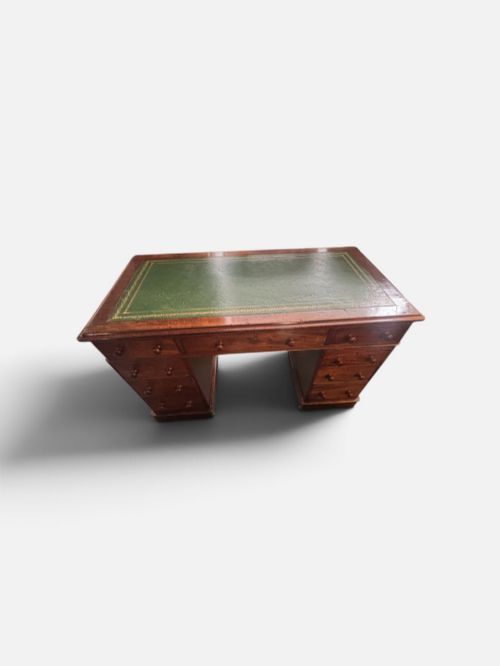
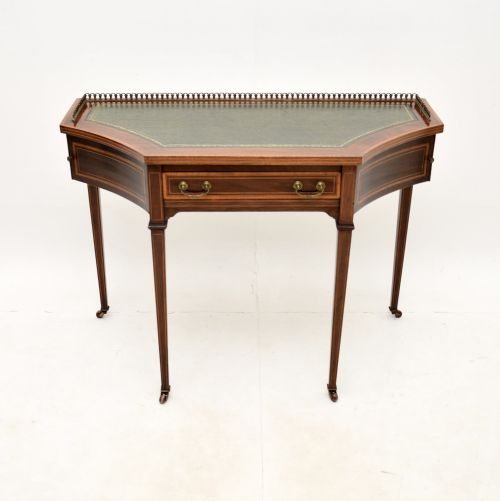
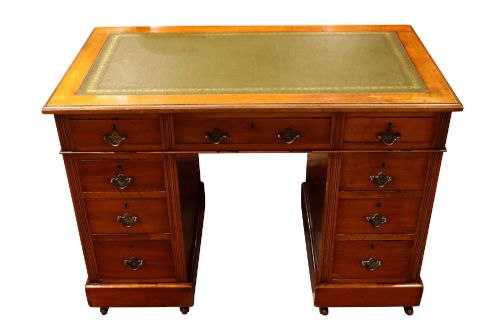
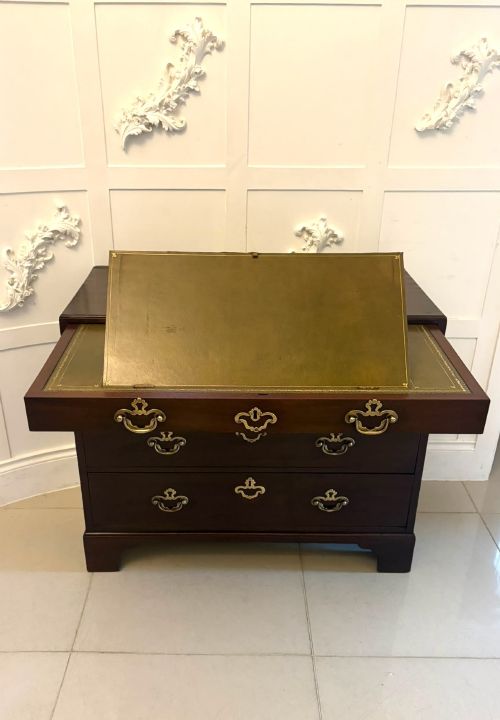
Green Leather Furniture
Green leather furniture brings rich colour and traditional utility to a study, built from solid timbers and finished by hand.
Green Leather Furniture
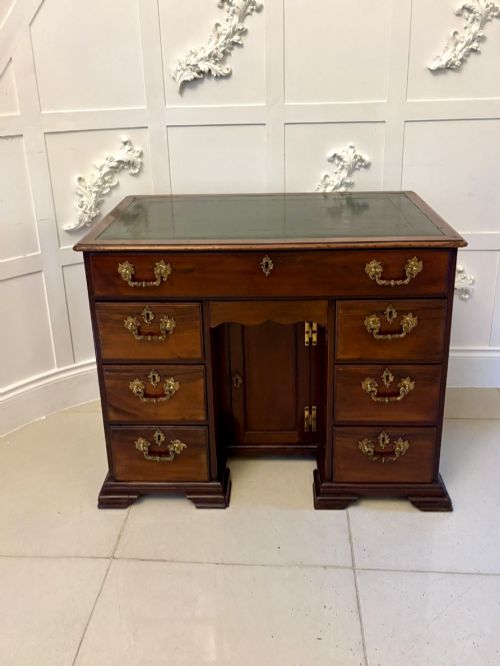
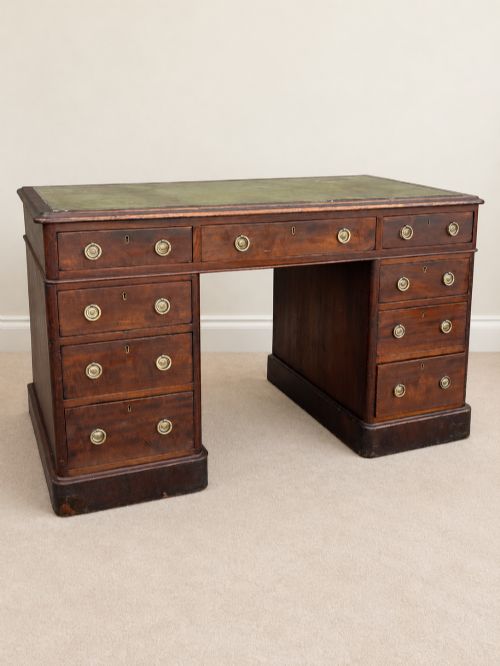
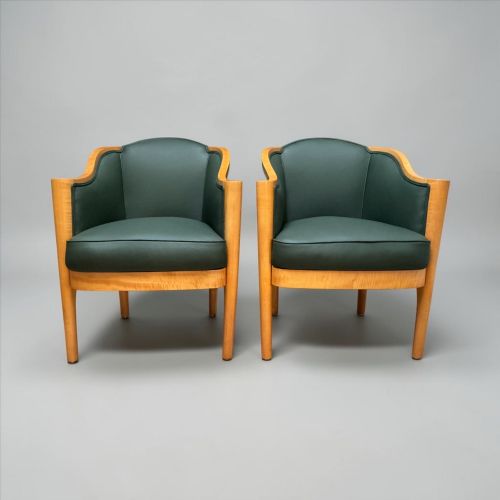
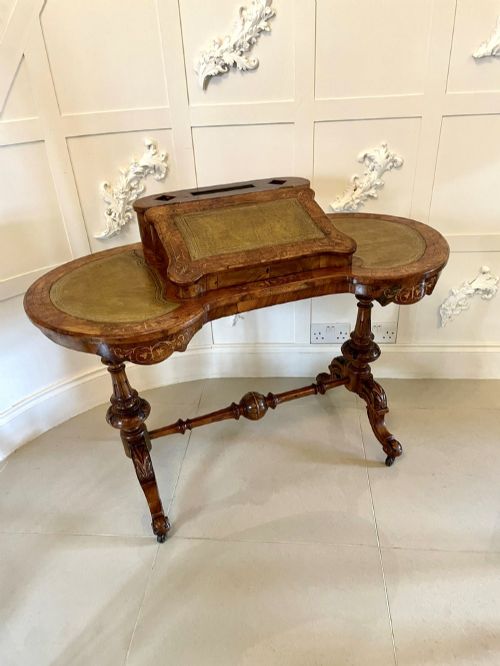
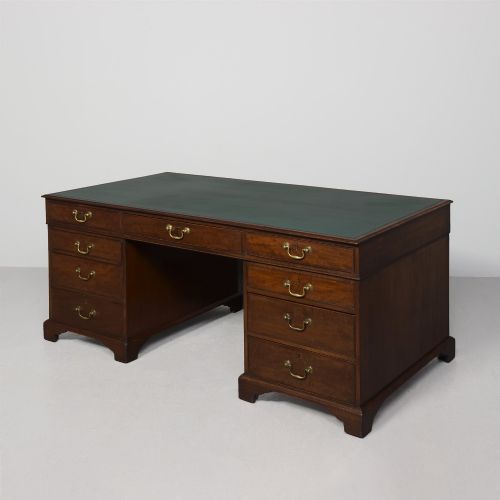
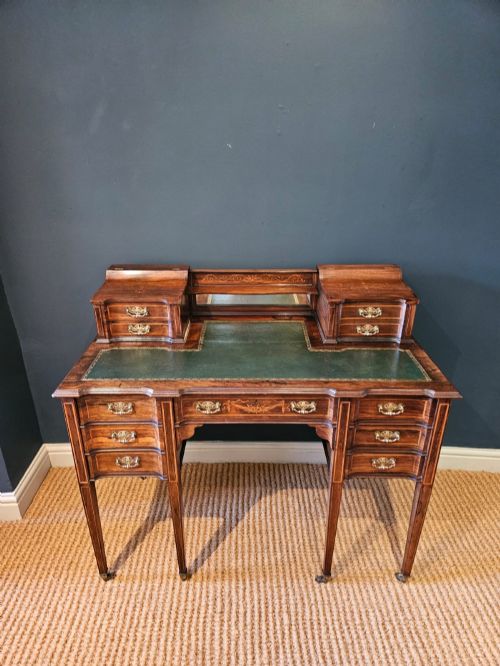
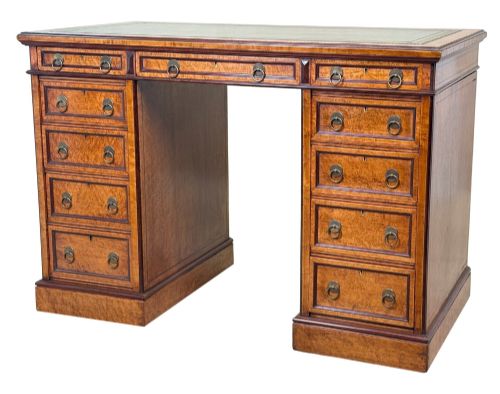
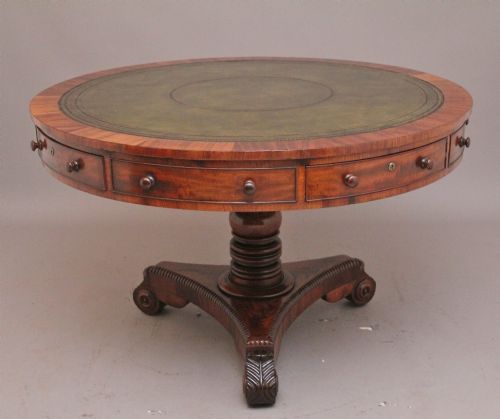
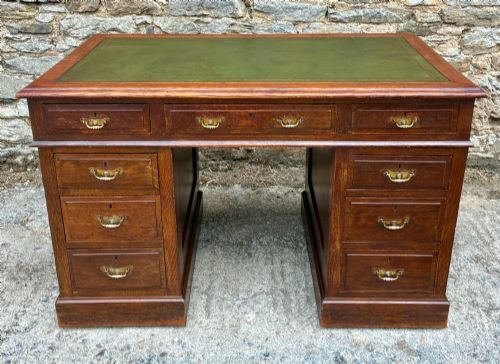
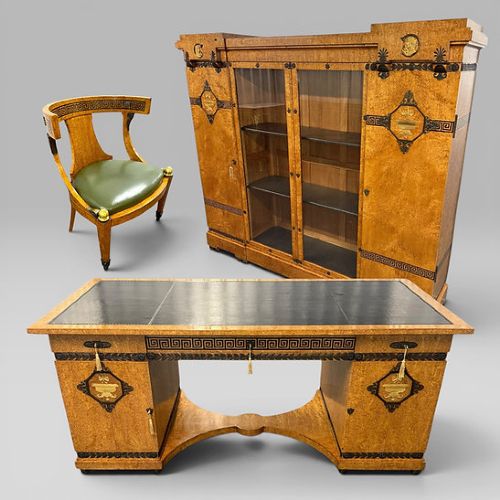
Green leather furniture encompasses utilitarian writing surfaces and seating designed for study and office spaces across several historical periods. Pieces range from small Edwardian writing tables and Davenport desks to large Victorian partners desks and French neoclassical office sets.
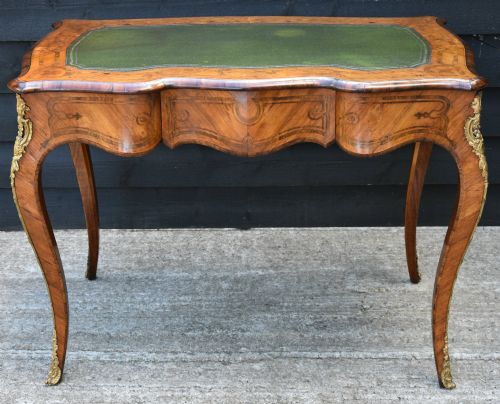
Desks, armchairs, and pedestal desks dominate the available selection, often incorporating inset hide writing surfaces. Walnut, mahogany, and oak form the primary wooden structures supporting these leather inserts.
Origins stretch from George II and George III periods through the Regency, Victorian, and Edwardian eras. Makers utilised dense hardwoods combined with brass hardware and cane details to build functional furniture for libraries and estate offices.
Materials and construction
Makers constructed the carcases from mahogany, burr walnut, and oak, applying crossbanding and brass mounts for structural strength and decoration. Leather panels were typically glued and pinned into recessed desk surfaces.
Joinery involved traditional techniques such as dovetailing for drawer construction and mortise and tenon joints for frames. Cabinetmakers selected figured veneers for drawer fronts and tabletops to create striking visual contrast against the dark timber framing.
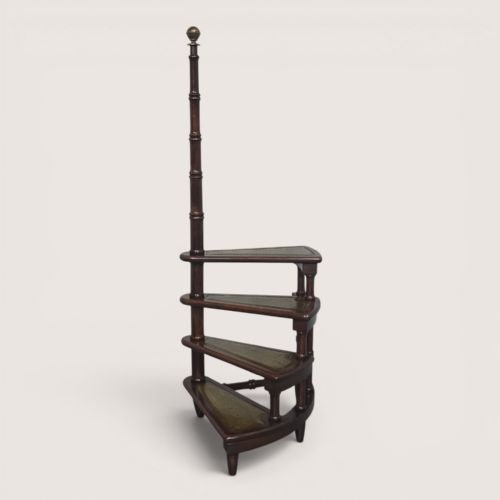
Metamorphic armchairs fold out into library steps, letting studious Victorians reach high shelves without leaving their seat.
Judging quality
Quality rests in the selection of timber veneers and the precision of the cabinet work, particularly around drawer joints and inlaid borders. Desks featuring finely figured burr walnut or flame mahogany sit above plain utilitarian examples.
The integrity of the leather writing surface and the retention of original brass handles and locks dictate the standing of a piece. Finer items exhibit crisp carving on chair arms and pedestals, executed by skilled hands rather than factory production.
Gillows·Mercier Frères·Bell Barn Furniture
The Green Leather Furniture Glossary
- Partners desk
- A large double-sided desk designed for two people to work opposite each other, featuring drawers and cupboards on both faces.
- Pedestal desk
- A freestanding desk comprising a top resting on two separate pedestals fitted with banks of drawers.
- Davenport
- A compact writing desk with a sloping leather-lined top above a set of side drawers.
- Crossbanding
- A decorative border of veneer laid around the edge of a tabletop or drawer front with the grain running at right angles to the central panel.
- Cartonnier
- A piece of furniture fitted with compartments or drawers designed to hold papers and documents.
Green Leather Furniture: Frequently Asked Questions
What is a partners desk?
A partners desk provides workspace on both sides, incorporating matching drawers and cupboards facing opposite directions for two users.
Cabinetmakers built these large tables for libraries and offices where colleagues sat facing one another.
How do I date a leather top desk?
Dating relies on the secondary timbers, drawer construction techniques, and the prevailing style of the hardware and woodwork.
Victorian and Edwardian pieces show machine assistance, whilst Georgian furniture employs hand-cut dovetails and solid primary woods.
Where were Davenport desks used?
Davenport desks served as compact writing stations in drawing rooms, bedrooms, and private studies where space was limited.
Their sloping tops provided a comfortable angle for correspondence while the side drawers held stationery.
What woods are typical for these desks?
Mahogany, burr walnut, and oak form the structural foundations for the vast majority of antique desks and tables.
Veneers of flame mahogany and figured walnut decorated the principal surfaces, contrasted by lighter satinwood inlay.