
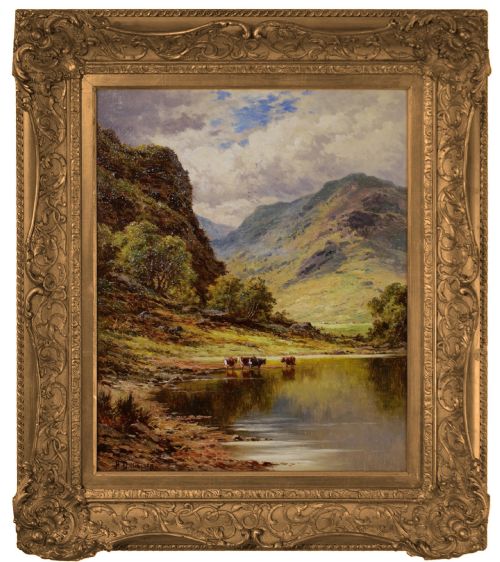


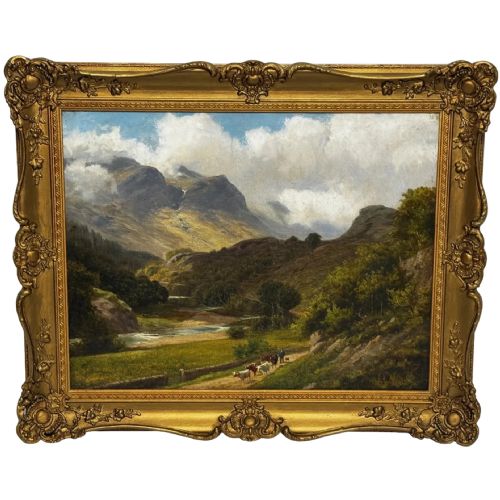


Green Lake Oil Painting
A green lake oil painting captures open water and shoreline in pigment, offering a quiet focal point for a wall.
Green Lake Oil Painting
A green lake oil painting depicts pastoral waters, mountain tarns, and rural estuaries rendered in oil pigment. The examples found here span the seventeenth century through the mid-nineteenth and twentieth centuries, taking the form of framed wall art and fine art landscape paintings.
Buyers encounter Victorian Scottish Highland scenes, French impressionist views, and Lake District compositions. These works range from intimate pastoral views to large framed mountain and lake vistas.
The subjects focus on natural bodies of water surrounded by trees, hills, and skies. Many carry signatures from recorded artists across Britain and France.
Materials and technique
These works are executed in oil paint upon canvas, often stretched over wood frames. Many pieces utilise gesso and giltwood or gilt wood frames to enclose the painted surface.
Artists applied pigment using traditional brushwork or impasto technique to build texture across the landscape. The combination of oil on canvas and carved wooden framing defines the physical structure of these works.
Landscape paintings on this page depict scenes from the Lake District, Scottish Highlands, and French waterways.
Assessing quality
Quality rests in the handling of light across the water and the depth achieved within the landscape. Superior works demonstrate confident brushwork and balanced composition that anchor the viewer within the scene.
The integrity of the canvas and the execution of the original giltwood frame contribute to the overall standing of a piece. Finer examples retain their original surface textures and pigment stability without heavy later restoration.
Henry H. Parker·Helen Layfield Bradley·Gabriel Dauchot·Frank Hider·Joseph Farrington·Stephen Enoch Hogley·Benjamin Williams Leader·Antoine Bouvard·William Mellor·Martin Pierre Denis
The Green Lake Oil Painting Glossary
- Oil on Canvas
- Pigment mixed with drying oil applied to a woven fabric support. This method allows for rich blending and varied surface textures.
- Impasto
- Paint laid on an area of the surface in thick layers, standing out visibly from the canvas. This technique adds tactile dimension to water and foliage.
- Giltwood
- Wood carved and covered with a thin layer of gold leaf or gold paint. Frames finished in this manner complement traditional landscape paintings.
- Impressionist
- A style involving thin brush strokes and open composition emphasising light. Such works prioritize the accurate recording of visual illumination.
Green Lake Oil Painting: Frequently Asked Questions
What periods do these lake paintings come from?
The listings encompass works from the seventeenth, eighteenth, nineteenth, and twentieth centuries. Victorian and mid-century examples appear frequently alongside earlier periods.
Each era brings distinct framing styles and handling of landscape subjects.
How should I hang an oil painting?
Select a wall away from direct sunlight and damp conditions to protect the canvas and wood frame. Secure fixings suited to the weight of the giltwood or wood frame.
Ensure the painting hangs at eye level for optimal viewing of the landscape details.
Are these paintings signed by artists?
Many works bear signatures or attributed provenance from listed painters, while others remain unsigned antique pieces. Documentation often links specific views to known topographical locations.
Signatures add historical context to the canvas.
What framing comes with the paintings?
The majority of pieces arrive within original or period-appropriate wood and giltwood frames. These enclosures protect the edges of the canvas and complement the aesthetic of the artwork.
Frame construction varies from ornate moulded gilt to simpler wooden profiles.