

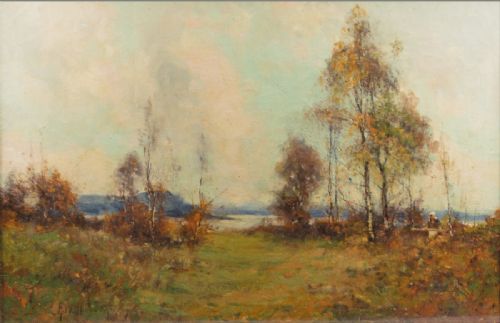


Green Highland Landscape Painting
These green highland landscape painting works capture remote glens and quiet lochs through nineteenth and early twentieth century brushwork.
Green Highland Landscape Painting
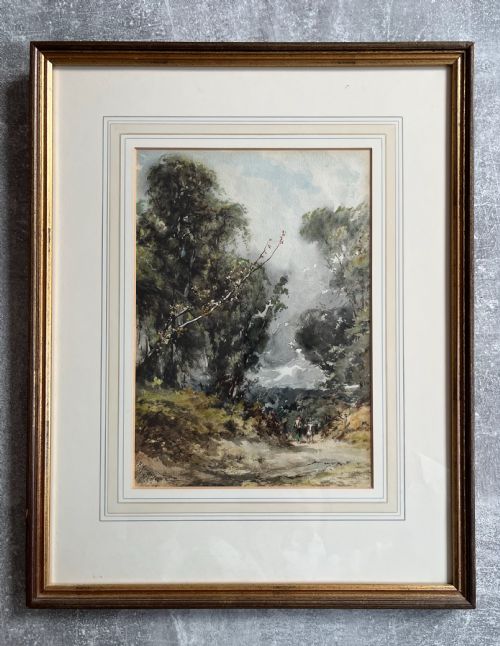
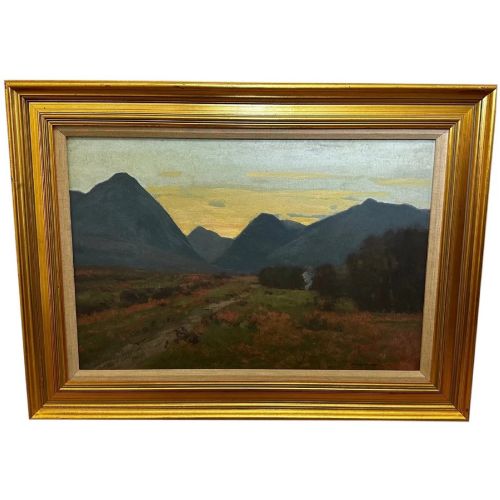
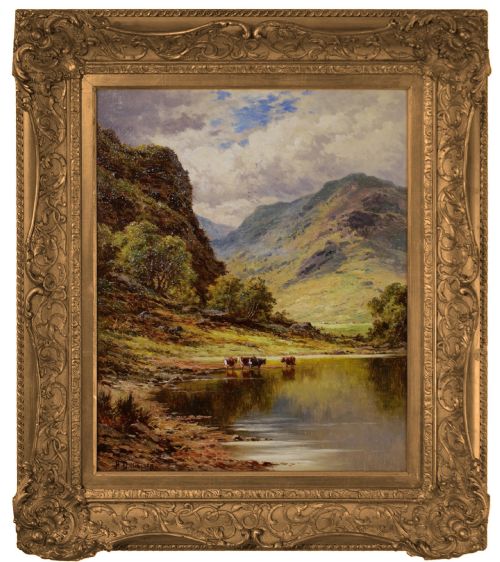
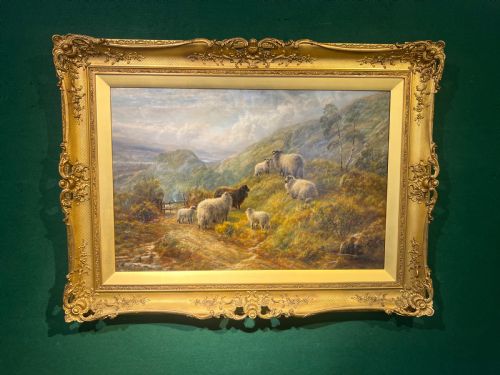
A green highland landscape painting records the rugged terrain of northern hills, peat glens, and grazing livestock through the eyes of Victorian and early twentieth century artists. Buyers seeking these works find themselves drawn to depictions of misty lochs, heather slopes, and quiet agricultural crofts rendered with traditional realism. Most pieces on this page emerge from the nineteenth century and the Edwardian era, carrying the palette and atmosphere of Scottish and British rural schools.
The compositions frequently centre on mountainous backdrops, winding tracks, and pastoral animals integrated into expansive valley floors. Painters of this genre observed shifting weather patterns, translating damp moss and upland pastures into layered tones of verdant green and earthy brown. These canvases and panels serve as historical windows into rural life before mechanisation altered the highland topography.
Materials and technique
Artists painted these scenes primarily with oil on canvas or wood panel, though watercolours and pastel also appear across the selection. The pigment layers build depth through careful glazing, allowing dark undertones to anchor bright highlights on distant peaks and water surfaces. Giltwood frames traditionally enclose these works, complementing the rich earth tones within the composition.
Brushwork ranges from tight academic realism to the looser application found in Scottish Impressionism and post-impressionist movements. Painters applied oil paint with varied density, using thick impasto to suggest rough stone and textured foliage while keeping skies thin and luminous.
A patient retriever often waits quietly beside the highland pony while the artist mixes greens for the glen.
Distinctions in execution
Quality rests in the confidence of the draughtsmanship and the artist's command of natural light across challenging terrain. Superior examples demonstrate a careful balance between the expansive scale of mountains and the intimate detail of foreground figures or animals, avoiding muddy shadows and heavy-handed blending.
The distinction also lies in the preservation of the original pigment surface and the harmony of the framing. Skilled composition draws the viewer naturally into the glen, whereas lesser works rely on repetitive formulas without capturing the specific atmosphere of the location.
William Beattie-Brown·George Fotherly Hargitt·Tom Campbell·George Houston·Henry H. Parker·Robert Watson·Alexander Wellwood Rattray·Joseph Knight·William George Tennick·Archibald Kay·William Henry Mander·Henry Hillier Parker·William Grant Murray·Stanley Orchart·George Melvin Rennie·Robert Cleminson·Daniel Sherrin·Frederick Richard Lee·Thomas Sidney Cooper·George Cole·Henry Birtles·Benjamin Williams Leader·A. De Breanski·Thomas Pritchard·James Kay
The Green Highland Landscape Painting Glossary
- Oil on canvas
- Pigments bound in drying oil applied to a stretched woven fabric support. This combination allows for rich colour saturation and subtle blending.
- Wood panel
- A rigid wooden support used by painters instead of canvas. It provides a smooth, stable surface that withstands the pressure of heavier brushwork.
- Scottish Impressionism
- A regional painting style influenced by French techniques yet rooted in local light and weather. It employs broken brushstrokes and vibrant colour relationships.
- Giltwood
- Wood carved and covered with a thin layer of gold leaf or gold paint. Frames finished in this manner were standard for exhibiting fine art.
- Pastel and gouache
- Media utilising dry pigment sticks and opaque water-based paint on paper. These materials produce velvety textures and direct, immediate colour effects.
Green Highland Landscape Painting: Frequently Asked Questions
What subjects appear in these paintings?
The canvases depict mountainous terrain, remote crofts, grazing sheep, and Highland cattle within rural valleys.
Artists focused on natural light over lochs and moorland tracks during the nineteenth and early twentieth centuries.
How do I identify the period of a painting?
Dating relies on recorded artist lifespans, stylistic markers of the Victorian or Edwardian eras, and framing materials.
Signatures, dates inscribed on stretchers, and exhibition labels on the reverse provide definitive chronological evidence.
Where were these artists working?
Many painters travelled through Scottish regions such as Arran, Skye, and the Grampians to sketch directly from nature.
Others worked in English studios translating field studies into finished exhibition pieces for metropolitan galleries.
How should I hang and light an oil painting?
Place the artwork away from direct sunlight and fluctuating heat sources to protect the canvas and oil pigments.
Use a dedicated picture light positioned above the frame to illuminate the surface without generating excessive warmth.