


Green Gemstone Solitaire
A green gemstone solitaire centres on a single verdant stone, offering striking colour and clean lines for daily wear.
Green Gemstone Solitaire
A green gemstone solitaire brings together a single prominent green stone mounted as the focal point of a ring, pendant or board game. These pieces span from early twentieth century Edwardian and Art Deco designs through to Mid-Century modern work.
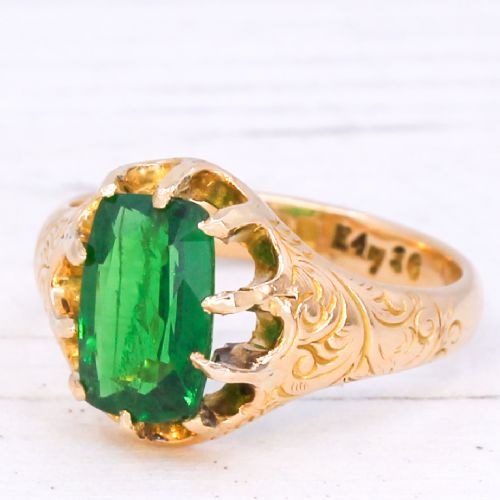
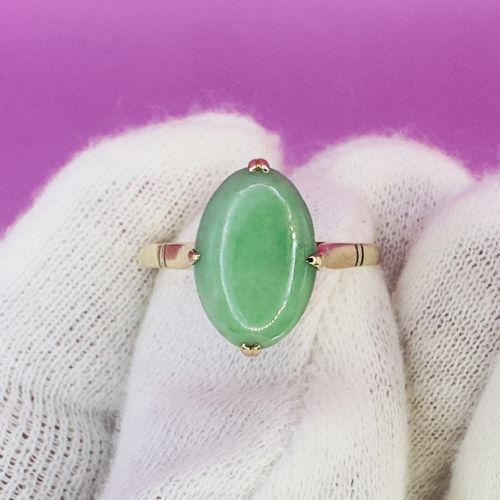
The selection on this page centres primarily upon rings featuring emerald, jade, tsavorite garnet, malachite, chalcedony and green tourmaline. Alongside traditional finger jewellery, the category includes pendants and a solitaire board set with malachite.
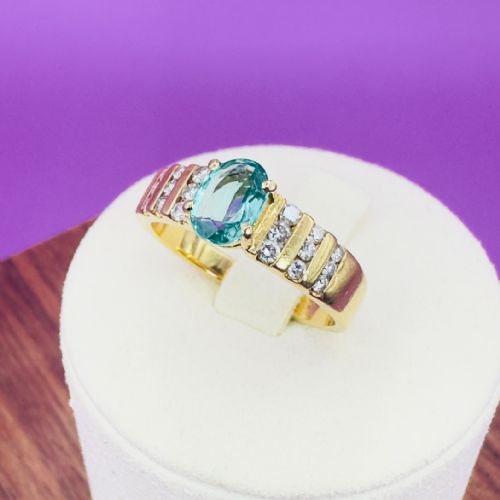
Makers set these stones in yellow gold, white gold, 18ct gold, 9ct gold, 14ct gold and platinum. Buyers find both pure single stone settings and variations accompanied by small accent diamonds.
How they were made
Goldsmiths shaped mounts in yellow, white, and platinum using traditional casting and hand-working techniques suited to each specific decade. Settings range from secure bezel mounts on cabochon jade and chalcedony to classic claw settings holding faceted emeralds and tsavorite garnets.
Lapidaries shaped the green stones into oval cuts, cabochons, and carved forms to maximise the visual depth of the material. Artisans frequently integrated small accent diamonds into the shoulders or surrounding frames of the gold and white gold mountings.
One unexpected piece steps away from finger jewellery entirely, presenting a vintage malachite solitaire board complete with its playing marbles.
What varies in quality
The calibre of a green gemstone solitaire rests upon the natural saturation and clarity of the central stone, whether it is an emerald, jadeite, or tourmaline. Stones possessing high internal transparency or fine, even cabochon polish elevate the visual impact of the piece.
Metalwork execution defines the structural integrity, seen in the crispness of Edwardian and Art Deco geometric detailing and the robustness of the gold or platinum claws. Heavier gold weights and solid platinum construction provide greater durability across decades of handling.
The Green Gemstone Solitaire Glossary
- Solitaire
- A piece of jewellery featuring a single principal gemstone set by itself without major flanking stones. This setting style draws the eye entirely to the qualities of the central mineral.
- Cabochon
- A gemstone shaped and polished with a smooth, rounded domed surface rather than faceted edges. This cut is frequently utilised for jade, chalcedony and malachite to display soft lustre.
- Tsavorite
- A vibrant green grossular garnet discovered in East Africa, prized for high brilliance and intense colour saturation. It offers a durable alternative for rings designed in the early twentieth century style.
- Malachite
- An opaque green copper carbonate mineral displaying distinct banded patterns in various tones of green. Craftsmen utilise this decorative stone for rings and ornamental solitaire boards.
- Chalcedony
- A cryptocrystalline form of silica exhibiting a waxy lustre and translucent green body colour. Edwardian jewellers favoured this smooth stone for understated gold mounting.
Green Gemstone Solitaire: Frequently Asked Questions
How do I wear a green gemstone solitaire daily?
Select stones with greater mineral hardness, such as tsavorite garnet or tourmaline, for everyday finger wear to minimise surface scratching. Softer materials benefit from careful handling and occasional removal during manual tasks.
Pair rings with simple bands to ensure the single green stone remains the visual focus. Pendants offer an alternative way to wear these stones without the friction experienced on hands.
How can I tell an Edwardian setting from Art Deco?
Edwardian mountings rely on delicate platinum or yellow gold wirework, floral motifs, and intricate millegrain detailing. They project an airy, graceful aesthetic typical of the early nineteen hundreds.
Art Deco pieces introduce geometric precision, sharp lines, and stylised symmetry. These later settings frequently utilise white gold or platinum to frame emeralds and other green stones with stark contrast.
What is the difference between an emerald and a tsavorite?
Emerald is a variety of beryl known for its characteristic internal inclusions and deep green hue, often treated or oiled to enhance clarity. It has been utilised in jewellery across Victorian, Edwardian and Mid-Century periods.
Tsavorite is a garnet species that exhibits vivid green colour and high dispersion without requiring oil treatments. It provides a bright, durable alternative found in twentieth century fine rings.
How should I clean my vintage gold ring?
Clean gold mounts and durable gemstones using warm water and a mild detergent with a soft brush. Avoid harsh chemical dips, particularly on treated emeralds, jade, or softer quartz varieties.
Dry the metal and stone thoroughly with a lint-free cloth after washing. Regular cleaning removes daily residues from the gallery underneath the setting.