


Square Emerald Ring
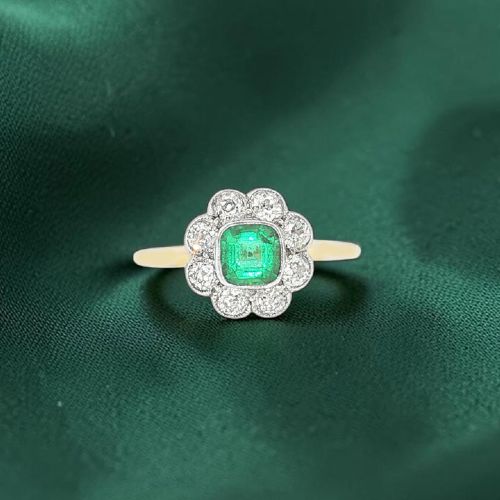
A square emerald ring brings together sharp geometric lines and rich green stones, offering a striking alternative to the traditional round diamond.
Square Emerald Ring
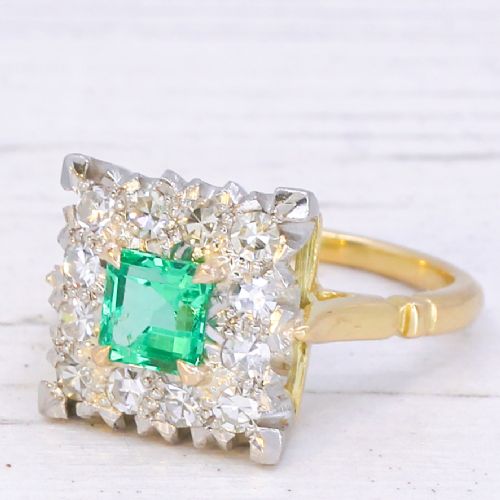
A square emerald ring takes several distinct forms, most commonly appearing as cluster arrangements, panel designs, or solitaire settings framed by diamonds. These pieces span the Edwardian era through the mid-twentieth century, alongside revivals and later twentieth-century examples.
The layout often pairs the central green gemstone with surrounding diamonds in geometric configurations. Buyers frequently encounter Art Deco and Edwardian interpretations, where the angular cut of the stone dictates the entire architectural arrangement of the mount.
Materials and Construction
Goldsmiths utilised platinum and various carats of gold, including 18ct yellow gold, white gold, and 14ct gold, to secure the stones. Platinum gained favour in Edwardian and Art Deco pieces for its strength in delicate, linear settings.
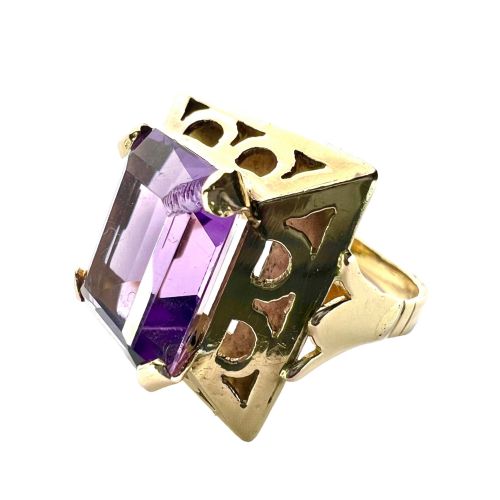
Diamonds and occasionally amethysts or aquamarines accompany the central emeralds. The stones are typically step-cut, princess-cut, or old-cut, reflecting the period's preference for sharp symmetry and structured faceting.
Listings feature periods spanning Edwardian, Art Deco, 1920, 1930, 1940, 1950, 1960, and later than 1960.
Distinctions in Quality
Quality rests in the precision of the stone cutting and the integration of the metalwork. Finer examples display crisp geometric angles in both the emerald and its surrounding platinum or gold mount.
The calibre of the supporting diamonds and the clarity of the central gemstone determine the visual depth of the piece. Superior craftsmanship ensures the setting holds the stones securely while maintaining delicate proportions.
The Square Emerald Ring Glossary
- Cluster ring
- A ring design featuring a central gemstone surrounded by a group of smaller stones, typically diamonds. This arrangement maximises overall brilliance and presence on the hand.
- Step-cut
- A stone cutting style characterised by parallel facets that resemble steps, commonly used for square or rectangular emeralds. This cut emphasises clarity and colour over overt sparkle.
- Platinum
- A dense, durable white metal frequently utilised in Edwardian and Art Deco jewellery. Its strength permits fine, intricate wirework and secure prong settings.
- Old-cut diamond
- A hand-faceted diamond cut popular before modern machine precision, featuring a smaller table and larger culet. These stones exhibit a softer, warmer glow under candlelight.
Square Emerald Ring: Frequently Asked Questions
How do I wear a square emerald ring daily?
Emeralds are a softer gemstone compared to diamonds, requiring care during everyday activities. Consider removing the ring during heavy manual work to protect the setting.
Pairing the ring with simpler bands prevents metal friction against the claws and the central stone. Regular cleaning in warm soapy water maintains the clarity of the emerald.
How do I identify an Art Deco square emerald ring?
Art Deco pieces display strict symmetry, sharp geometric lines, and often utilise platinum settings. The design prioritises architectural shapes and contrasting black and white or green and white motifs.
Step-cut stones and milgrain edging further point towards this period of manufacture. These characteristics separate them from softer Edwardian or bolder Retro Modern designs.
What is a cluster ring setting?
A cluster setting groups smaller diamonds tightly around a larger central gemstone. This technique enhances the visual spread of the piece without requiring a single massive stone.
In square designs, this creates a defined block of sparkle that frames the green centre. The arrangement was particularly popular during the Edwardian and Art Deco eras.
How do I care for antique gold and platinum?
Gold and platinum mounts benefit from gentle cleaning with a soft brush and mild soapy water. Avoid harsh chemical dips, especially when emeralds are present in the setting.
Periodic inspection by a jeweller ensures the claws holding the square stones remain secure. Proper storage in a fabric-lined box prevents scratching from other jewellery.