
Gold Emerald Dress Ring
A gold emerald dress ring brings vibrant green colour and striking presence to the hand, drawing the eye with rich gemstone clusters and bold statement silhouettes.
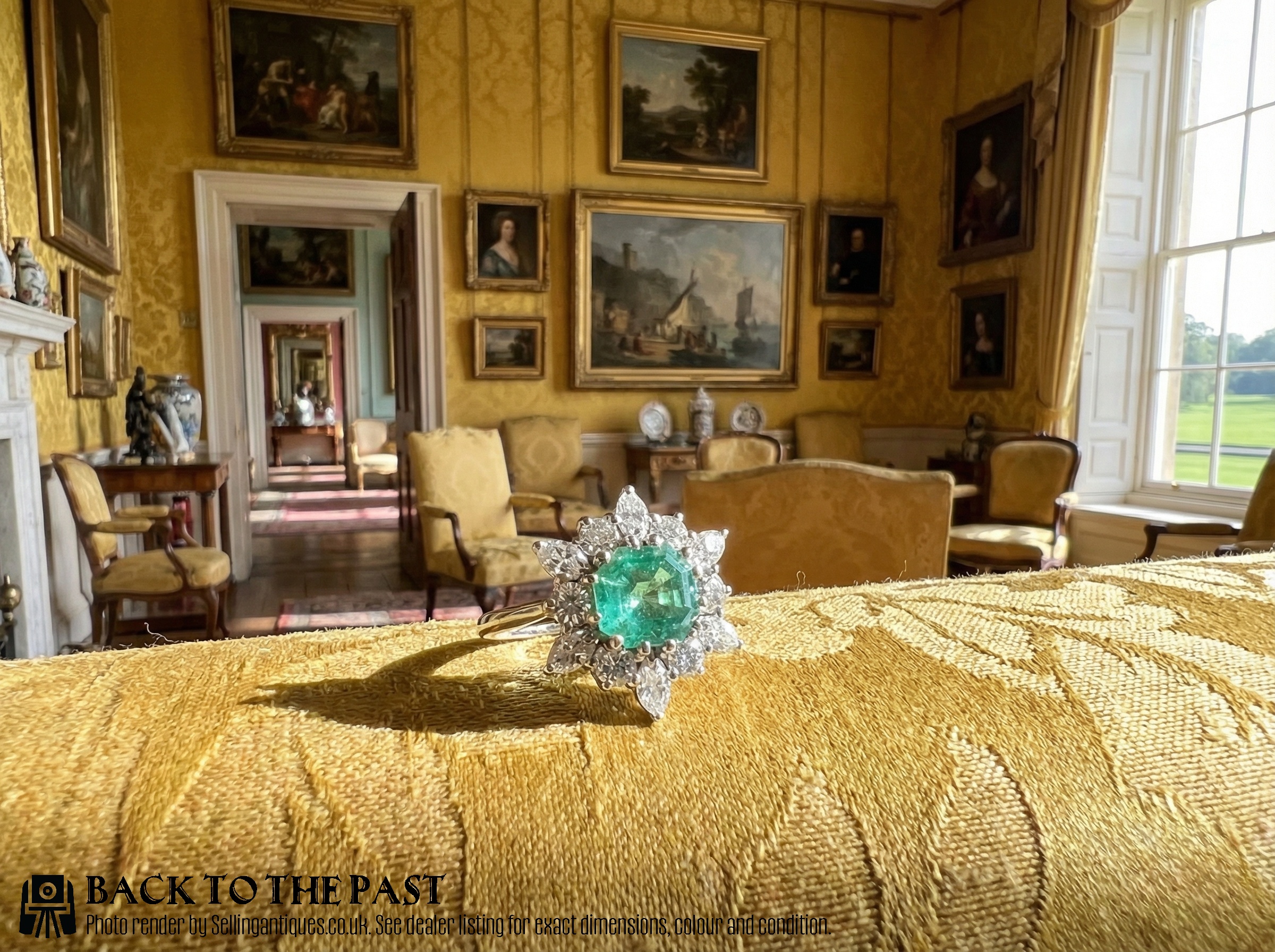
Gold Emerald Dress Ring
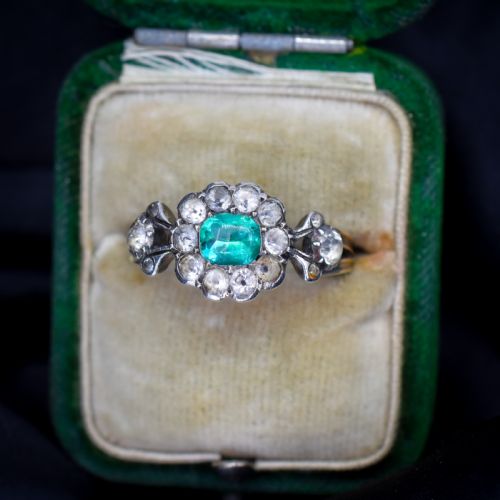
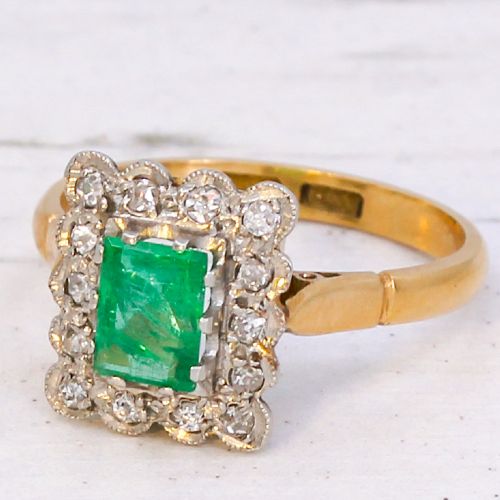
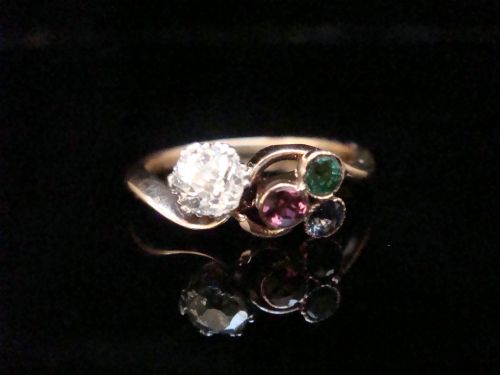
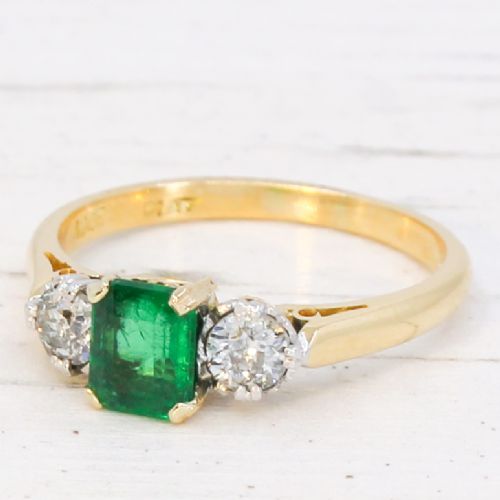
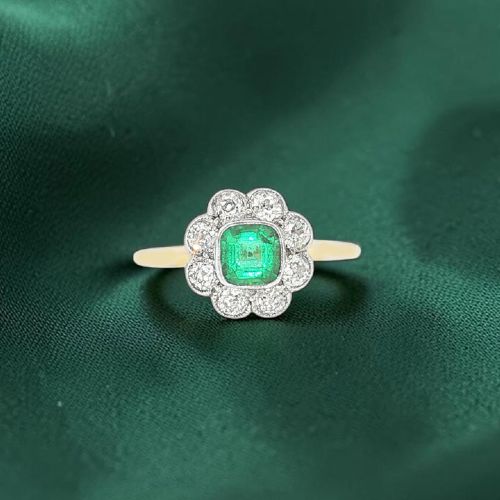
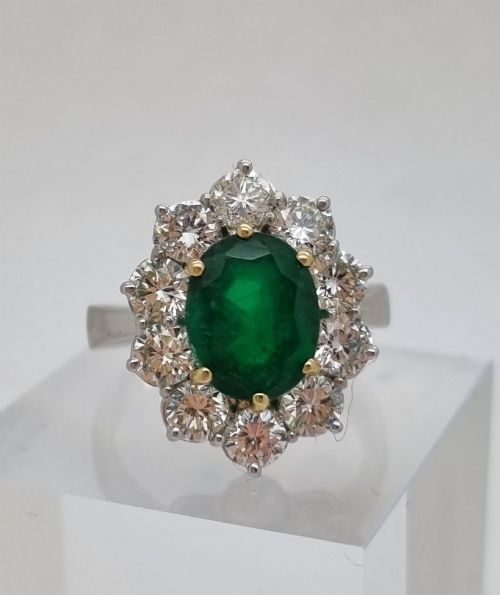
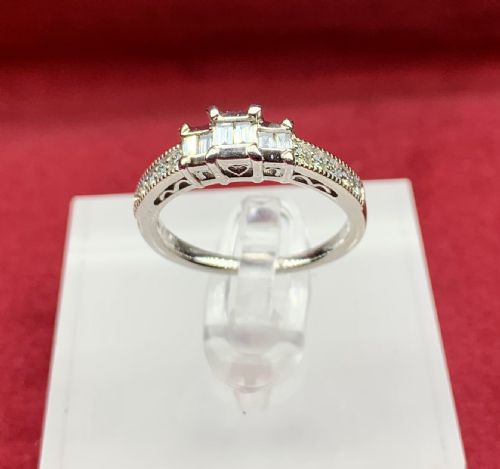
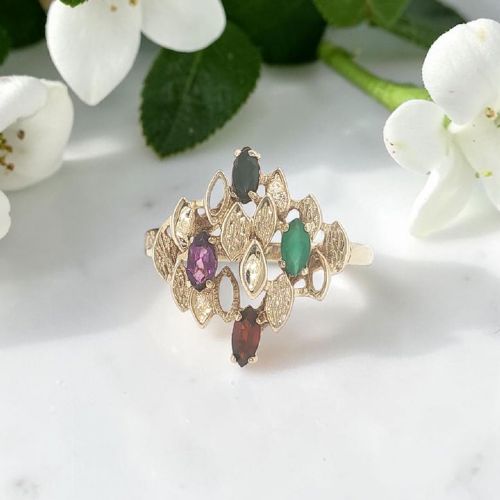
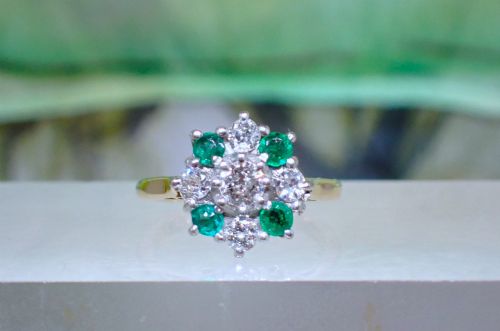
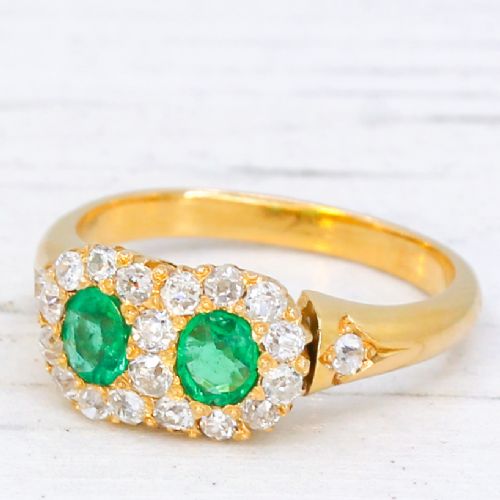
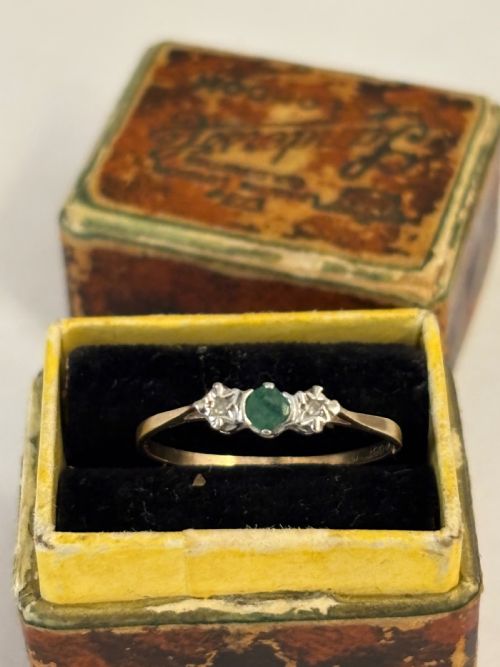
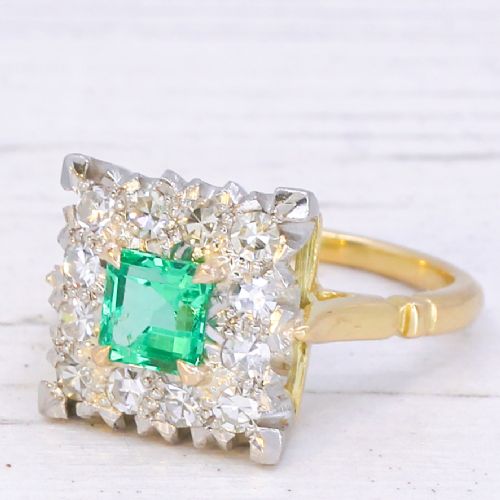
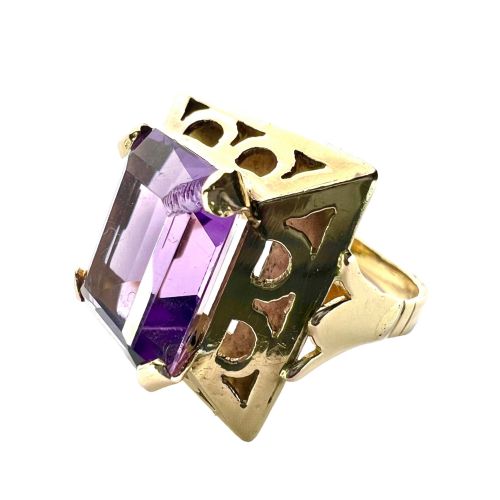
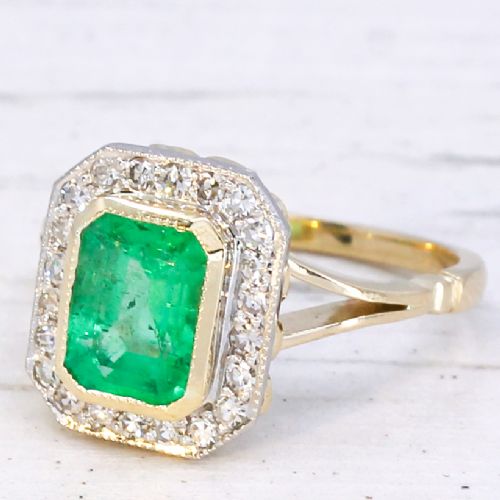
A gold emerald dress ring sits firmly in the realm of statement jewellery, designed primarily for decorative wear rather than as a simple band. These pieces frequently take the form of cluster rings, cocktail rings, or multi-stone arrangements that showcase a central emerald surrounded by diamonds or contrasting gems.
Examples span several decades and stylistic movements, reaching from Georgian and Victorian origins through Edwardian delicacy and Art Deco geometry into Mid-Century and Retro Modern designs. The selection available here captures this broad chronological sweep, offering both antique precedents and later vintage interpretations.
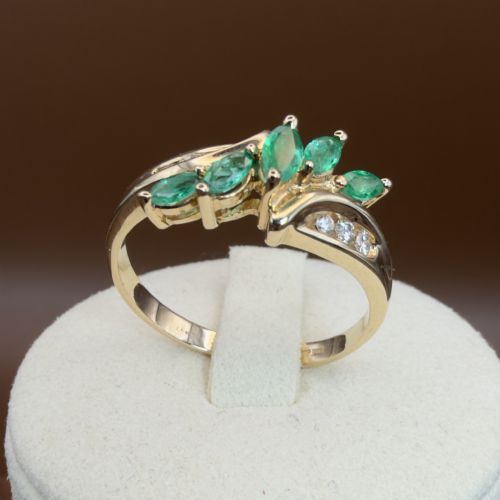
Most items combine yellow, white, or rose gold with emeralds of varying cuts, paired alongside diamond accents or other precious stones. This variety ensures that every piece presents a distinct silhouette, whether one seeks a delicate Edwardian cluster or a substantial mid-century cocktail design.
How they were made
Makers utilised a combination of cast and hand-worked gold, most commonly in nine-carat, fourteen-carat, or eighteen-carat purity, alongside platinum for specific secure settings. Metals were shaped into yellow or white iterations to complement the inherent tone of the central beryl or diamond surrounds.
Stones were secured using traditional techniques such as claw settings, bezel mounts, or flush channels, depending on the prevailing style of the period. Jewellers cut emeralds into oval, emerald, marquis, and princess shapes, often pairing them with old-cut or brilliant-cut diamonds to maximise light reflection.
Gold Emerald Dress Ring Retail Price Guide 2026
Typical asking prices for gold emerald dress ring among the pieces listed under this phrase on Sellingantiques today, from the lower quarter to the upper quarter. They describe what is for sale here now, not the wider market.
Listings feature pieces spanning the nineteenth century through the 1960s, constructed in yellow gold, white gold, and platinum.
What varies in quality
The standard of an emerald dress ring depends heavily on the natural clarity, origin, and treatment level of the central stone, alongside the precision of the surrounding gem-setting. Superior specimens exhibit vivid saturation and minimal oil enhancement, whereas lesser stones show heavy inclusions that require more extensive fracture filling.
Construction integrity also defines the tier of a piece, observable in the thickness of the shank and the security of the prongs holding each stone. Finer examples maintain crisp millegrain edges, symmetrical cluster layouts, and substantial metal weight that prevents bending over decades of wear.
The Gold Emerald Dress Ring Glossary
- Cluster ring
- A ring featuring a central gemstone encircled by a group of smaller stones, typically diamonds. This arrangement maximises overall visual impact on the finger.
- Cocktail ring
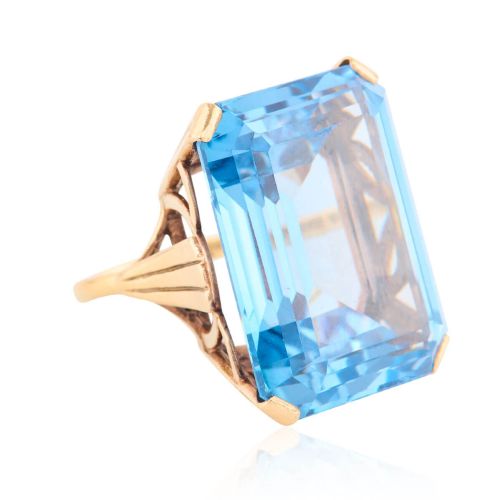
- A large, dramatic ring designed to be noticed during evening gatherings. These pieces often incorporate elevated mountings and multiple colourful gemstones.
- Old-cut diamond
- A diamond cut by hand before the mid-twentieth century, characterised by a smaller table, higher crown, and large open culet. These stones display a softer, candlelight sparkle.
- Millegrain
- A decorative jewellery technique involving a line of tiny raised metal beads along the edges of a setting. It provides a refined, textural border typical of Edwardian and Art Deco work.
- Emerald cut
- A rectangular or square step-cut with cropped corners, designed specifically to highlight the depth and colour of beryl. This geometry emphasises clarity over high brilliance.
Gold Emerald Dress Ring: Frequently Asked Questions
How do I care for my ring?
Emeralds are a softer gemstone compared to diamonds and require gentle cleaning using warm soapy water rather than ultrasonic devices. Store the ring separately to prevent scratching from harder metals or stones.
Regular checks by a jeweller will ensure the prongs remain tight and secure. Avoiding harsh chemicals and wearing the piece with mindfulness will preserve the stone and metal for future generations.
Can I wear this every day?
While these pieces were built for social wear, many owners enjoy them daily with proper consideration for their age and setting style. Edwardian and Victorian examples demand extra care due to their delicate metalwork and older mounting techniques.
Sturdier mid-century designs handle regular routines better, but removing the ring during heavy manual tasks prevents unnecessary wear on the claws and band.
What is minor oil treatment?
Minor oil treatment refers to the traditional practice of filling microscopic surface-reaching fractures in emeralds with natural oils to improve clarity. This enhancement is standard practice within the gemstone industry and is graded by gemological laboratories.
A minor classification indicates that the stone required very little intervention to achieve its current appearance, which is preferred by collectors.
How do I identify the era?
Dating relies upon stylistic markers, metal hallmarks, and the specific cutting styles of the diamonds and emeralds used. Edwardian pieces often utilise platinum-topped yellow gold with intricate pierced work, while Art Deco items favour stark geometric lines in white gold.
Mid-century rings introduce bolder, sculptural forms and heavier gold weights. Official certification and hallmarks inside the band provide definitive clues.