
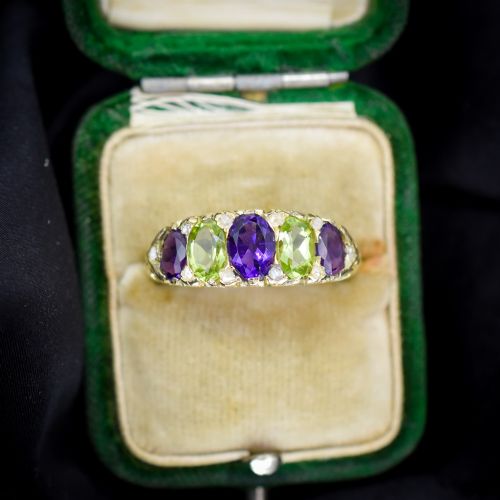
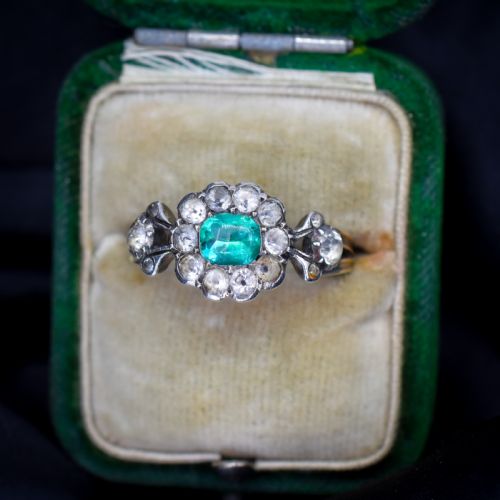
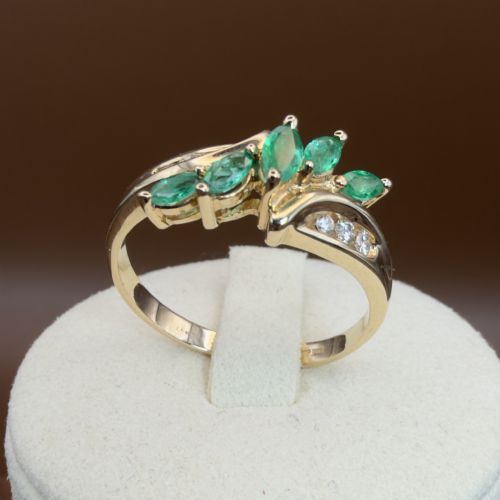
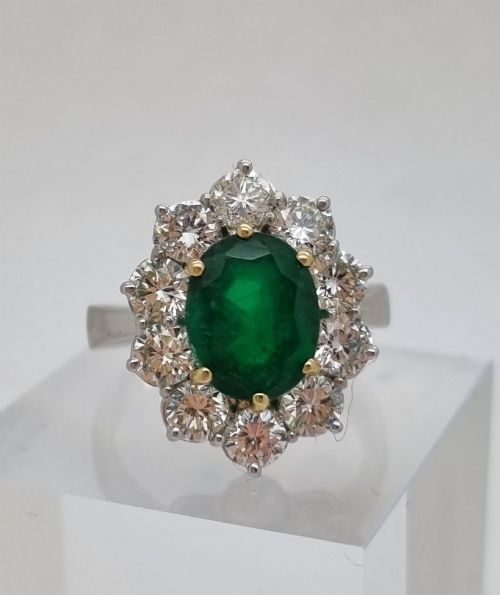


Green Stone Cluster Ring
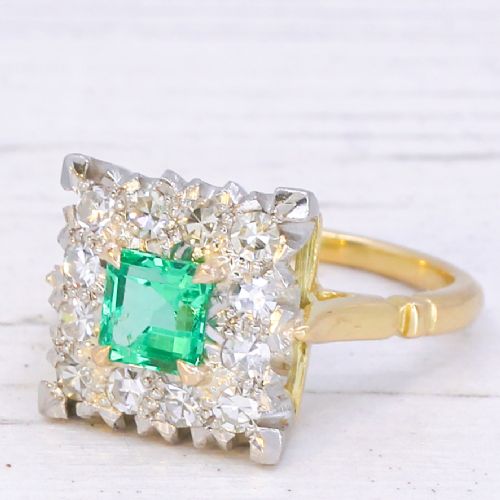
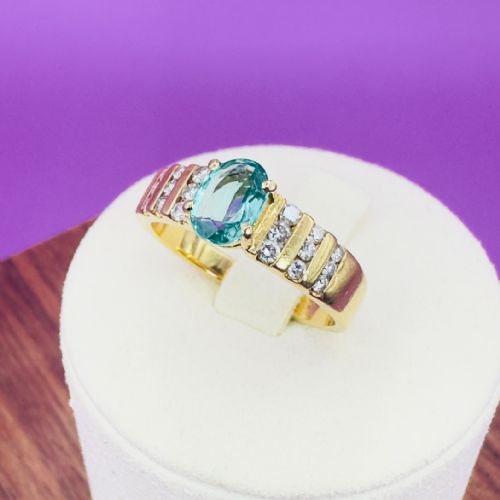
A green stone cluster ring brings together vibrant emeralds or jadeite surrounded by sparkling diamonds, offering an eye-catching piece of vintage statement jewellery.
What these rings are
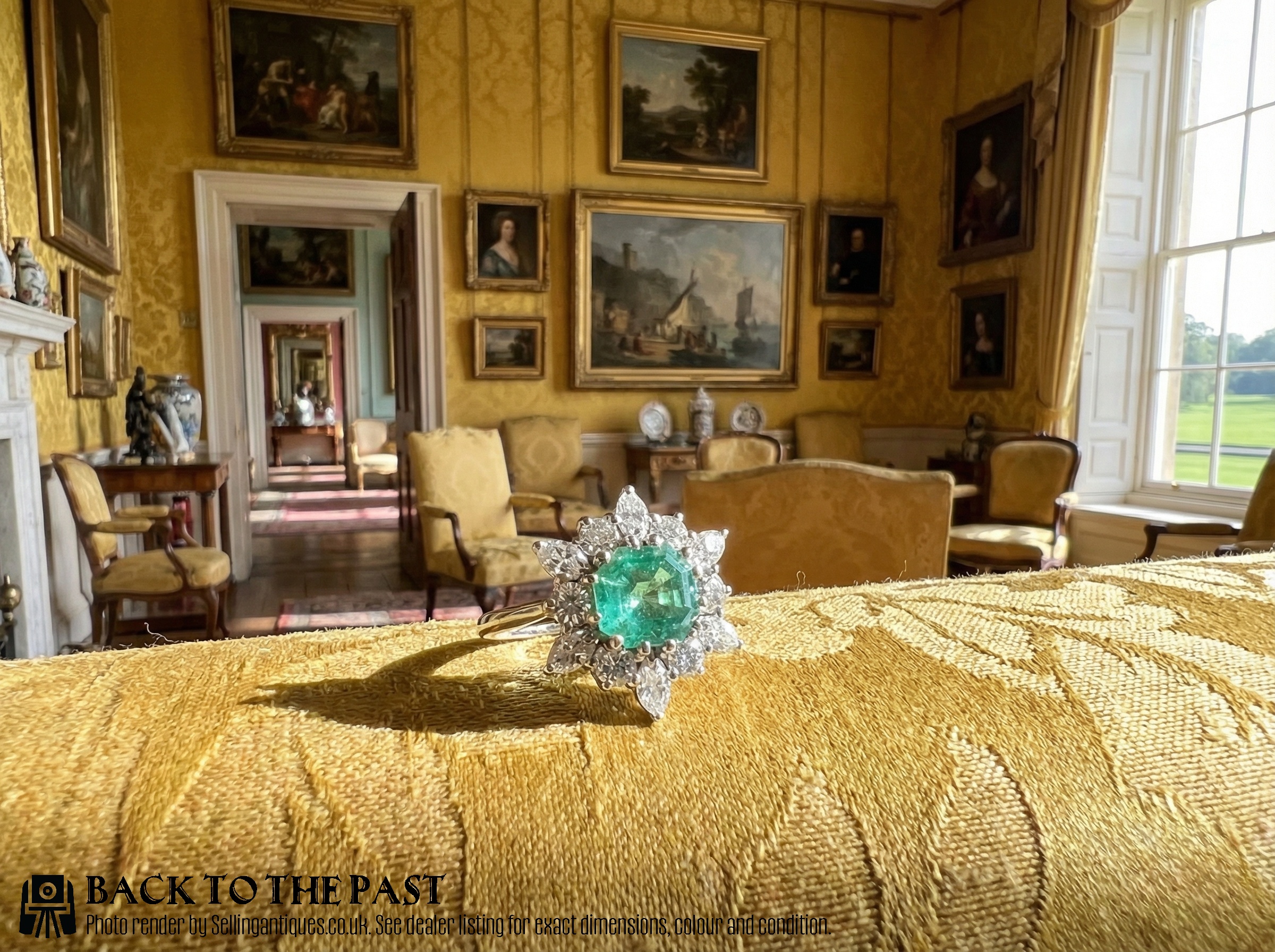
A green stone cluster ring centres on a prominent emerald or jadeite stone encircled by a border of smaller diamonds. These pieces appear across several eras, including the Edwardian period, the Art Deco years, and mid-century designs.
The silhouettes vary from marquise and oval cuts to snowflake formations and substantial rectangular profiles. Settings utilise 9ct gold, 18ct yellow or white gold, and platinum to mount the stones securely.
Buyers encounter rings ranging from delicate Edwardian mounts to bold mid-century statement pieces featuring significant carat weights. Each example demonstrates the enduring appeal of combining rich green gems with brilliant diamond borders.
How they were made
Goldsmiths shape precious metals like platinum and 18ct or 9ct gold to form the intricate settings that hold the cluster together. Yellow gold and white gold provide contrasting backdrops for the central green gems and surrounding diamonds.
Lapidaries cut the emeralds and jadeite into marquise, oval, and faceted shapes before surrounding them with carefully matched diamond accents. Metal claws and bezels secure each stone tightly within the overarching design.
Retail Price Guide 2026
Typical UK retail prices for green stone cluster ring, calculated from the Sellingantiques database of over a million retail prices indexed since 2003. This retail price guide relies exclusively on Sellingantiques data; no external sources or auction records are used, so the figures do not describe the wider market.
Periods represented across the pieces span from the 1910s Edwardian era through Art Deco up to the 1960s.
What varies in quality
The overall standard rests on the natural qualities of the central green stone, particularly the clarity, origin, and carat weight of the emerald or jadeite. Substantial diamond weight and well-matched stone proportions elevate the piece.
The precision of the metalwork, whether executed in platinum or gold, distinguishes finer workshops from standard production. Heavier gold weights and intricate mounting styles demonstrate superior craftsmanship.
The Green Stone Cluster Ring Glossary
- Cluster ring
- A ring design featuring a prominent central gemstone surrounded by a ring of smaller stones, typically diamonds.
- Platinum
- A dense, durable, and naturally white precious metal frequently utilised in fine jewellery manufacture.
- Marquise cut
- A pointed elliptical gemstone shape with curved sides, designed to maximise carat weight and visual impact.
- Emerald
- A green variety of beryl coloured by trace amounts of chromium and vanadium, prized for centuries in fine jewellery.
- Jadeite
- A pyroxene mineral forming one of the two types of genuine jade, known for its rich green colour and translucency.
Frequently Asked Questions
What periods do these rings come from?
These pieces originate from multiple decades, spanning Edwardian, Art Deco, and mid-century eras.
Each period brings distinct design characteristics, from early platinum mountings to later yellow gold settings.
What metals are used in the settings?
Goldsmiths utilise 9ct gold, 18ct yellow gold, white gold, and platinum for these clusters.
The choice of metal often reflects the prevailing style of the specific decade in which the ring was made.
How do I care for my ring?
Precious metals and natural gemstones require gentle cleaning with warm soapy water and a soft brush.
Avoiding harsh chemicals helps preserve the secure setting of both the central green stone and the surrounding diamonds.
What stone shapes are common?
Common stone shapes include oval, marquise, and snowflake cluster formations that highlight the central green gem.
Surrounding diamond borders accentuate these geometric outlines to create a striking visual contrast.