


Green Garden Oil Painting
A green garden oil painting captures natural light and outdoor planting through rich brushwork across eras from the nineteenth century to the mid-twentieth century.
Green Garden Oil Painting
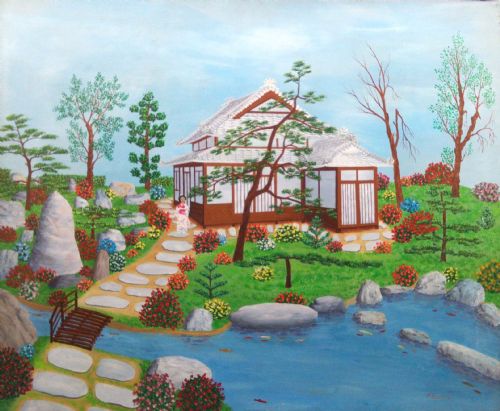
A green garden oil painting brings outdoor foliage and floral settings indoors through traditional canvas works from the nineteenth century onwards. You encounter British Impressionist views, naive outsider scenes, and Edwardian compositions depicting domestic planting and parkland.
These works range from intimate studies of country house borders to broader landscapes featuring figures among shrubs and trees. Painters recorded natural light falling across lawns and herbaceous borders using varied approaches from different European schools.
Materials and technique
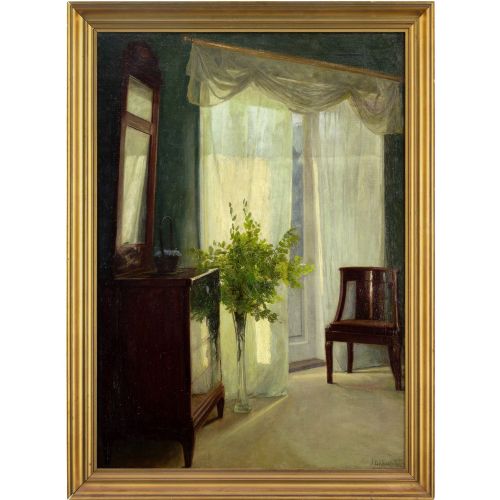
Artists painted primarily with oil paint on stretched canvas or wood panels, building textures through layered pigments. Some compositions incorporate gold leaf moulding on the surrounding frame to complement the painted light.
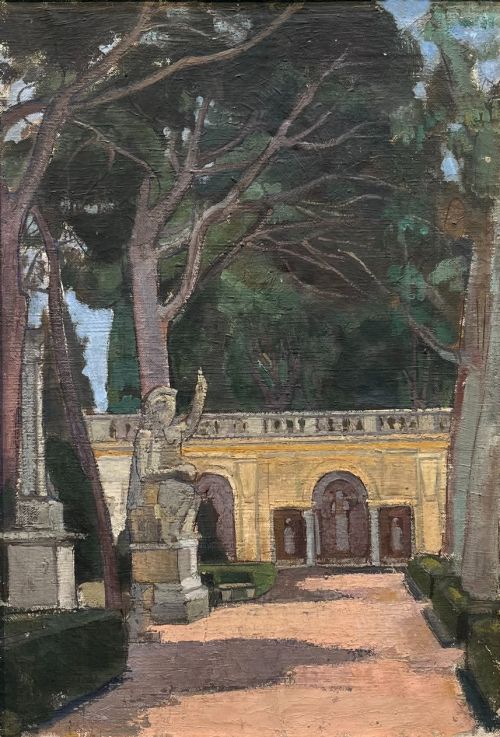
The technique relies on the slow-drying nature of oil medium to blend tones of green and earth colours directly on the surface. Brushwork varies from tight academic precision to loose impressionistic dabs that suggest foliage and sunlight.
A gardener scythes a lawn before a church in one nineteenth-century canvas, preserving an industrious outdoor moment.
Assessing quality and execution
Quality rests in the artist's handling of light and shadow across the garden landscape rather than the sheer scale of the canvas. Finer examples capture atmospheric depth and convincing tonal relationships within the foliage.
The strength of the composition and the confidence of the brushstrokes distinguish skilled observational works from more formulaic decorative pieces. Original framing and well-preserved paint layers also contribute to the standing of an individual work.
John Lübschitz·Ernest Higgins Rigg·Kershaw Schofield·Charles E Cundall·John Henry Inskip·William Hatherell·Herbert Royle·Walter Dendy Sadler·Edgar Bundy·Hermoine Hammond·William Greaves·Fred Merriman·John F Pasmore
The Green Garden Oil Painting Glossary
- Canvas
- A heavy woven fabric stretched across a wooden frame to serve as a support for oil painting. It provides a flexible and resilient surface for layered pigments.
- Oil paint
- A slow-drying medium made by combining pigments with drying oils such as linseed. This material allows artists to blend colours smoothly and build rich surface textures.
- Impressionism
- A nineteenth-century painting style focused on capturing light and ephemeral moments with visible brushstrokes. Practitioners prioritized natural outdoor illumination over rigid academic finish.
- Gold leaf
- Very thin sheets of beaten gold applied to frames and decorative elements. It adds reflective warmth that enhances the surrounding artwork.
Green Garden Oil Painting: Frequently Asked Questions
What periods do these paintings cover?
The works span from the nineteenth century through the Edwardian era up to the nineteen-fifties and sixties. Artists across these decades interpreted garden scenes through changing stylistic lenses.
Earlier nineteenth-century pieces often employ more traditional detailing, while later twentieth-century examples embrace impressionist and naive approaches to light and colour.
How should I care for an oil painting?
Keep oil paintings away from direct sunlight and dramatic fluctuations in temperature or humidity. Stable indoor environments prevent the canvas and paint layers from cracking.
Dust the surface gently with a soft, dry brush and avoid using water or chemical cleaners on the paint or frame.
Are these works signed by artists?
Many of the listed paintings bear artist signatures or attributions to specific British and European schools. Documentation helps identify the hand behind the canvas.
Unsigned works are typically attributed through stylistic comparison and historical records associated with the piece.
What framing is normally included?
Most oil paintings retain period frames, including examples with gold leaf moulding that complement the aesthetic of the canvas. These enclosures often reflect the fashion of the painting's creation date.
Frames protect the edges of the canvas and complete the presentation of the artwork for domestic display.