






Vintage Country Garden Wall Art
These vintage country garden wall art pieces capture quiet pastoral scenes in oil, watercolour and mixed media from the nineteenth and early twentieth centuries.
Vintage Country Garden Wall Art
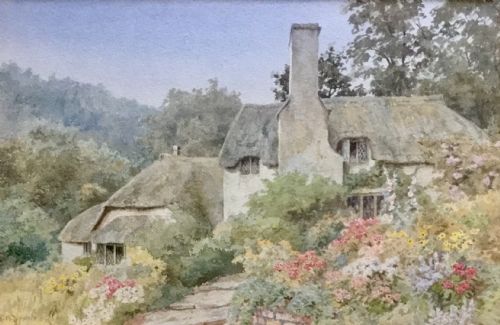
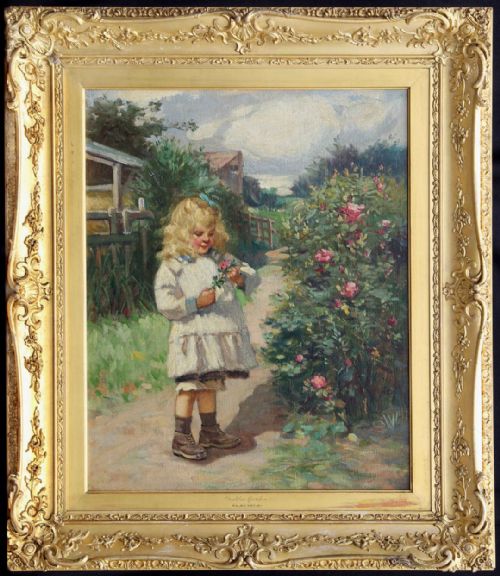
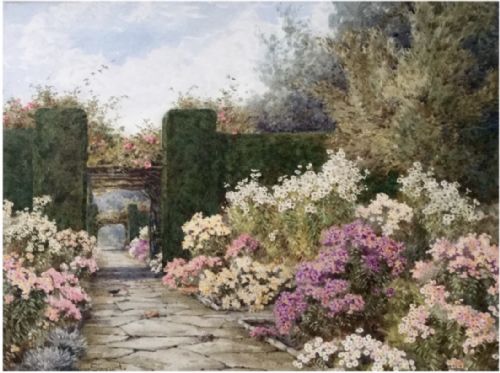
Vintage country garden wall art comprises oil paintings, watercolours and mixed media works depicting cottage gardens, herbaceous borders and country house grounds. These pieces date from the nineteenth century through the 1940s, capturing pastoral scenes in styles that range from Victorian fine art to British impressionism.
The most common examples on this page are early twentieth-century watercolours and oil paintings from the Edwardian period. Such works frequently feature thatched cottages, sunlit lawns and floral garden scenes rendered by noted regional painters.
What varies in quality
The sophistication of light and atmosphere distinguishes finer works from simpler decorative pieces. Master painters handle colour and shadow with greater subtlety, creating genuine depth within the garden landscape.
The strength of the composition and the handling of perspective separate accomplished works by named artists from standard studio output. Details such as botanical accuracy and confident brushstrokes elevate the status of a painting.
Listings feature works spanning the nineteenth century, the Edwardian era and the 1940s, executed in oil and watercolour.
Owen Bowen·Ernest Higgins Rigg·William Hatherell·Thomas Nicholson Tyndale·John Emms·Theresa Sylvester Stannard·George Frederick Nicholls·Ralph Hedley·Lilian Stannard·Fred Merriman·John F. Pasmore
The Vintage Country Garden Wall Art Glossary
- Watercolour
- A painting method in which the paints are made of pigments suspended in a water-based solution. These works are typically executed on paper and mounted under glass.
- Oil on canvas
- Pigments bound in a drying oil applied to a woven fabric stretched across a wooden frame. This medium allows for rich colour saturation and textured brushwork.
- British Impressionism
- A painting style developed in the late nineteenth and early twentieth centuries focusing on light and everyday subjects. Artists working in this manner applied loose brushstrokes to capture outdoor scenes.
- Mixed media
- An artwork utilising more than one medium or material combined on the surface. These pieces incorporate various drawing and painting supplies to build layered garden textures.
- Edwardian Pastoral
- An artistic style from the early twentieth century depicting idealized rural and domestic scenes. These works emphasise tranquil country houses and cultivated cottage gardens.
Vintage Country Garden Wall Art: Frequently Asked Questions
What periods do these garden paintings date from?
The works span the nineteenth century through to the 1940s, encompassing Victorian, Edwardian and mid-century periods. Most pieces originate from the early decades of the twentieth century.
During this time, artists frequently turned to pastoral subjects, capturing the traditional English country garden in oil and watercolour.
How should I display watercolour garden art?
Watercolour paintings on paper require protection behind glass to prevent atmospheric damage and fading. Hanging them away from direct sunlight preserves the original pigments.
Matching the painting with a suitable period frame enhances the historical character of the artwork on a wall.
How do I identify an Edwardian garden painting?
Edwardian works often display lighter, impressionistic brushwork and bright palettes compared to darker Victorian pieces. They frequently depict sunlit cottage gardens and country houses.
Signatures, artist dates and stylistic traits characteristic of the period help confirm the origin of the painting.
What is the difference between oil and watercolour works?
Oil paintings use pigments bound in oil applied to canvas or board, creating a textured and robust surface. Watercolours use water-soluble pigments on paper, resulting in a lighter and more translucent finish.
Both mediums were widely used to capture pastoral garden scenes across the nineteenth and twentieth centuries.