


Green Column Table Lamp
A green column table lamp brings rich colour and classical weight to a room, drawing the eye with polished marble, glass, or ceramic shafts.
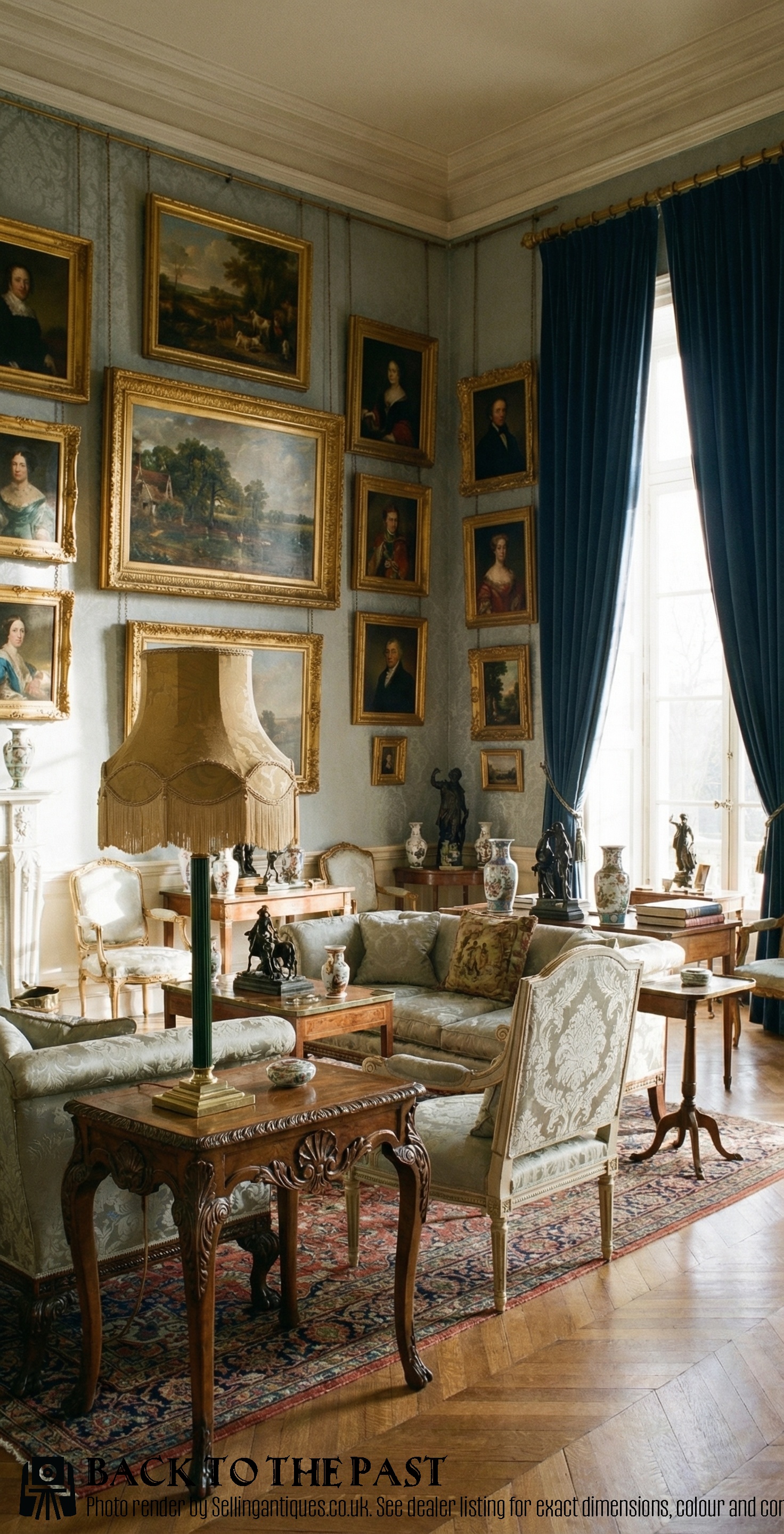
Green Column Table Lamp
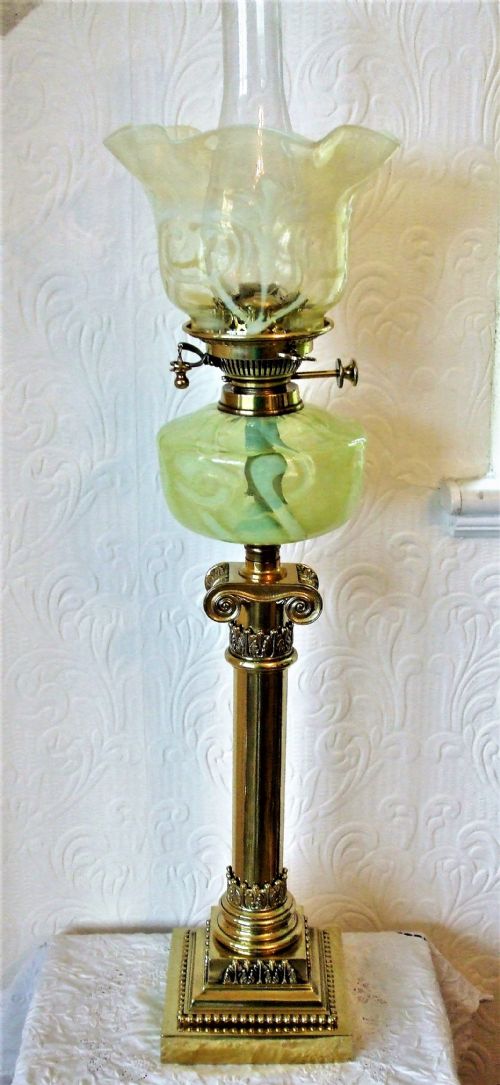
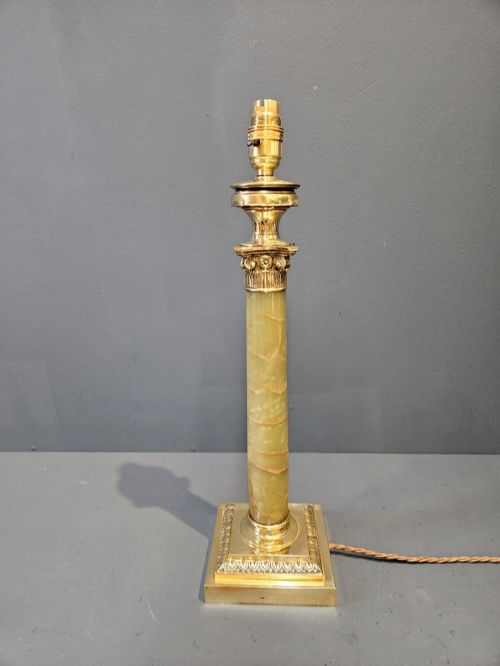
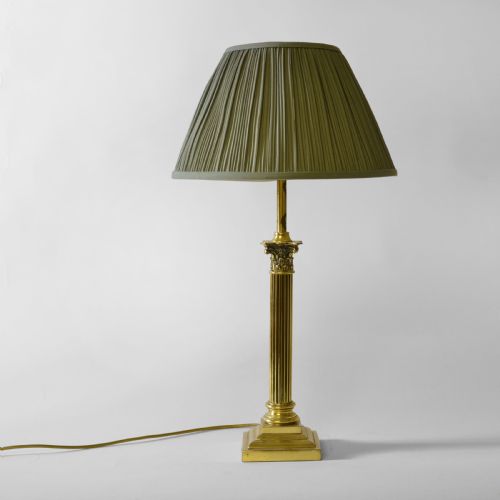
When you search for green column table lamp, you find lighting and side tables rooted in 19th-century, Victorian, and Edwardian design. The selection includes tall brass corinthian column table lamps, pieces with green fonts, and items mounted on polished marble.
The most common form on this page is the oil lamp or paraffin lamp, often later converted for modern electrical use. These pieces borrow heavily from Neoclassical, Regency, and French Empire styles, pairing structural metal columns with coloured glass or ceramic elements.
How they were made
These lamps rely on heavy cast brass, bronze, and ormolu for their structural columns and bases, frequently combined with turned rosewood or polished marble. The metalwork is often detailed with classical architectural orders such as the Corinthian style.
Coloured glass, opaline glass, and majolica ceramic form the central shafts or fonts, creating the characteristic green tone. Many of these lighting fixtures began as oil lamps by makers like Hinks or Messenger before adapting to take fabric shades.
Table lamps and converted oil lamps dominate the selection, frequently featuring green opaline glass or majolica components.
What varies in quality
Quality shows in the weight and crispness of the metal casting, particularly in the acanthus leaves of a Corinthian capital or the chasing on ormolu mounts. Finer examples use dense, two-tone polished marble and heavy gauge brass rather than lighter pressed sheet metal.
The integration of the glass font or ceramic column dictates the overall visual balance of the piece. Superior specimens retain their original proportions and undamaged coloured glass without clumsy later replacements in the conversion process.
Hinks·Messenger
The Green Column Table Lamp Glossary
- Corinthian column
- An architectural column style featuring an ornate capital decorated with carved acanthus leaves. This motif appears frequently on the brass standards of Victorian lighting.
- Ormolu
- Gilded bronze used for decorative mounts and bases. It provides a bright gold-toned contrast against green glass or dark marble columns.
- Majolica
- A type of colourful glazed earthenware often used for the body of Edwardian lamps. It introduces rich pictorial and botanical tones to the design.
- Duplex burner
- A double-wick mechanism found on Victorian oil lamps. Its presence indicates a larger, brighter lighting source from the nineteenth century.
Green Column Table Lamp: Frequently Asked Questions
Are these lamps converted from oil lamps?
Many examples began life as oil or paraffin lamps during the Victorian period and have since been adapted for electricity. This conversion process usually preserves the original brass columns and glass fonts.
Rewiring allows these heavy nineteenth-century lighting pieces to function safely in modern interiors while retaining their antique character.
How do I date a brass column lamp?
Dating relies on stylistic clues such as the form of the Corinthian capital, the weight of the brass base, and the type of burner mechanism. Victorian and Edwardian pieces often feature maker stamps on the wick turners.
Materials also offer guidance, as polished marble, majolica, and opaline glass were favoured during specific late nineteenth-century decades.
What styles are common in these lamps?
The dominant styles draw heavily from Neoclassical, Regency, and French Empire revivals. These aesthetics emphasise symmetry, classical columns, and architectural dignity.
Ornate Rococo revival details and simpler Edwardian forms also appear across the selection of available lighting.
Where should I place a column lamp?
These tall pieces suit sideboards, large side tables, or heavy wooden desks where their vertical presence balances surrounding furniture. They work well in traditional studies, libraries, or living rooms.
The coloured glass and marble elements require a stable surface that can support their substantial weight.