
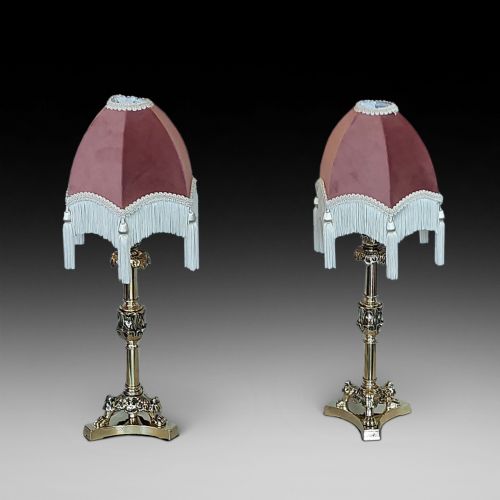
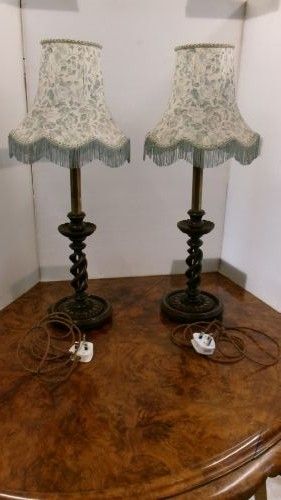


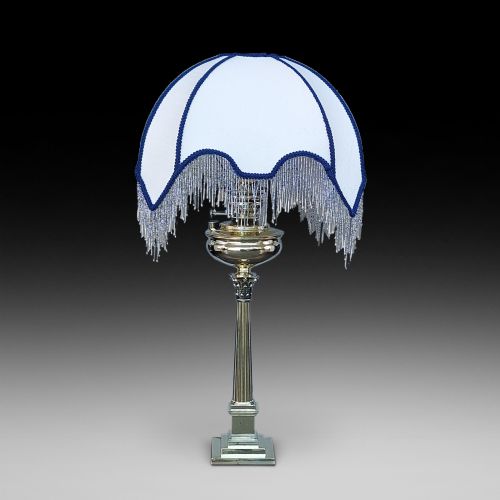


Fringed Fabric Lamp Shade
A fringed fabric lamp shade turns down harsh glare and casts a warm, textured light across a room.
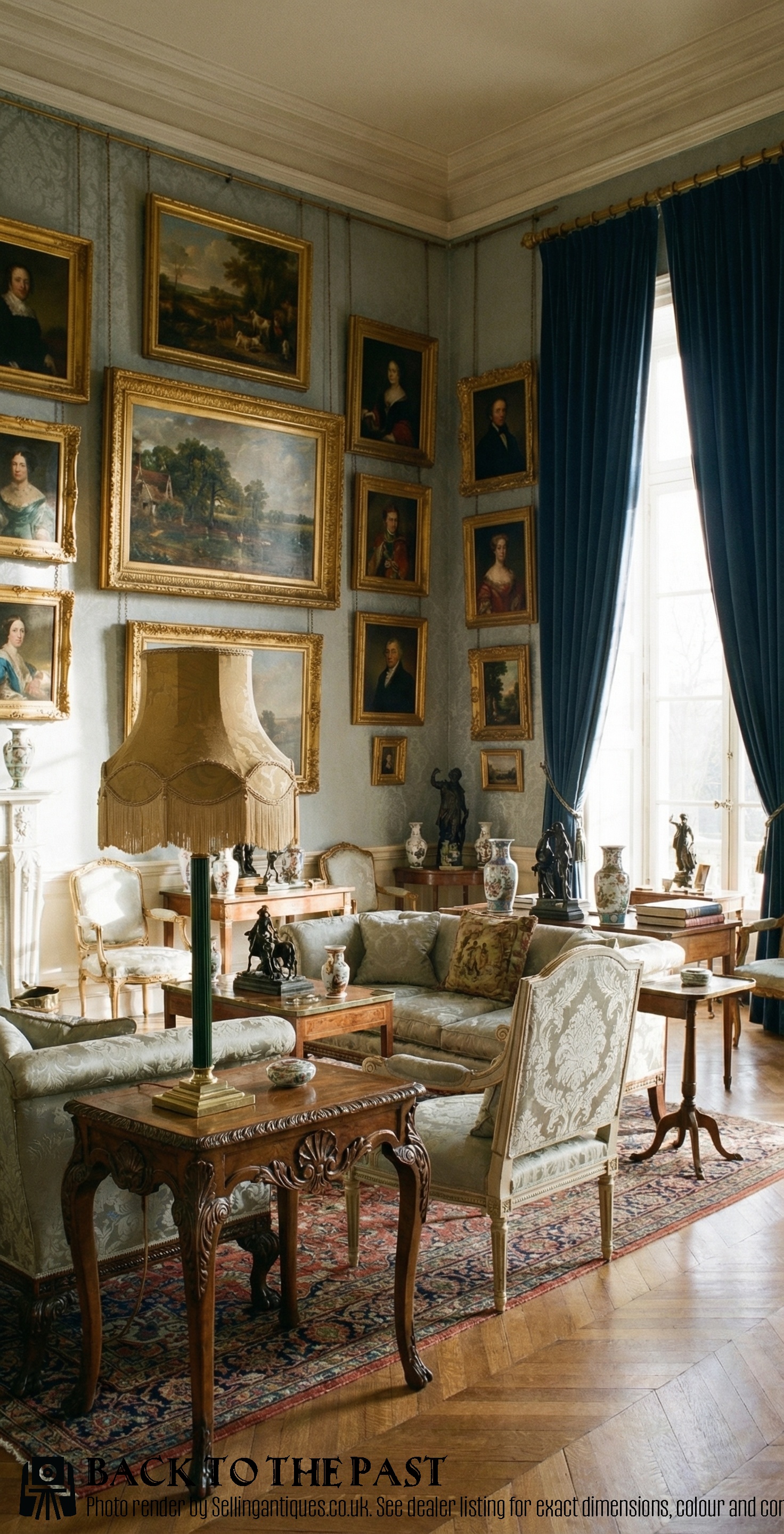
Fringed Fabric Lamp Shade
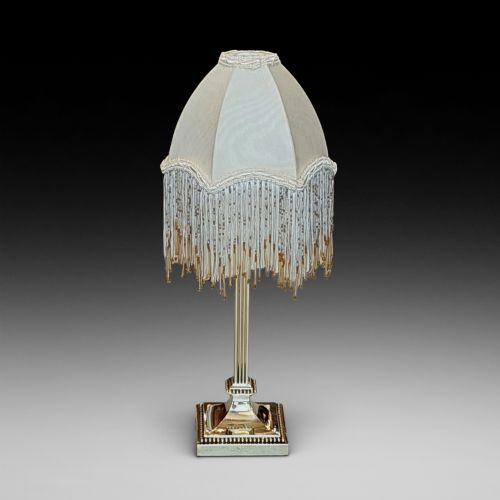
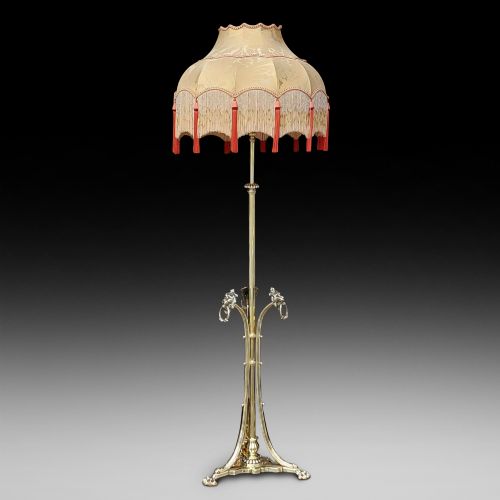
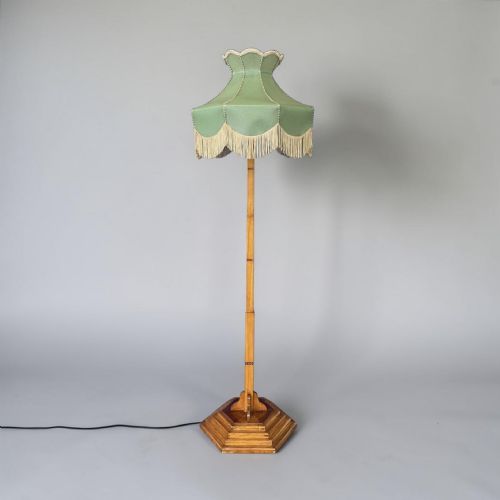
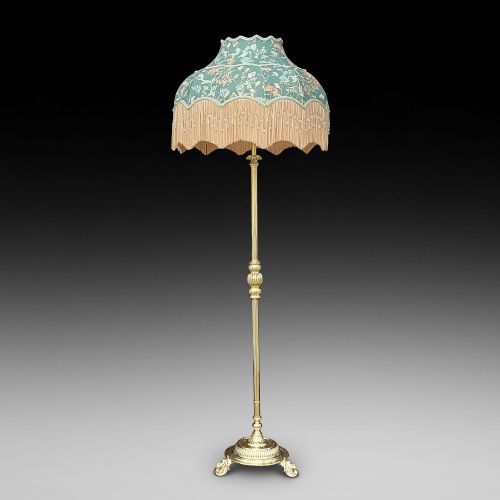
A fringed fabric lamp shade sits on table lamps, standard lamps and floor lamps spanning the Victorian, Edwardian, Art Nouveau and Art Deco periods. These shades complement brass columns, wooden standards and gilt bronze bases originating from the nineteenth and early twentieth centuries.
Buyers meet variations involving silk, glass beads and elaborate trimming atop oil lamps, standard lamps and electric table lamps. The selection draws on styles ranging from Neoclassical Revival to Empire and Gothic Revival.
Judging quality in these pieces
Quality rests on the weight and durability of the materials, from the density of the fabric and the security of the fringe attachment to the solidity of the brass, gilt bronze or carved wooden base. Heavier cast metals and finer textile work distinguish superior examples.
Proportion and detail set the better pieces apart, such as finely carved wooden standards, crisp brass column fluting, and intricate glass beadwork on the shades.
Fringed Fabric Lamp Shade Retail Price Guide 2026
Typical asking prices for fringed fabric lamp shade among the pieces listed under this phrase on Sellingantiques today, from the lower quarter to the upper quarter. They describe what is for sale here now, not the wider market.
Listings for this phrase include items spanning the Victorian, Edwardian, Art Nouveau, Art Deco, and 19th-century periods.
The Fringed Fabric Lamp Shade Glossary
- Standard lamp
- A tall floor lamp designed to illuminate a room from a standing position. These often carry elaborate fabric shades and heavy metal or wooden bases.
- Spelter
- An alloy of zinc used as a cheaper substitute for bronze. It frequently appears painted or gilded on figural lamp bases from the early twentieth century.
- Corinthian column
- A classical architectural column style featuring ornate acanthus leaves on the capital. This design is common on brass table and standard lamps.
- Gilt bronze
- Bronze coated with a thin layer of gold or gold paint. It provides a rich decorative finish on nineteenth-century lamp bases.
- Oil lamp
- A lighting device that burns liquid fuel through a wick. Many surviving examples later undergo conversion to electricity.
Fringed Fabric Lamp Shade: Frequently Asked Questions
How do I clean a fringed fabric lamp shade?
Dust the fabric and fringe gently using a soft brush or a low-suction vacuum attachment. Avoid harsh rubbing that might distort delicate silk or loosen beaded trims.
Keep moisture away unless the specific textile type is known to be washable. Professional textile cleaning is advisable for heavily soiled antique pieces.
Can I use modern LED bulbs with these lamps?
Modern LED bulbs work well provided they match the required wattage and fitting size. LEDs emit less heat, which helps protect older fabrics and silk shades from thermal degradation.
Check that the internal wiring of the lamp suits current safety standards before plugging it in.
How do I date a brass standard lamp?
Examine the construction methods, switch types, and base weighting. Victorian and Edwardian brass standard lamps often feature heavy cast bases, Corinthian columns, and weighted iron interiors.
Later twentieth-century versions tend to use lighter pressed brass and simpler transitional styling.
What is the difference between a table lamp and a standard lamp?
A table lamp sits on a piece of furniture such as a sideboard, desk or side table. Its scale is kept smaller to fit domestic surfaces.
A standard lamp stands directly on the floor as a larger, independent piece of furniture that illuminates a wider area.