


Green Coastal Landscape Watercolour
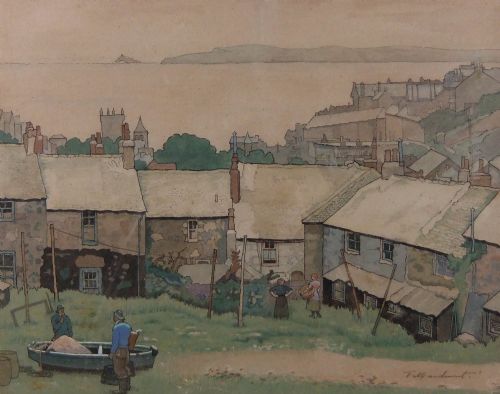
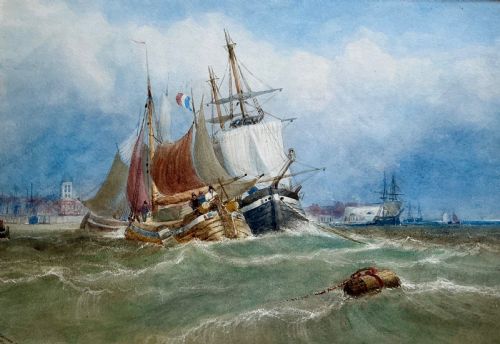
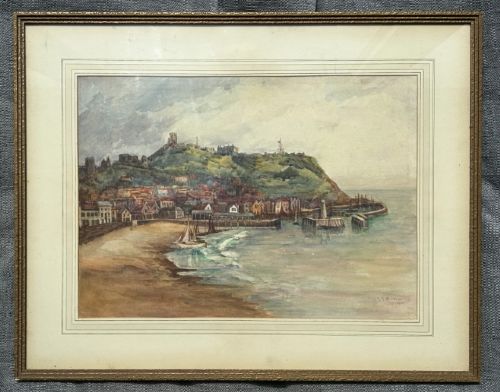
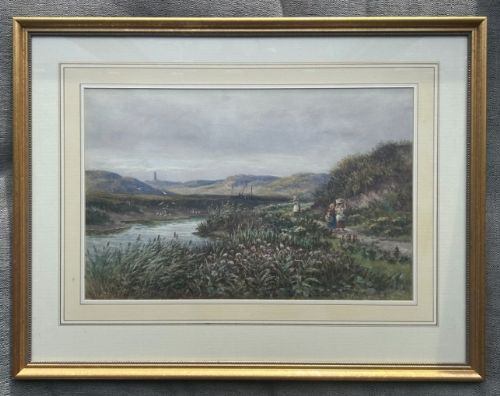
A green coastal landscape watercolour captures maritime shores in delicate pigment, offering buyers a serene window into nineteenth and twentieth-century seaside views.
Green Coastal Landscape Watercolour
A green coastal landscape watercolour represents maritime scenes executed on paper using water-soluble pigments, often depicting shores, bays, and fishing harbours from the Victorian era to the mid-twentieth century. These works frequently incorporate Edwardian pastoral elements alongside rugged British coastal topography.
The version most commonly encountered on this page combines watercolour paint on paper, housed within wood and glass framing, capturing coastal locations ranging from Yorkshire harbours to Devon villages. Such paintings reflect the enduring appeal of British and Irish coastal scenery across successive artistic movements.
Materials and Technique
Artists applied watercolour pigment onto paper supports, utilising the natural white of the paper to generate luminosity within the damp washes of coastal skies and rolling green headlands. Washes were layered to build depth in sea and shore.
Framing typically involved wood surrounds paired with glass protection, preserving the delicate pigments of the paper from atmospheric moisture and handling over decades.
Object types seen on this page include framed paintings, wall art, and original watercolour paintings on paper.
Factors of Distinction
Quality rests upon the artist's command of light and atmosphere, where skilled brushwork conveys the specific movement of coastal air and the particular green tones of maritime vegetation rather than generic scenery. The strength of composition and topographical clarity distinguish finer works.
Condition also separates examples, particularly the preservation of pigment vibrancy on the paper and the integrity of the early framing materials that protect these watercolours.
Thomas Maidment·Henry Barlow Carter·Frank Wood·Frederick Williamson·William Tatton Winter·Joseph William Carey
The Green Coastal Landscape Watercolour Glossary
- Watercolour
- A painting method in which the paints are made of pigments suspended in a water-based solution. It relies on the translucency of the washes.
- Pigment
- The finely ground natural or synthetic coloured powder that gives watercolour paint its hue. These materials provide the enduring colour seen across maritime works.
- St Ives School
- An association of artists centred in Cornwall who focused on coastal and landscape subjects. Their output strongly influenced British landscape painting.
- British Impressionism
- A painting style that emerged in the late nineteenth century focusing on light and everyday subjects. It often shaped how coastal watercolours rendered open-air scenes.
Green Coastal Landscape Watercolour: Frequently Asked Questions
How should I hang a watercolour painting?
Watercolours require placement away from direct sunlight to prevent the fading of delicate pigments on paper. Maintaining stable indoor humidity also protects the paper support and framing.
Positioning the painting at eye level in a principal room allows the fine details of the coastal landscape to be appreciated without environmental strain.
What periods do these paintings represent?
The works span from the Victorian period through the Edwardian era and into the mid-twentieth century, including pieces from the nineteen-thirties and nineteen-forties. Each period brings distinct framing and stylistic traits.
Earlier nineteenth-century works often focus on dramatic topography, while later twentieth-century pieces reflect evolving British landscape traditions.
Are these watercolours original works?
Every listed piece is an original painting executed by hand on paper using watercolour pigments. Artists signed many of these works directly on the sheet.
Such original creations capture the immediate touch of the artist during their observation of the British and Irish coastline.