





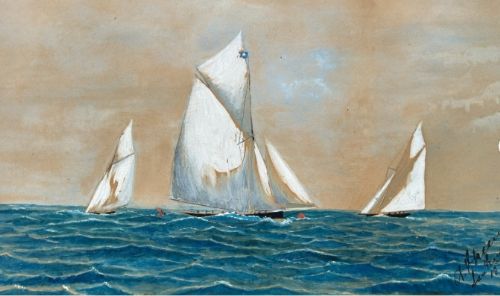

Marine Landscape Watercolour
A marine landscape watercolour captures the shifting moods of the coast and sea through fluid pigments on paper, offering a direct view into maritime history.
Marine Landscape Watercolour
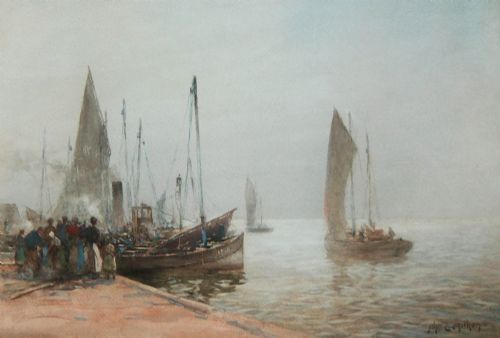
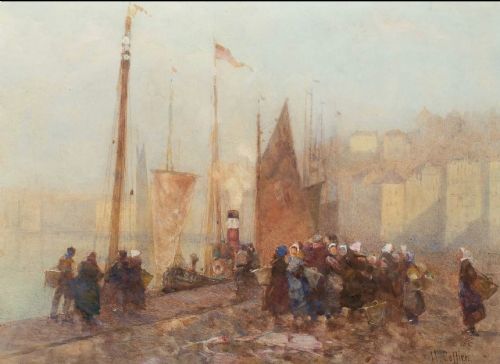
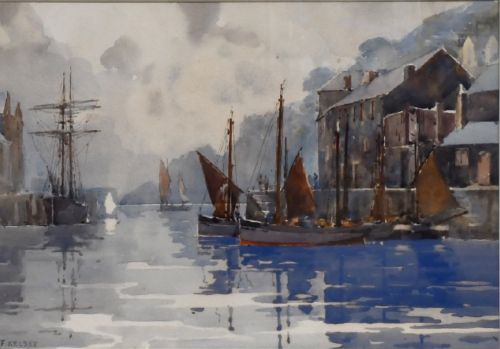
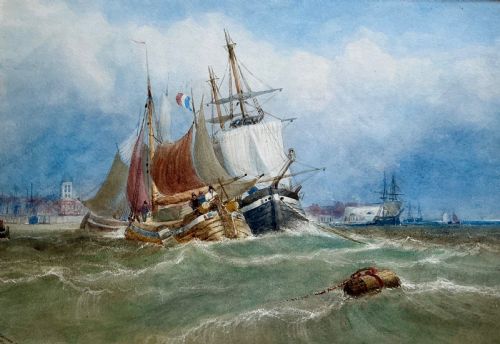
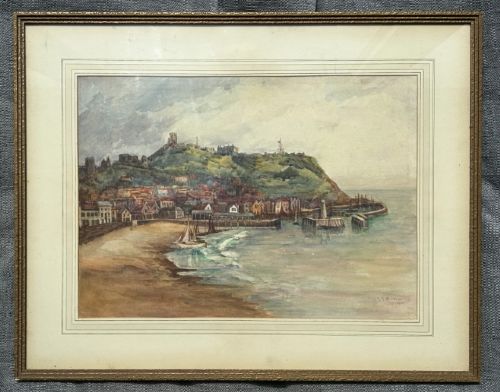
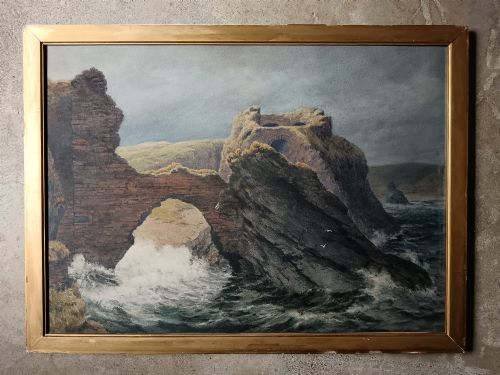
A marine landscape watercolour depicts coastal scenes, harbours, and open waters, primarily originating from the nineteenth and early twentieth centuries. These paintings record specific locations, from Yorkshire fishing ports to European estuaries, rendered through traditional British and continental watercolours.
The works frequently feature shipping vessels, fishing boats, and tidal shores observed during the Victorian, Edwardian, and later periods. Buyers encounter framed sheets bearing historical signatures, documenting coastal life and maritime activity across Britain and beyond.
Materials and technique
Artists applied watercolour pigment suspended in water onto various prepared papers, often utilising the white of the unpainted sheet to create highlights of seafoam and light. Washes of colour establish the atmosphere of sky and water, while finer brushwork details rigging, architecture, and vessels.
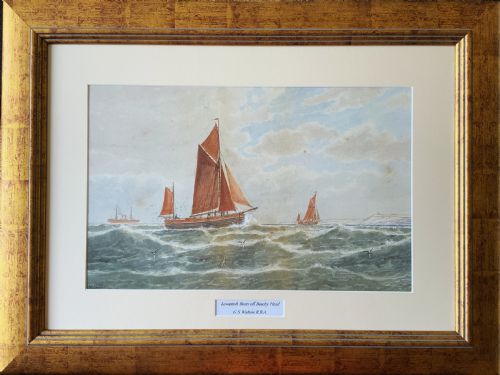
Compositions were typically framed behind glass within wooden surrounds, sometimes incorporating gilt detailing to protect the delicate paper surface from atmospheric moisture and handling.
Framing materials recorded in the archive include traditional wood and gilt wood surrounds protecting pieces behind glass.
Distinctions in quality
The strength of a marine landscape watercolour relies on the artist's handling of light and atmospheric perspective over water, where confident brushwork creates convincing movement in waves and clouds. Compositional balance and descriptive precision regarding maritime architecture or rigging separate accomplished works from routine topographical sketches.
Condition also influences standing, as paper stability, minimal fading of pigments, and the preservation of original tonal contrasts maintain the integrity of the artist's initial vision.
James Orrock·James E Aitken·Hector Caffieri·George Stanfield Walters·Thomas Bush Hardy·Edward Seago
The Marine Landscape Watercolour Glossary
- Watercolour paint
- A medium consisting of colour pigments mixed with a water-soluble binder, applied in translucent washes onto paper.
- Seascape
- A painting depicting the sea, coastal views, and marine vessels operating in tidal or open waters.
- Wash
- A thin, fluid layer of diluted watercolour pigment spread evenly across paper to represent skies or expanses of water.
- Provenance
- The documented history of a painting's ownership and origin, confirming its authenticity and past exhibitions.
- Gilt wood
- Timber framing finished with a thin layer of gold leaf or metallic gilt, commonly used to frame nineteenth-century works.
Marine Landscape Watercolour: Frequently Asked Questions
How should I hang a marine landscape watercolour?
These works on paper require positioning away from direct sunlight to prevent fading of the delicate pigments. Archival framing under glass ensures protection from ambient humidity and dust.
Maintaining stable indoor temperatures preserves both the paper substrate and the historical wooden or gilt frame surrounding the painting.
What subjects appear in these watercolours?
The compositions record busy fishing ports, quiet estuaries, and racing yachts along British and European coastlines. Artists frequently documented working vessels, local maritime architecture, and changing tidal conditions.
Specific geographical locations, from Yorkshire harbours to Venetian canals, provide a clear record of nineteenth and twentieth-century maritime life.
How do I identify the period of a watercolour?
Dating relies on stylistic markers, artist signatures, and framing materials typical of Victorian, Edwardian, or later periods. Subject matter often reflects the costume, vessel types, and maritime technology of the era.
Inscribed titles and biographical dates of the artist offer further confirmation of when the work was produced.
Are these watercolours original paintings?
The listings comprise unique, hand-painted works created directly by the artist rather than mass-produced prints. Each sheet demonstrates individual brushwork, pigment mixing, and paper textures.
Signatures, monograms, and period framing distinguish these historical paintings as singular artistic records.