




Green Ceramic Vase Painting
Green ceramic vase painting brings together centuries of fired clay and pigment, offering hand-decorated vessels that transform a room.
Green Ceramic Vase Painting
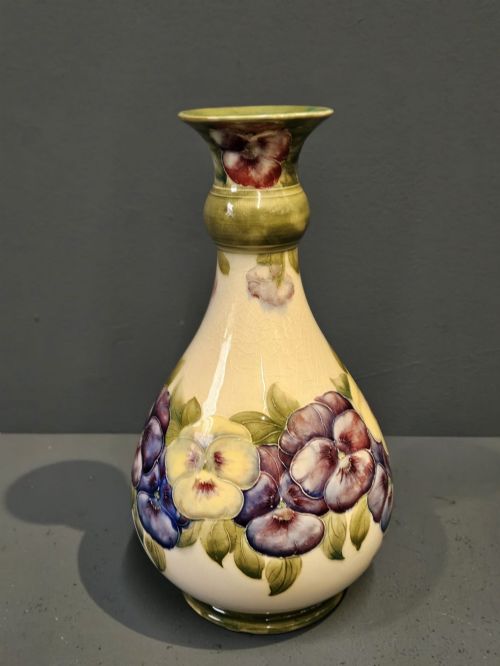
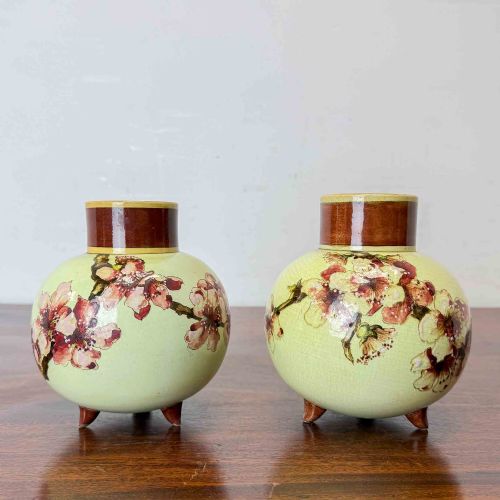
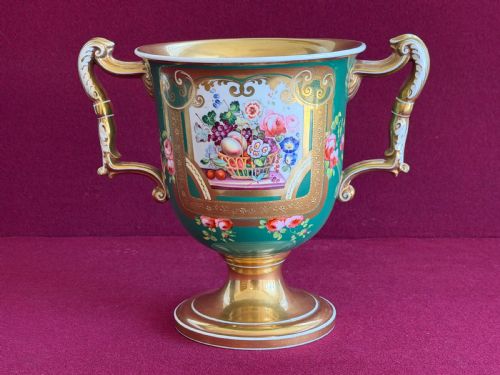
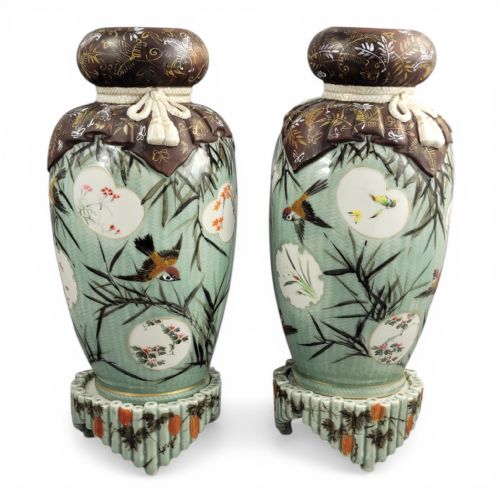
Green ceramic vase painting encompasses earthenware, porcelain, and majolica vessels adorned with botanical, figurative, or abstract pigments, spanning periods from the nineteenth century onward.
The selections on this page highlight Chinese export porcelain, British studio pottery, and continental majolica, featuring ginger jars, baluster vases, and handled urns.
Makers ranging from Doulton Lambeth to Royal Worcester demonstrate how surface painting transformed utilitarian clay into decorative display objects.
Materials and construction
Potters shaped clay, porcelain, or earthenware on the wheel or in moulds before applying lead or tin glazes to form a smooth surface for pigment adhesion.
Artists painted details using iron red, green enamel, and polychrome pigments, often incorporating gold leaf or gilding before firing the pieces in kilns to vitrify the colours.
Listings feature porcelain, earthenware, and majolica across Victorian, Art Nouveau, and Qing Dynasty periods.
Assessing craftsmanship and finish
The distinction between standard production and masterwork lies in the precision of the brushwork and the depth of the glaze, where controlled kiln temperatures prevent running pigments.
Superior examples exhibit harmonious proportions and crisp, hand-painted botanical or figurative motifs that integrate seamlessly with the underlying ceramic body.
Doulton Lambeth·Royal Worcester·Moorcroft McIntyre·Ulisse Cantagalli·Alexandra Porcelain Works
The Green Ceramic Vase Painting Glossary
- Majolica
- A type of earthenware coated with an opaque tin glaze and painted with metallic oxides. This technique produces vibrant green and polychrome surfaces typical of nineteenth-century continental workshops.
- Famille Verte
- A Chinese porcelain palette dominated by green enamel, developed during the Qing dynasty and widely emulated in later European ceramics.
- Faience
- Tin-glazed earthenware produced in Europe, often featuring hand-painted floral or landscape motifs across the body of the vessel.
- Biscuit
- Unglazed fired ceramic pottery that provides a porous surface for subsequent painting and enamelling.
- Ewer
- A large jug with a wide spout and handle, frequently produced in porcelain or earthenware for decorative display.
Green Ceramic Vase Painting: Frequently Asked Questions
How do I clean an antique painted vase?
Dust the surface gently with a soft, dry brush to prevent accumulation. Avoid abrasive cloths and chemical cleaners that damage fragile enamel or gilt highlights.
Keep painted ceramics away from direct sunlight and moisture to preserve the stability of the glaze and pigments over time.
Are these vases suitable for holding water?
Many historical vessels, particularly those adapted into lamps or delicate porcelain pieces, function best as decorative objects rather than functional water containers.
Check the interior for hairline cracks or porous earthenware bodies that might leak if exposed to moisture.
How can I date a painted ceramic vase?
Examine the base for maker marks, impressed factory stamps, and the style of the painted decoration. Stylistic shifts between Victorian revivalism and Art Nouveau provide reliable chronological markers.
Compare the potting technique and glaze composition against known production periods for manufacturers such as Doulton Lambeth or Royal Worcester.
What does converted to a lamp mean?
A lamp conversion involves drilling or adapting a vase to house electrical wiring and hardware. This practice was common in the twentieth century to repurpose decorative antique vessels for modern domestic lighting.
Inspect whether the original ceramic body retains its structural integrity around the drilled aperture.