


Victorian Kitten Art
Victorian kitten art brings charming nineteenth century oil paintings and prints of playful felines into your home.
Victorian Kitten Art
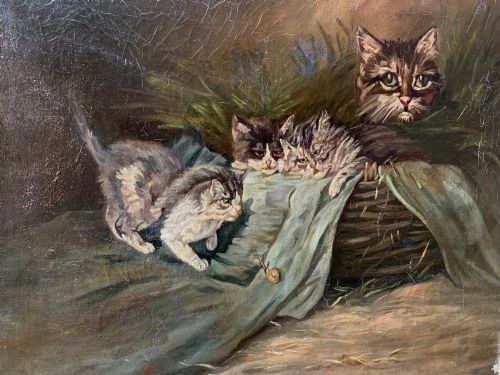
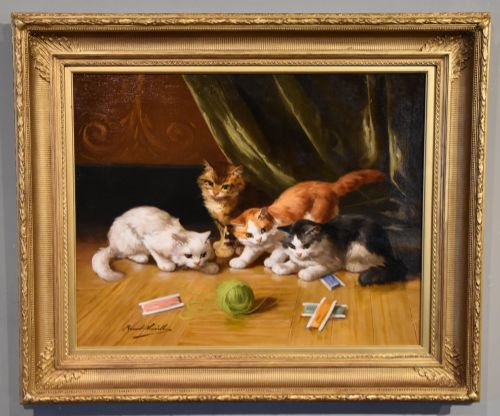
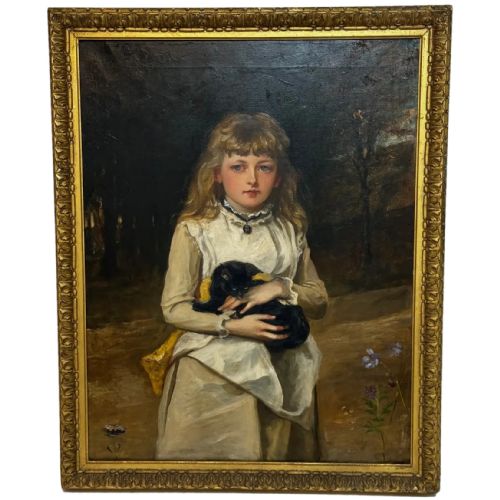
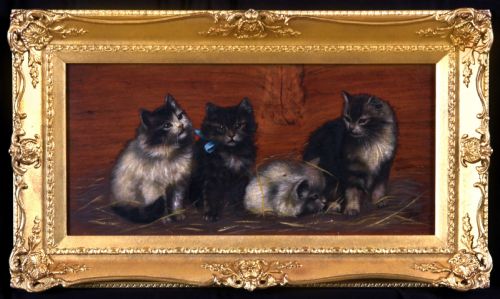
When you search for victorian kitten art, you encounter charming nineteenth century depictions of domestic felines engaged in playful or domestic scenes. These works capture the popular sentiment and genre painting trends of the period, showcasing cats in domestic interiors or natural settings.
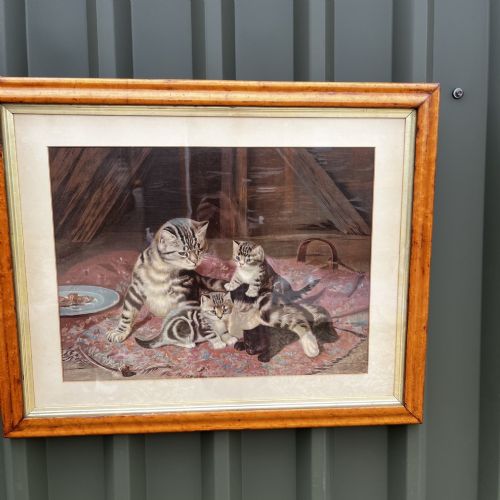
The pieces you meet on this page include original oil paintings on canvas and board, alongside period chromolithographs. Artists of the era specialised in capturing the soft fur and mischievous expressions of young cats, often grouping them into lively compositions like tea parties or playful tumbles.
Originating largely from British and French artistic traditions, these works span the nineteenth century and extend slightly into the early twentieth century. They reflect a Victorian fascination with animal painting, where household pets became subjects of serious artistic merit and sentimental affection.
How these pieces were made
Artists painted these works primarily using oil paint on canvas or wooden board, applying layers of pigment to build the texture of soft fur and fabrics. This medium allowed for rich blending and depth, which painters utilised to render realistic lighting and domestic details.
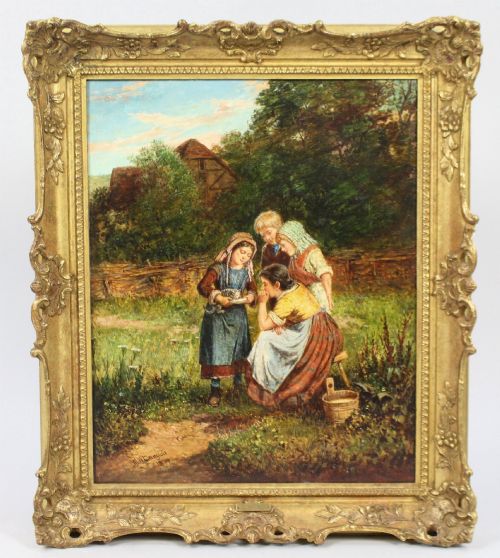
Many of these oil paintings sit within period frames constructed from gesso and wood, frequently enhanced with gold leaf or gilt finishes. These ornate surrounds complement the painted scenes, reflecting the decorative standards of nineteenth century framing workshops.
Several canvases capture kittens mid-mischief, proving that feline curiosity has amused art buyers for over a century.
What varies in quality
The distinction between average and exceptional work lies in the anatomical accuracy of the animals and the liveliness of their expressions. Master painters capture the fluid movement and distinct textures of kitten fur with careful brushwork, whereas lesser works appear stiff and generalised.
Compositional complexity and the rendering of surrounding domestic objects also separate standard decorative pieces from superior examples. Skilled artists integrate the kittens naturally into detailed interiors or landscapes, creating a balanced and engaging narrative within the frame.
Mark William Langlois·Alfred Arthur Brunel de Neuville·Horatio Henry Couldrey·Agnes Augusta Talboys·Henry Weigall·Francisco Jose Domingo y Marques·Bessie Bamber
The Victorian Kitten Art Glossary
- Chromolithograph
- A multi-coloured print produced using lithographic stones, allowing for vibrant reproductions of original paintings. This technique became popular in the nineteenth century for mass-producing accessible art.
- Genre painting
- Artwork that depicts scenes from everyday life, often featuring ordinary people or domestic animals in natural settings. In this context, it describes the charming domestic antics of cats and kittens.
- Gesso
- A plaster-like mixture applied to wooden frames before gilding, providing a smooth base for intricate moulding. It creates the raised decorative details found on period frames.
- Gilt wood
- Wood coated with a thin layer of gold leaf or metallic powder to resemble solid gold. This finish enhances the decorative appeal of nineteenth century frames.
- Oil on canvas
- A traditional painting medium where oil-based pigments are applied to a stretched woven fabric support. This combination offers durability and rich colour depth.
Victorian Kitten Art: Frequently Asked Questions
What is victorian kitten art?
Victorian kitten art comprises nineteenth century paintings and prints depicting domestic cats and kittens in playful or observational settings. These works reflect the era's affection for household pets and the popularity of animal genre painting.
Artists of the period captured the distinct personalities and soft textures of young felines, producing works that remain popular with collectors today.
How were these paintings displayed?
These artworks were typically displayed in domestic parlours and drawing rooms within ornate gilt wood frames. The frames were designed to complement the interior decor of nineteenth century homes.
Today, they suit similar traditional or eclectic living spaces, often hung in prominent positions on panelled or neutral walls.
Who painted these kitten scenes?
Various British and European artists specialised in painting animals during the nineteenth century, capturing domestic scenes with considerable skill. Painters often focused on the humorous or tender interactions between mother cats and their litters.
Notable contributors to this genre included Alfred Arthur Brunel de Neuville and Horatio Henry Couldrey, whose works are recognised for their anatomical precision.
How do I care for an oil painting?
Oil paintings require stable environmental conditions away from direct sunlight and extreme humidity fluctuations. Gentle dusting with a soft, dry brush helps maintain the surface without disturbing the pigment.
Avoiding moisture and harsh cleaning agents ensures the canvas and original gesso frame remain preserved for future years.