


Green Ceramic Table Lamp
A green ceramic table lamp brings rich colour and enduring form into a room, drawn mostly from nineteenth-century Chinese vases and European porcelain bases.
Green Ceramic Table Lamp
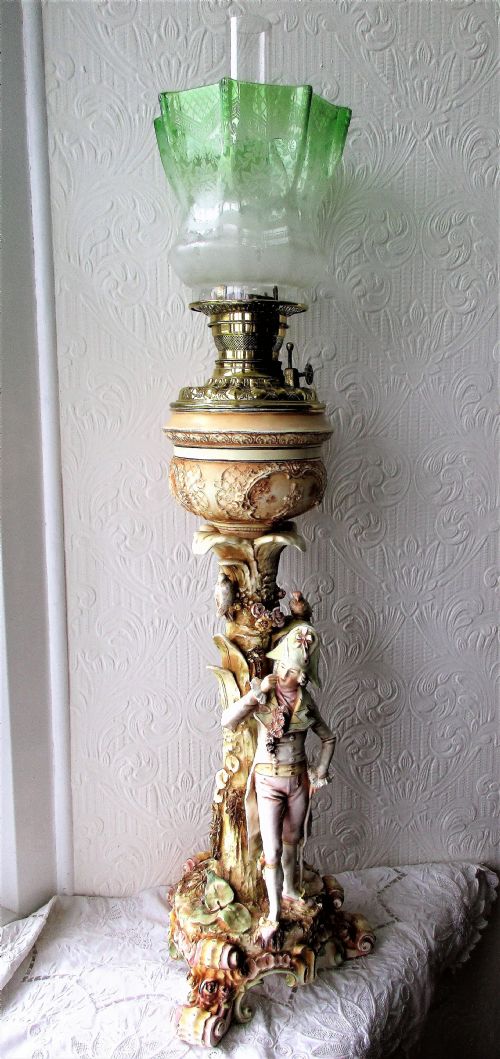
When you search for a green ceramic table lamp, you encounter pieces that are predominantly converted nineteenth-century vases, ginger jars and oil lamps. The selection spans Victorian and Edwardian periods, alongside French nineteenth-century and Art Deco examples.
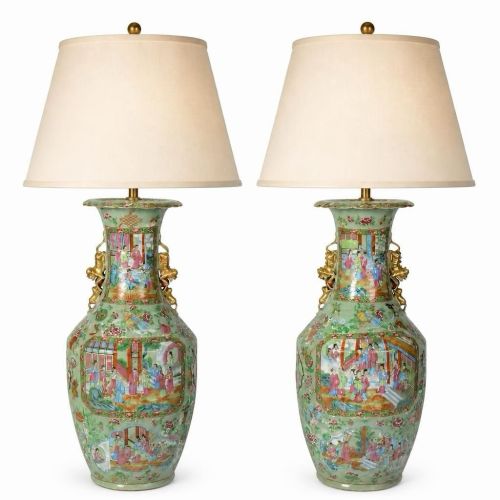
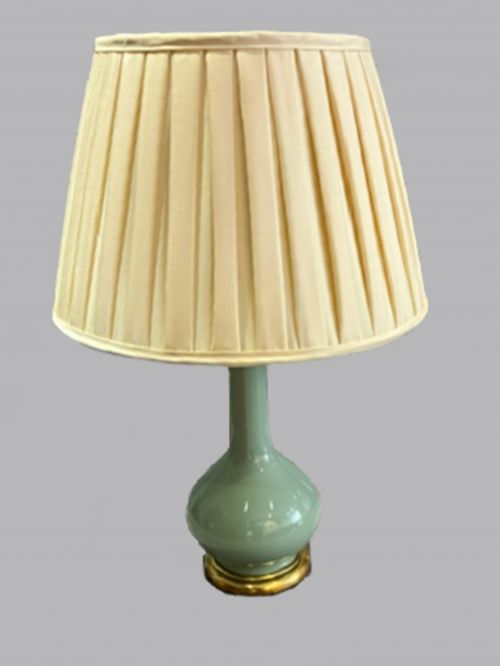
Chinese export ceramics form a large share of the available objects, particularly celadon and famille verte wares fitted for electricity. These pieces frequently appear as matched pairs or single statement bases.
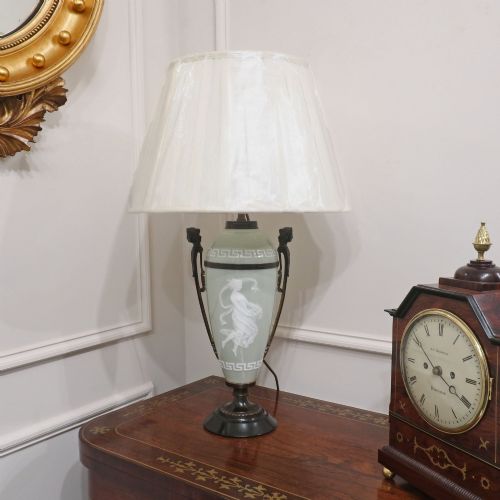
European interpretations also emerge through majolica, pate sur pate porcelain and art nouveau tile work. Many items retain earlier brass, gilt bronze or ormolu mounts from their original iterations as decorative vessels or oil lamps.
Materials and construction methods
Potters shaped the ceramic and porcelain bodies by hand or on the wheel before applying vibrant green glazes, celadon washes or hand-painted enamels. Artisans then fired the vessels in kilns to achieve durable, lustrous finishes.
Metalworkers added structural stability and decorative enrichment using brass, gilt bronze and ormolu mounts. These metal fittings often secure the ceramic body to a weighted base and anchor the electrical components.
The listings feature porcelain, ceramic, brass, gilt bronze, enamel, metal and wood across Victorian, Edwardian, 1900 and 1930 periods.
Distinctions in quality and execution
Superior examples display crisp hand-painted detail and finely cast ormolu mounts that integrate harmoniously with the ceramic body. The depth of the green glaze and the crispness of any incised or moulded decoration mark the distinction between standard production and exceptional studio work.
The precision of the conversion from vessel to lamp matters significantly. Top-tier pieces retain their original proportions and structural integrity without compromising the antique ceramic or metalwork.
The Green Ceramic Table Lamp Glossary
- Celadon
- A pale green jade-like ceramic glaze originating in China. It achieves its characteristic translucent colour from iron oxide in the glaze reacting during reduction firing.
- Famille Verte
- A Chinese porcelain palette dominated by green enamel overglaze colours. Introduced during the Qing dynasty, it often depicts natural scenes and figures.
- Ormolu
- Finely ground high-carat gold mercury-gilded onto a bronze object. It provides durable decorative mounts for nineteenth-century porcelain lamps.
- Pate-sur-pate
- A ceramic decorating technique where liquid clay is applied layer by layer to a background. This builds up a low relief cameo effect before firing.
- Majolica
- earthenware decorated with opaque coloured glazes on a tin enamel base. It yields rich green tones found in Victorian lighting.
Green Ceramic Table Lamp: Frequently Asked Questions
Are these lamps converted from old vases?
Many of these pieces began life as nineteenth-century Chinese export vases, ginger jars or oil lamps before being adapted for modern lighting. The conversion process preserves the historical ceramic body while adding appropriate wiring and hardware.
This method allows antique vessels to find a practical purpose in contemporary interiors without losing their original decorative character.
How do I identify a celadon glaze?
Celadon is characterised by a soft, pale green tone that resembles jade, resulting from iron oxide reacting in the kiln during firing. It often displays subtle crackle lines within the glaze surface.
This finish appears frequently on nineteenth-century Chinese porcelain bases available in the collection.
What periods do these lamps represent?
The lighting spans the nineteenth and early twentieth centuries, including Victorian, Edwardian and Art Deco eras. French nineteenth-century neoclassical and Chinese export styles also feature strongly.
Each period brings distinct stylistic traits, from ornate ormolu mounts to minimalist geometric forms.
Do these lamps come as pairs?
Several listings offer matched pairs of vases converted into lamps, particularly among the nineteenth-century Rose Medallion and Famille Verte stock. Single lamps also appear frequently for use on smaller side tables.
Pairs provide symmetrical lighting options for mantelpieces or larger sideboards.