




Green Baize Gaming Table
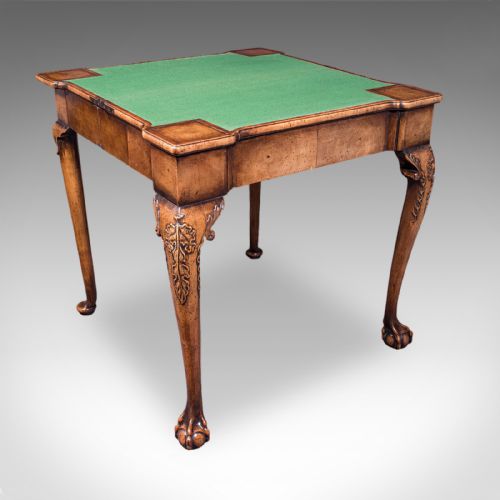
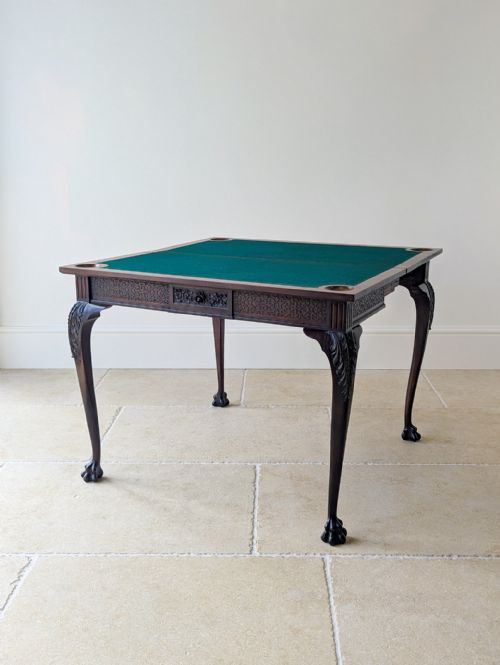
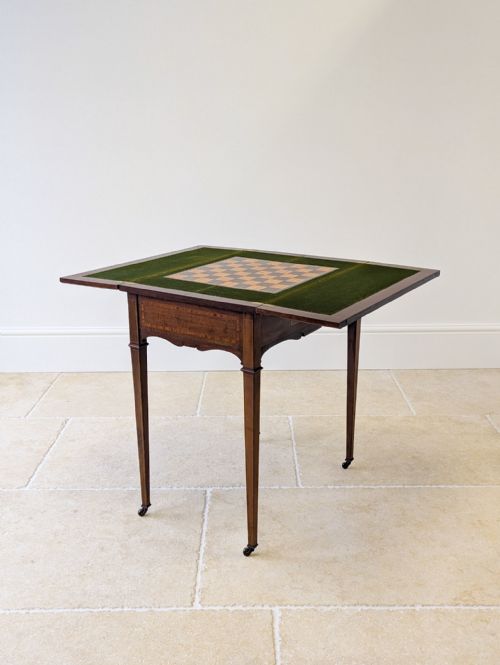
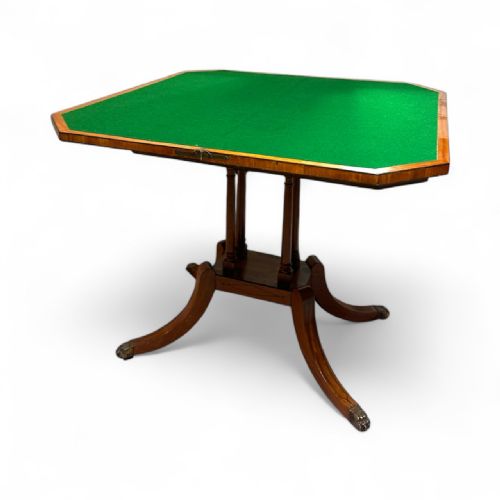
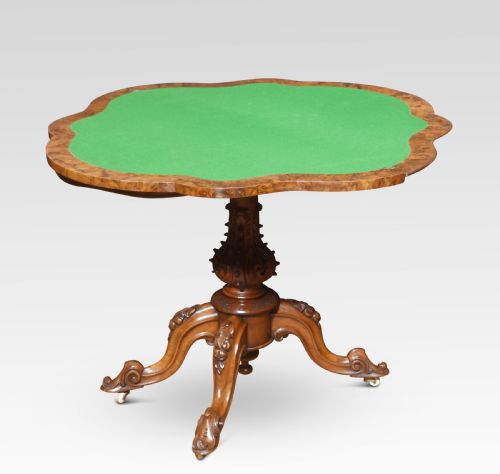
A green baize gaming table offers a tactile surface for cards and chess, bringing period craftsmanship straight into the modern drawing room.
Green Baize Gaming Table
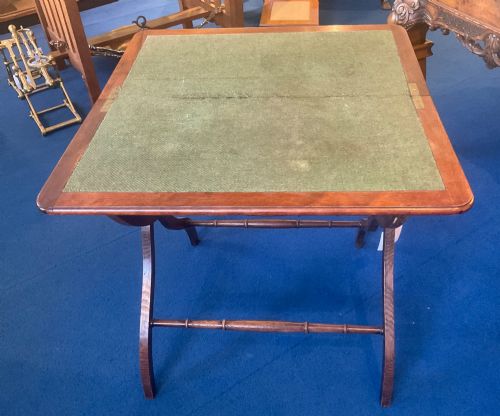
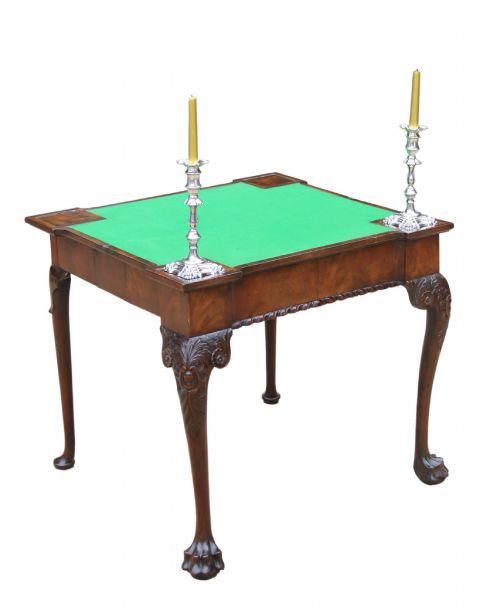
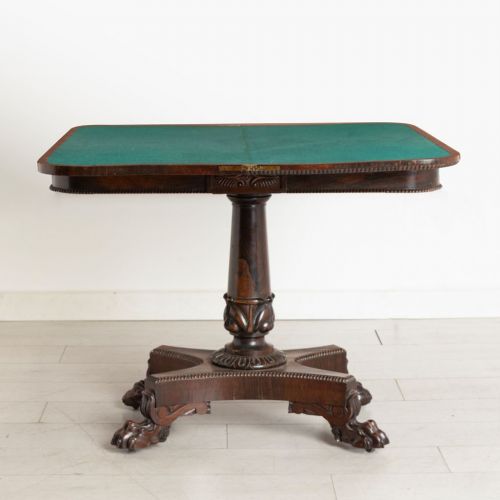
A green baize gaming table covers forms designed for card games, chess, and roulette, spanning the Georgian, Regency, and Victorian eras. These pieces include fold-over card tables, envelope tables, and occasional game furniture.
The Edwardian iterations feature mahogany and clever folding mechanisms, while earlier Georgian and Regency examples utilise rosewood and walnut. Buyers frequently encounter walnut and mahogany constructions across the nineteenth century.
Originating in English, Irish, and French workshops, these tables range from demi-lune consoles to occasional pieces with integrated drawers. The selection on this page demonstrates the diverse domestic pastimes of past centuries.
Elements of construction and finish
Superior examples demonstrate precision in the concertina or envelope folding actions, ensuring the timber surfaces align seamlessly when closed. The choice of figured veneers, such as burr walnut or rosewood, indicates the workshop's ambition.
Makers such as James Shoolbred and Edwards & Roberts brought notable cabinet-making standards to their games tables. The integration of auxiliary drawers and the retention of original wool baize distinguish the finest survivals.
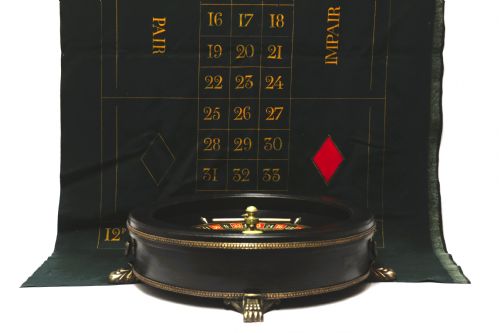
A French roulette wheel from eighteen eighty brings the lively clatter of nineteenth-century gaming directly to the antique card table.
James Shoolbred & Co.·Edwards & Roberts
The Green Baize Gaming Table Glossary
- Baize
- A coarse woolen fabric used traditionally to cover gaming and card tables. This material provides a soft, durable texture that cushions playing pieces.
- Envelope table
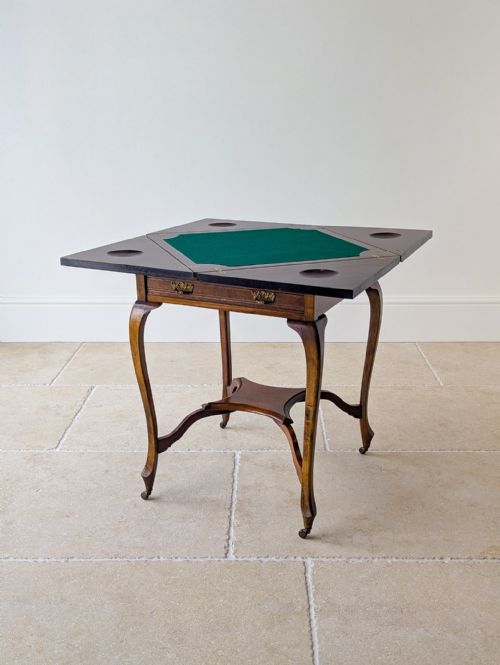
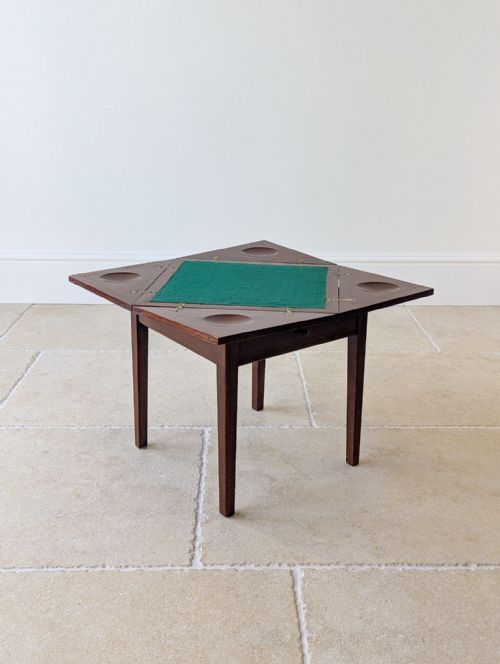
- A card table with a square top that folds open by rotating four triangular flaps. This clever design reveals a baize-lined interior surface.
- Concertina action
- An expandable frame mechanism that supports a fold-over table top when opened. It allows the table legs to extend symmetrically in pairs.
- Demi-lune
- A half-moon shape characteristic of certain console and card table tops. These pieces sit flat against a wall until unfolded for play.
- Parcel gilt
- A decorative technique where selected carved areas are partially covered with gold leaf. This method highlights specific details on ebonised or polished timber.
Green Baize Gaming Table: Frequently Asked Questions
How do you open an envelope card table?
The top consists of four triangular flaps hinged to fold inward and outward over each other. Rotating the top section causes these triangular leaves to open simultaneously like an unfolding envelope.
Underneath this clever mechanism, the baize-lined playing surface emerges smoothly without requiring extra support legs to pull out manually.
What games were played on these tables?
Georgian and Victorian households used these multi-functional surfaces for card games, chess, and bridge. Dedicated compartments or reversible tops accommodated multiple pastimes.
Some specialised tables incorporated roulette wheels or storage drawers for counters and cards, reflecting the varied social entertainment of the period.
How do I distinguish Georgian from Victorian tables?
Georgian examples often display restrained lines in mahogany or rosewood, adhering to neoclassical or Chippendale revival styles. Their fold-over tops frequently rely on concertina actions.
Victorian and Edwardian versions introduce burr walnut, ebonised finishes, and complex envelope mechanisms. They showcase the expanding industrial techniques of later nineteenth-century cabinet makers.
Where should I place a games table at home?
These tables function well as console or occasional furniture against a living room wall when closed. Their compact folded footprint makes them adaptable for smaller spaces.
Opening the top transforms the piece into a functional centre for games or a writing surface, retaining the versatility intended by the original makers.