



Grandmother Floor Clock
A grandmother floor clock brings the architectural presence of a full-scale longcase into rooms of modest proportions.
Grandmother Floor Clock
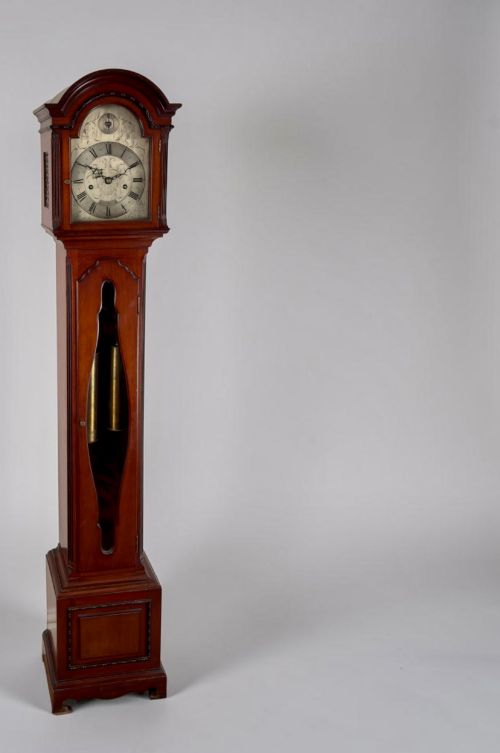
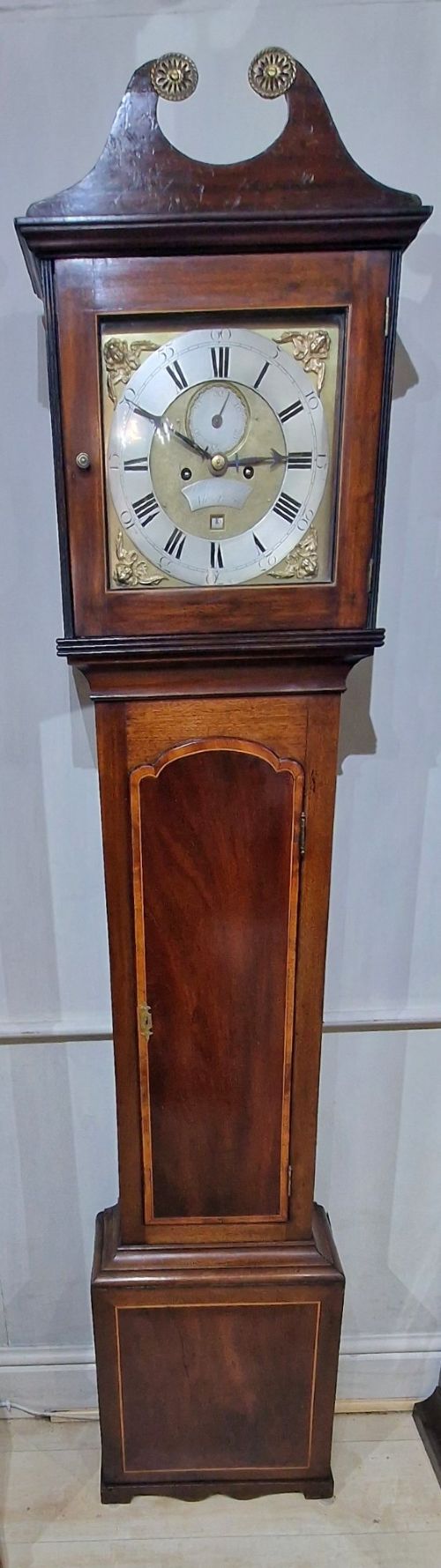
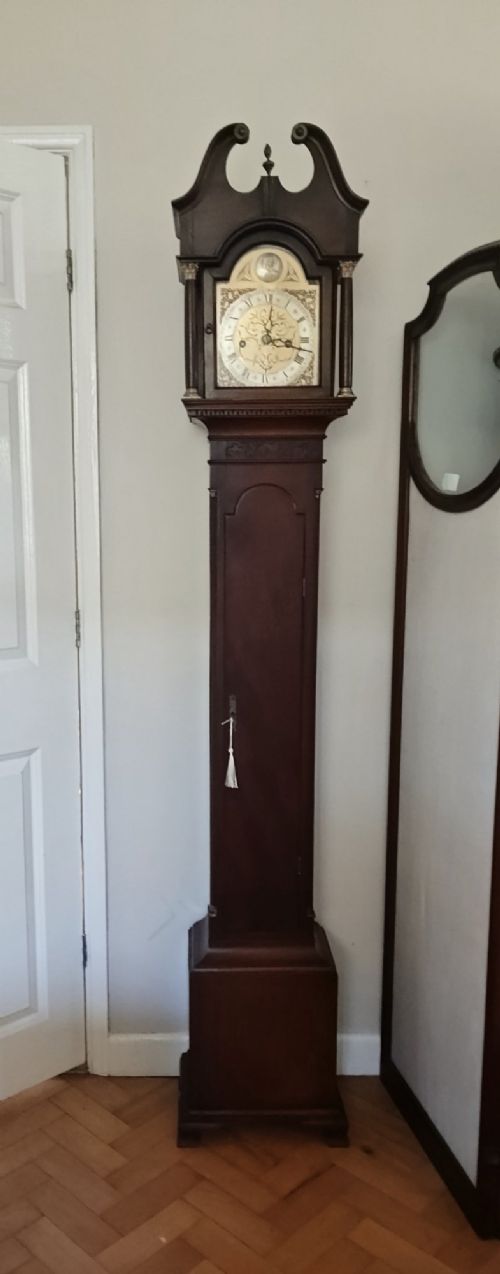
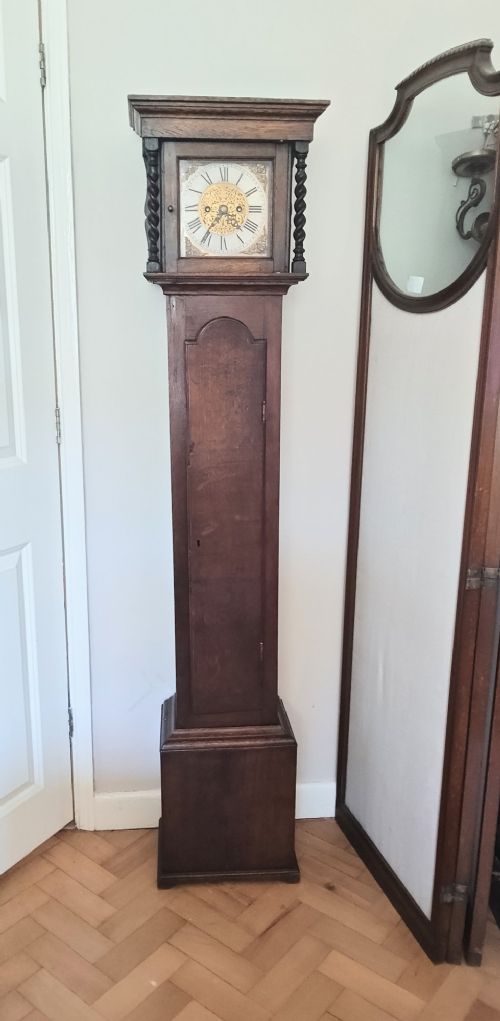
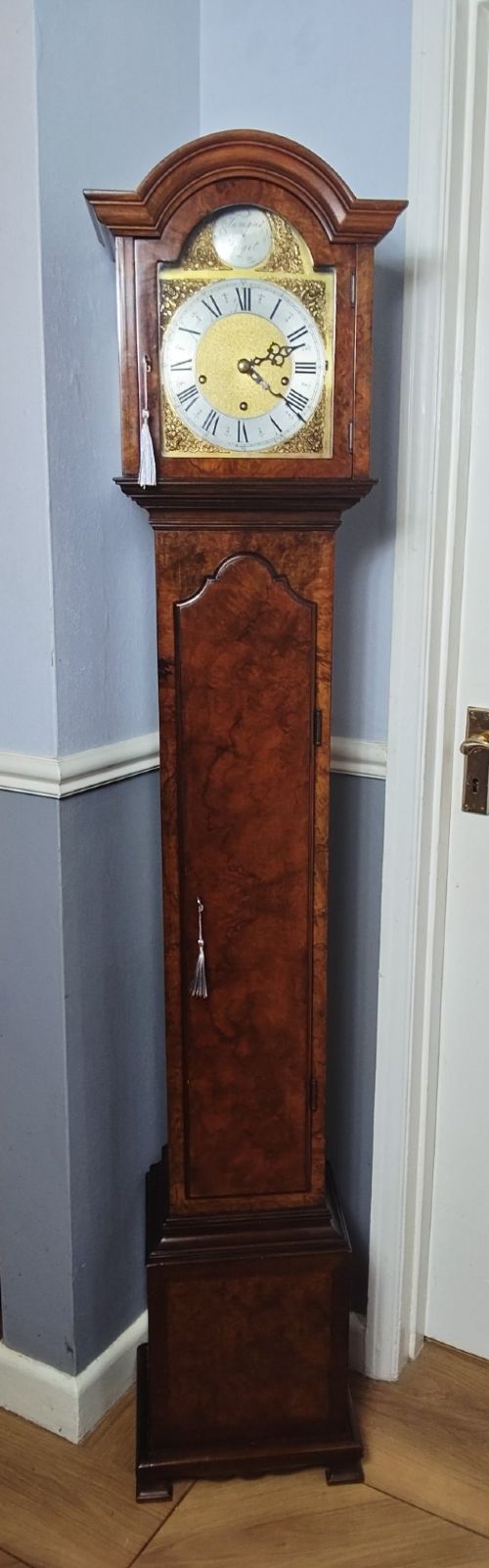
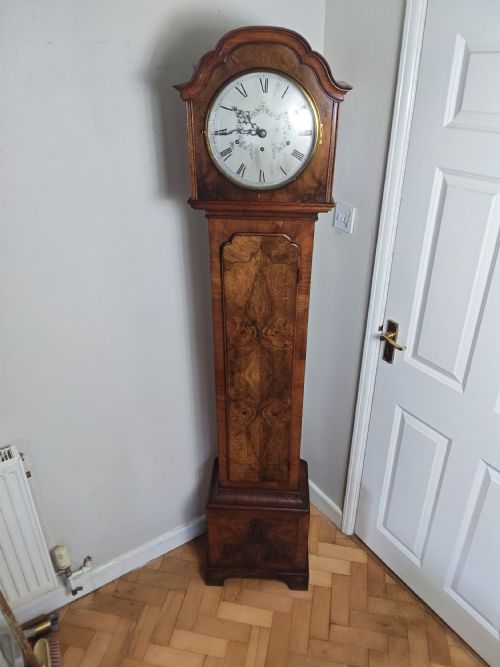
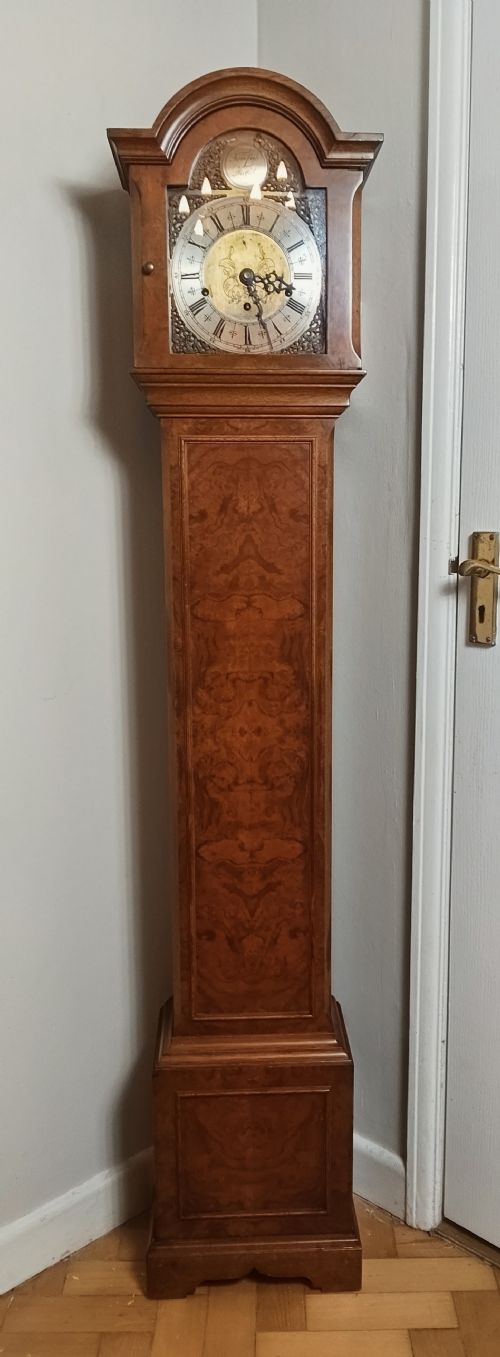
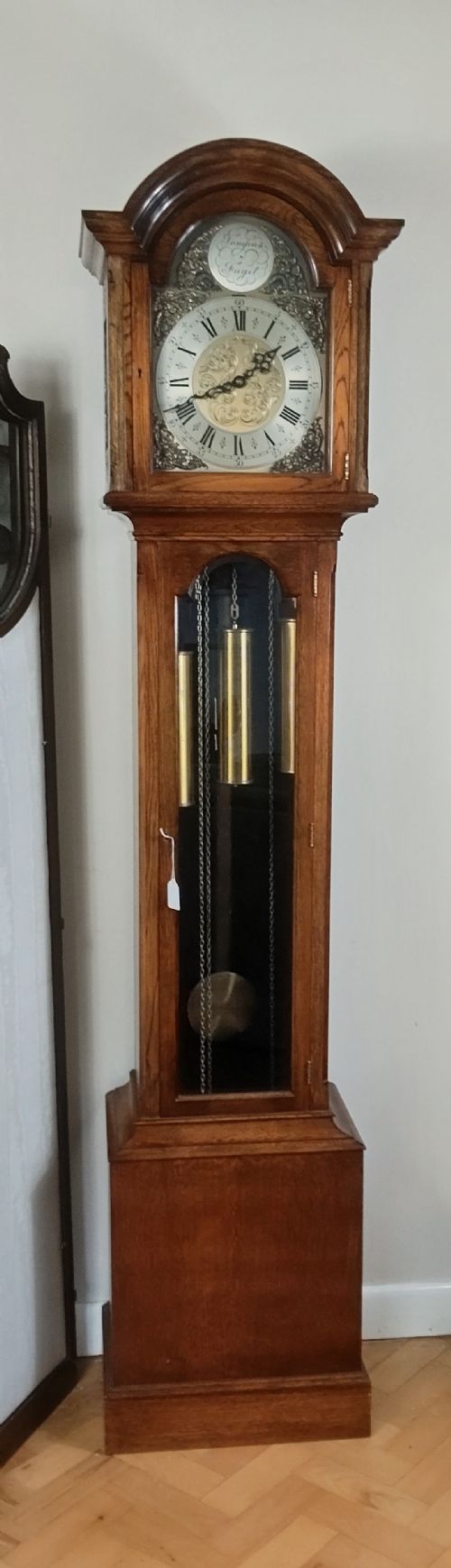
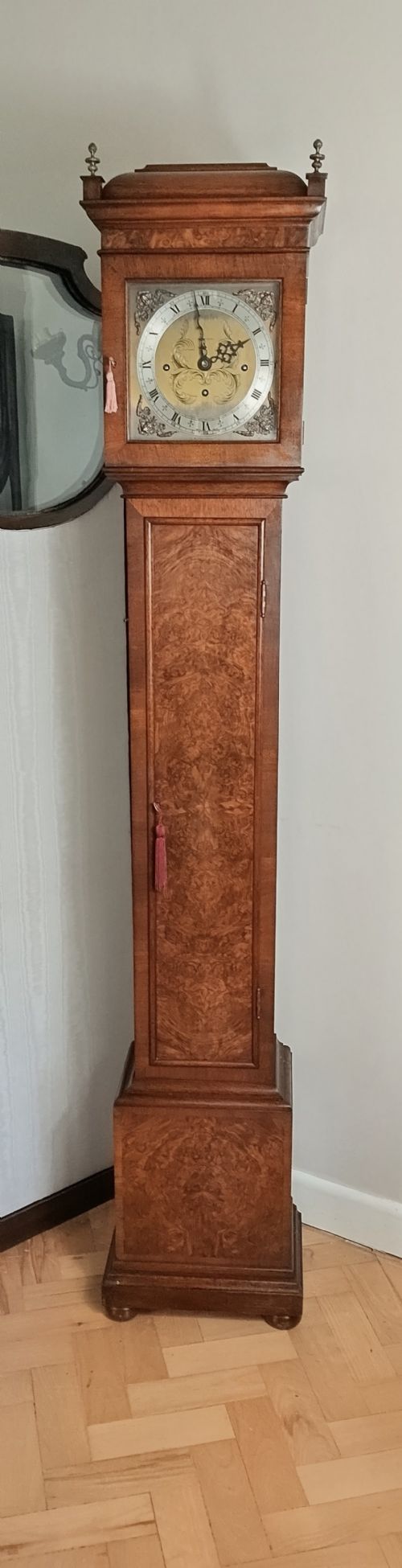
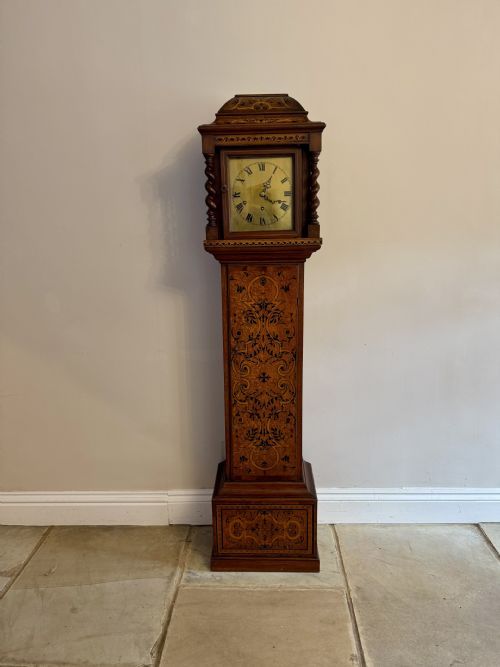
A grandmother floor clock is a scaled-down longcase timepiece designed to occupy less vertical and floor space than its taller grandfather counterpart while retaining traditional weight-driven or spring-driven mechanisms. These scaled pieces appear in forms dating from the 19th Century and Edwardian era through to the mid-20th century, with significant representation from the 1920s and 1930s.
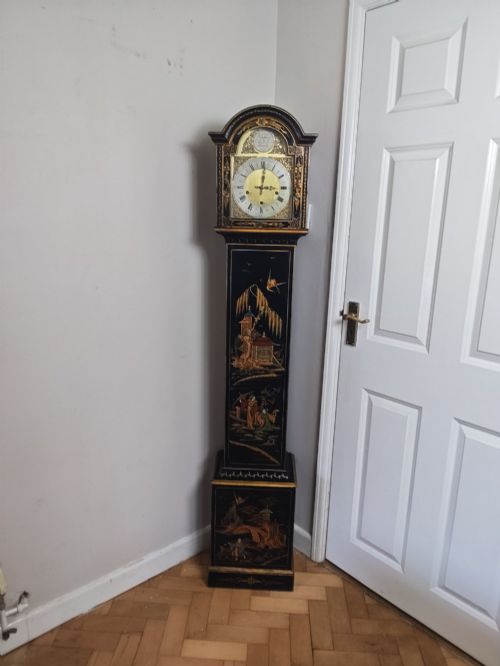
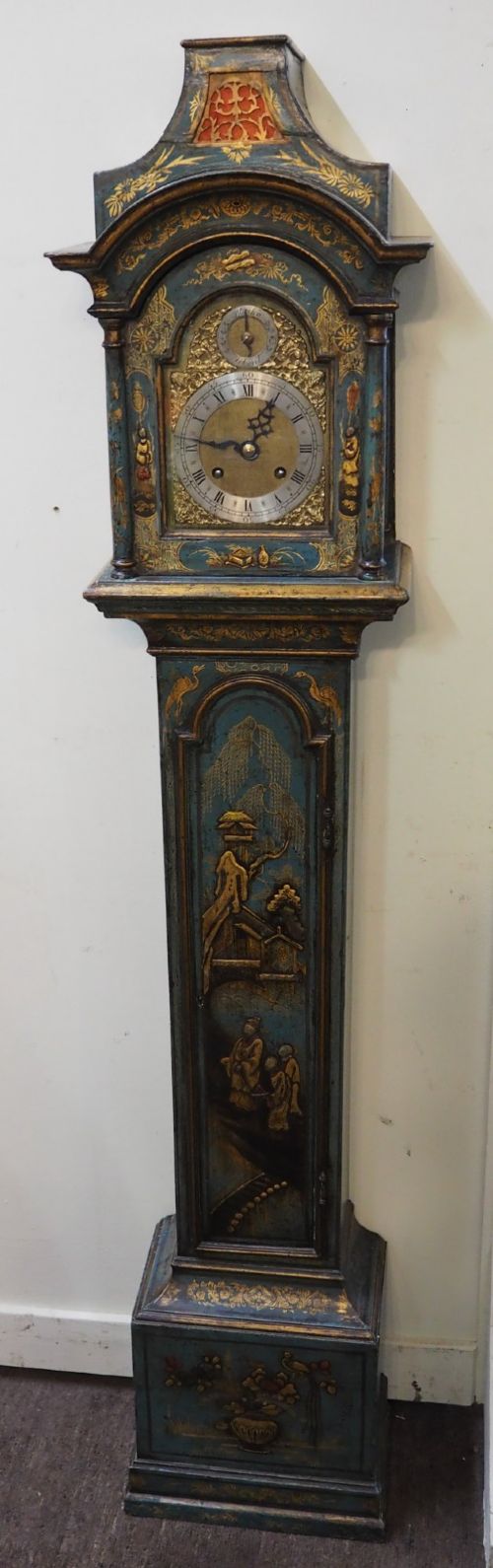
Buyers encountering this phrase find a variety of timber housings, including mahogany, oak, walnut, burr walnut, and decorative lacquer finishes such as Chinoiserie. The physical evidence shows styles ranging from Georgian and Victorian revivals to Queen Anne and Jacobean influences, alongside Edwardian interpretations.
Forms span simple timepieces to complex musical and quarter-chiming variations with brass dials. Many examples bridge the terminology between small longcases, regulators, and miniature grandfather clocks.
Materials and Construction
Timbers such as mahogany, oak, and figured walnut form the structural cases, often enhanced by burr walnut veneers or elaborate quarter-veneering. Lacquered surfaces receive painted or gilt decoration in blue or cream Chinoiserie schemes.
Interior movements rely on brass dials, glass viewing panels, and complex weight or spring configurations that drive quarter-chiming, Westminster chimes, or musical outputs.
Several clocks are small enough to convince visitors you live in a house designed for well-to-do mice.
Evaluating Craftsmanship
Quality rests in the precision of the case joinery and the selection of timber veneers, where figured walnut or burr walnut displays deliberate grain matching. Finer examples integrate sophisticated quarter-chiming or musical movements by notable makers.
Dial execution separates standard production from superior pieces, with engraved brass work, crisp silvered chapters, and substantial metal components indicating higher workshop standards.
Gillett & Johnston of Croydon·Elliott·JJ Elliot·Dent of London·Harrods·Robb, Montrose
The Grandmother Floor Clock Glossary
- Longcase clock
- A tall, weight-driven pendulum clock enclosed in a wooden case with a waist and base. These pieces are often referred to as grandfather clocks when tall.
- Grandmother clock
- A smaller, shortened version of the traditional longcase clock, typically standing under six feet tall. They were popular during the Edwardian period and the early twentieth century.
- Quarter chiming
- A movement mechanism that strikes the quarter hours using multiple gongs or bells. This adds acoustic complexity to the piece.
- Chinoiserie
- European decorative style inspired by Chinese art and design, characterised by raised motifs and painted lacquer. It appears on select clock cases.
- Burr walnut
- Timber sliced from walnut tree growths, yielding highly figured, swirling grain patterns. It is used as a veneer on high-status clock cases.
Grandmother Floor Clock: Frequently Asked Questions
How tall is a grandmother floor clock?
These clocks are generally built to smaller proportions than traditional tall clocks, making them suitable for rooms with lower ceilings.
Their reduced height distinguishes them within the broader category of longcase timepieces.
What is the difference between a grandmother and grandfather clock?
The primary distinction lies in the overall height and scale of the wooden case. Grandmother clocks offer a compact alternative while housing similar weight-driven or spring movements.
Both styles share traditional dial configurations and pendulum mechanisms.
How do I wind a chiming grandmother clock?
Winding requires using a specific key to raise the internal weights or tension the springs according to the movement type. Care must be taken not to overwind the mechanism.
Many Edwardian and 1930s examples utilise multiple weights to drive the timekeeping and chiming trains separately.
Where should I place a grandmother clock in my home?
These slim floor clocks suit hallways, landings, or principal reception rooms where their vertical timber cases can stand safely against a stable wall. Placement should avoid direct sunlight and extreme temperature fluctuations.
Keeping the clock away from heavy vibrations ensures the pendulum maintains accurate time.
How do I identify the period of a grandmother clock?
Dating relies on examining the timber veneers, dial construction, and stylistic revival cues such as Jacobean, Georgian, or Chinoiserie details. Edwardian and 1930s examples often feature distinct chime selections and movement signatures.
Maker signatures on the brass dial or movement plates provide direct chronological evidence.