

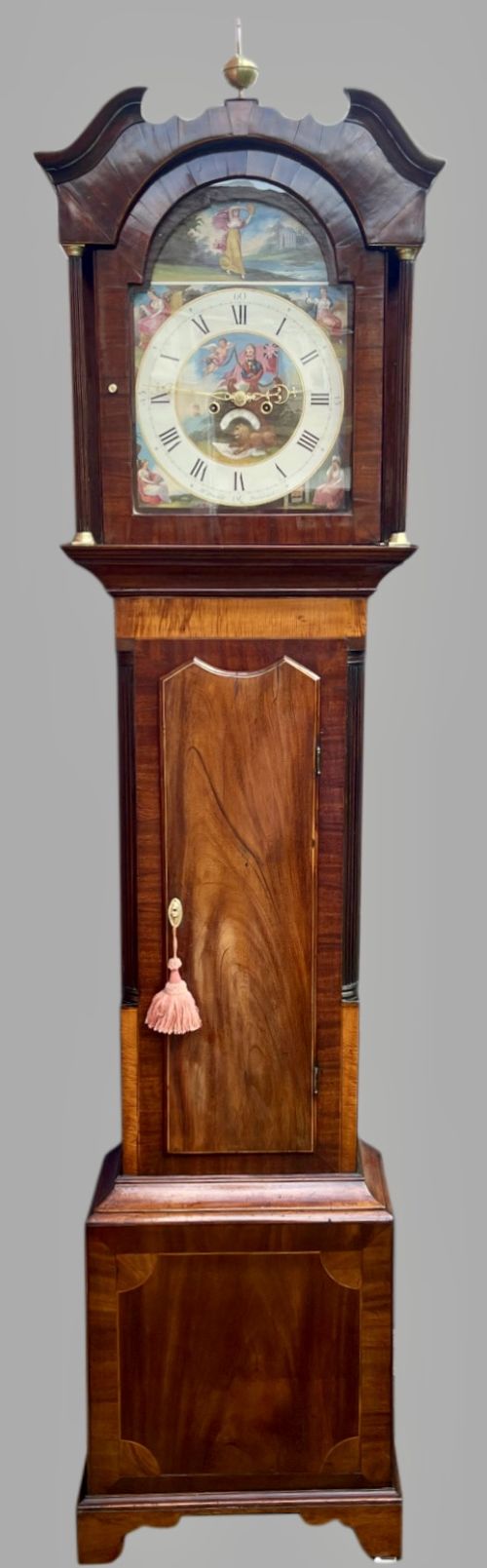
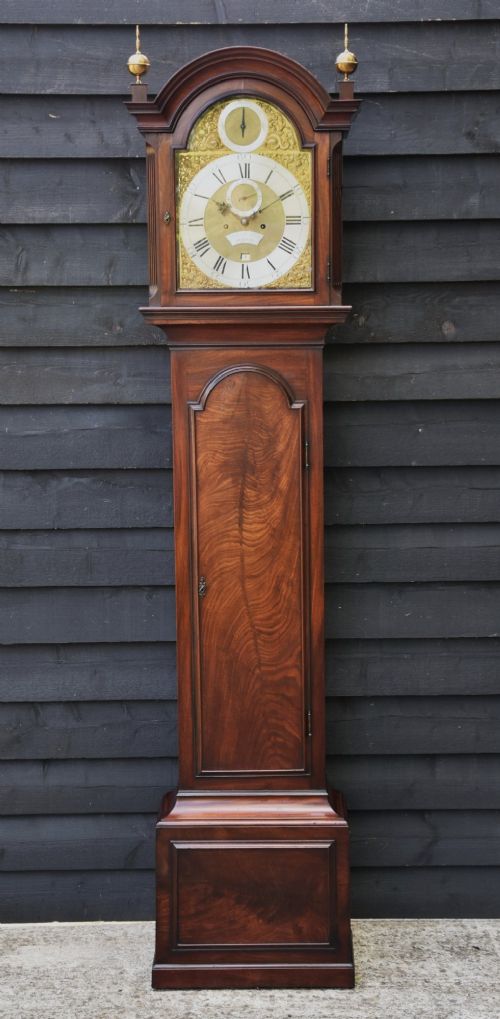
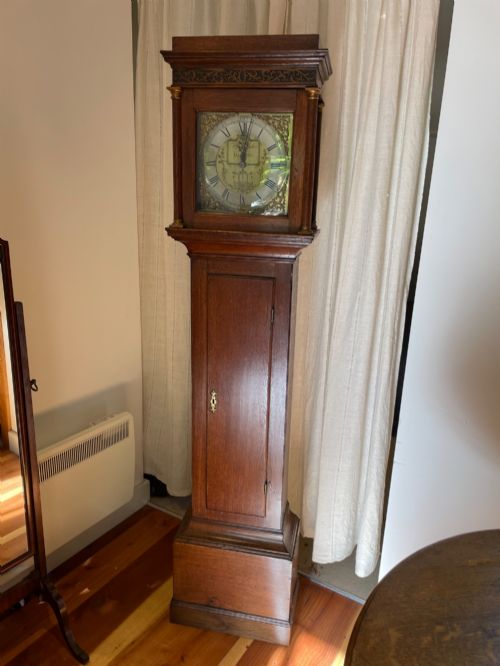
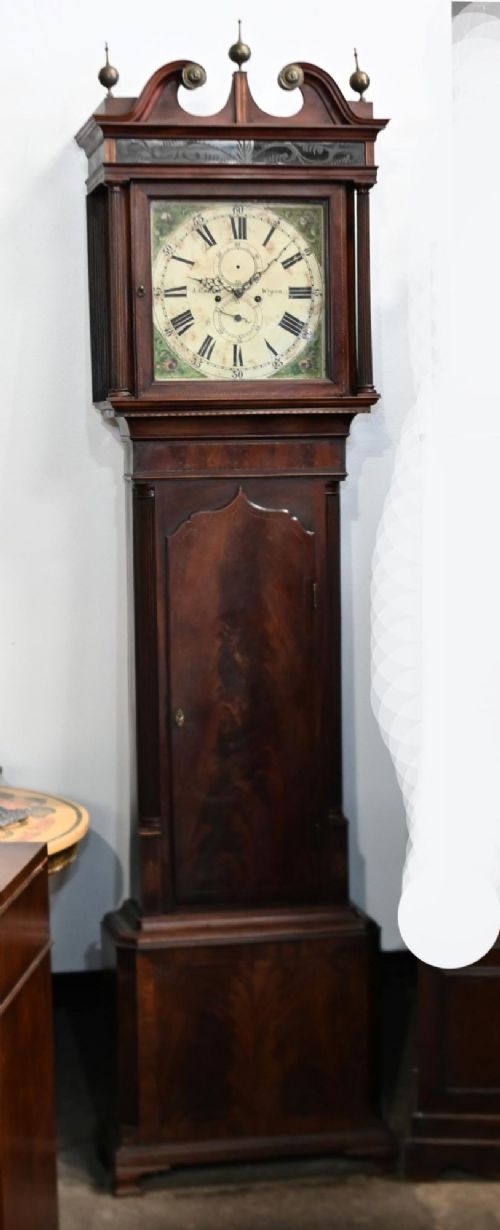
Grandfather Floor Clock
Grandfather floor clock designs combine tall timber floor cases with accurate mechanical clockwork, providing domestic timekeeping for centuries.
Grandfather Floor Clock
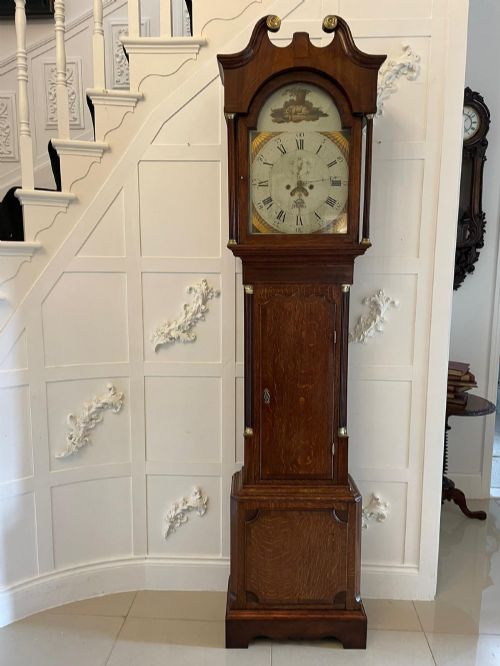
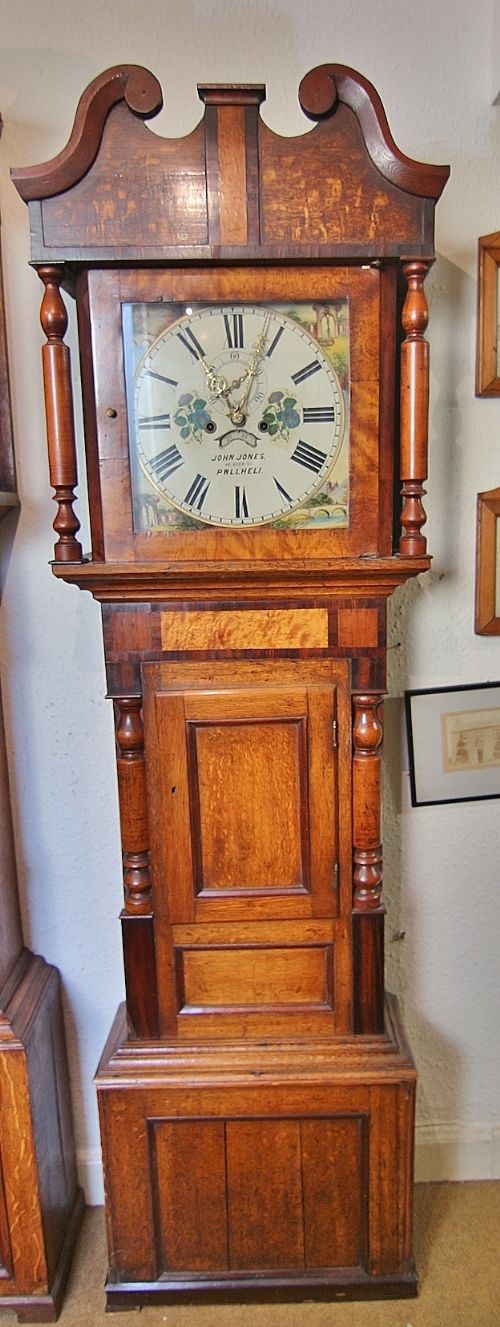
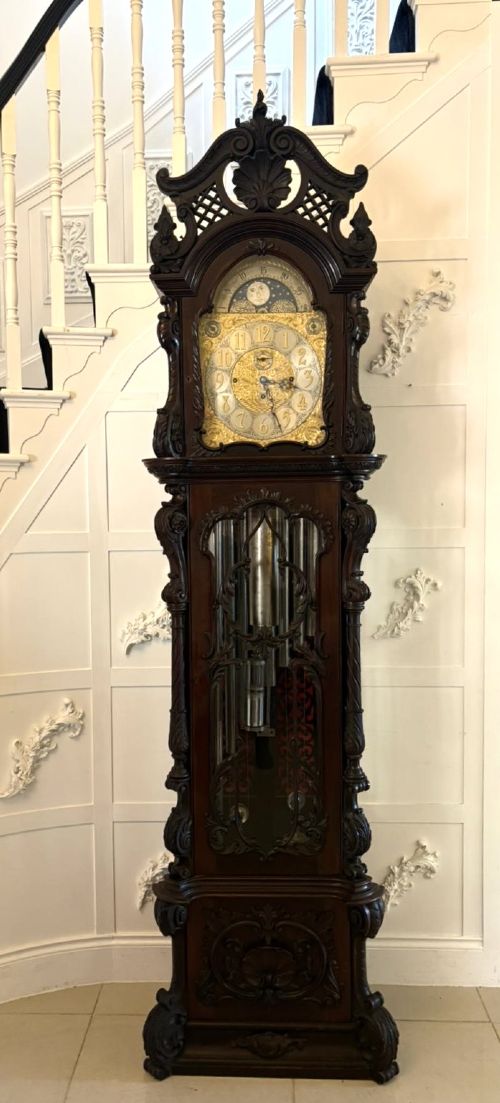
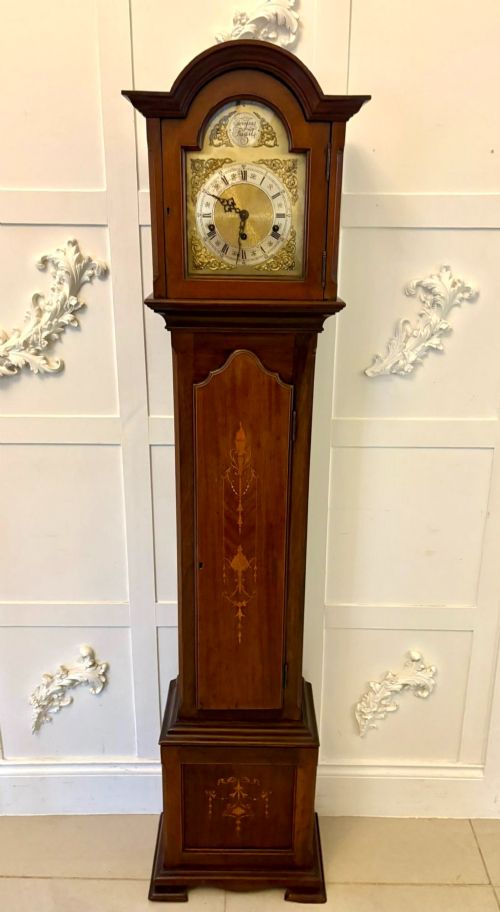
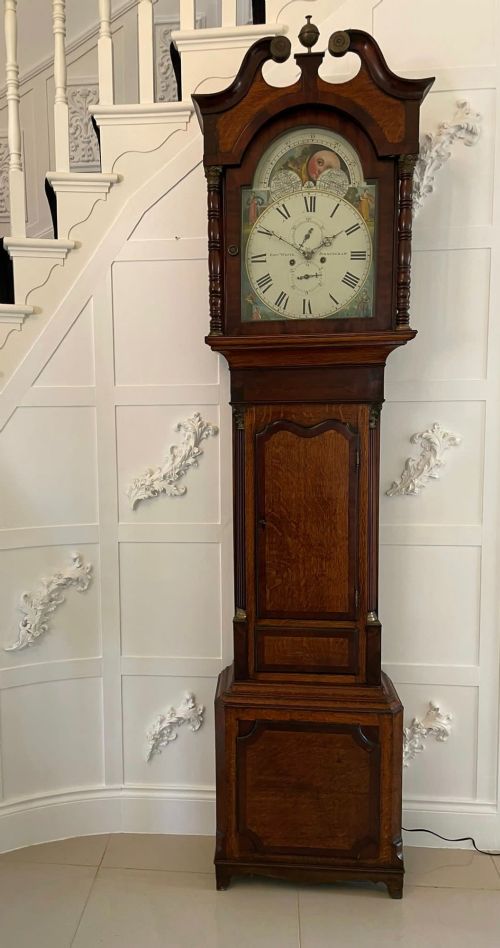
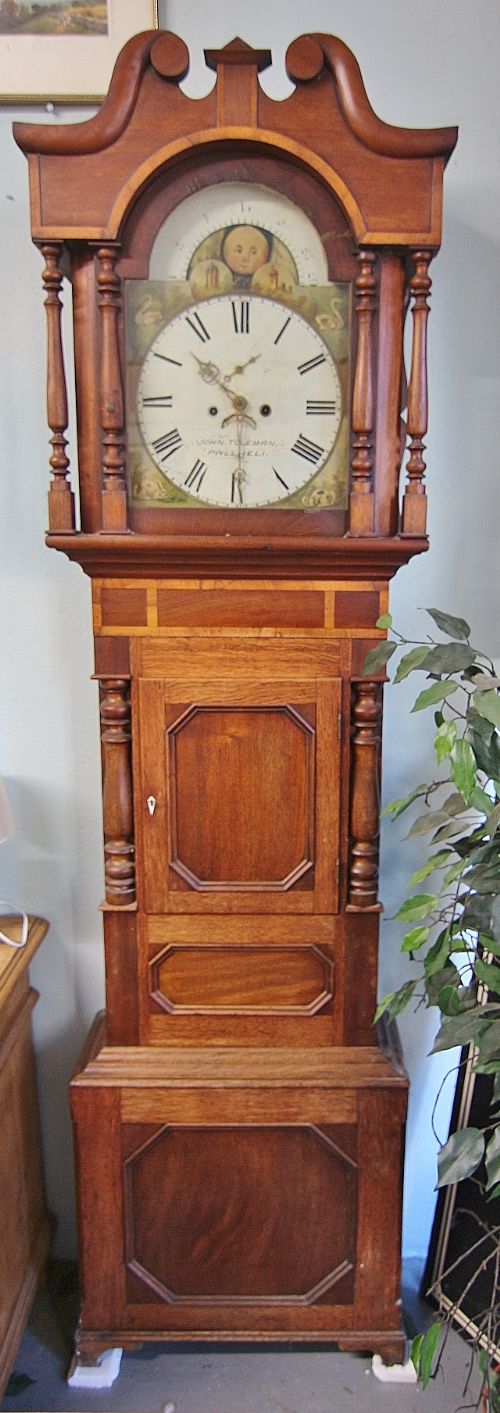
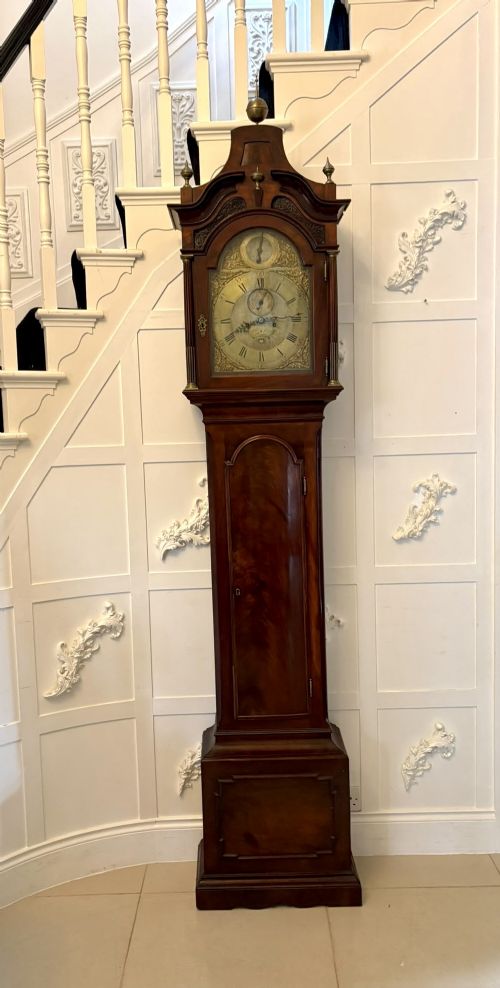
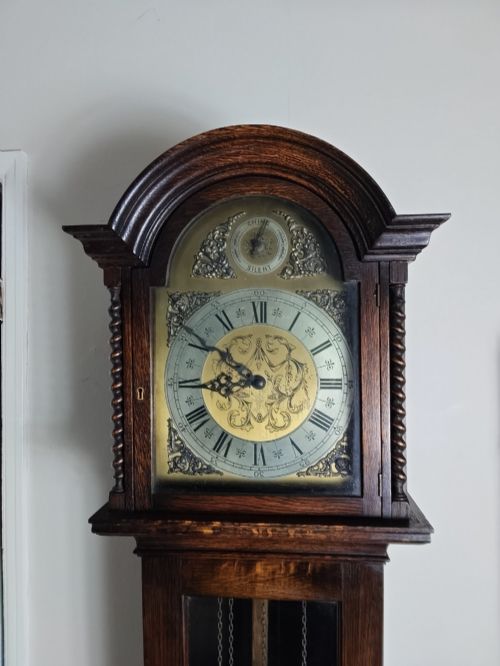
A grandfather floor clock stands upright on the floor to enclose a weighted or spring-driven movement behind a long wooden door and a glazed dial face. These tall timepieces appear in forms designated variously as longcase clocks, floor clocks, and occasionally smaller grandmother clocks.
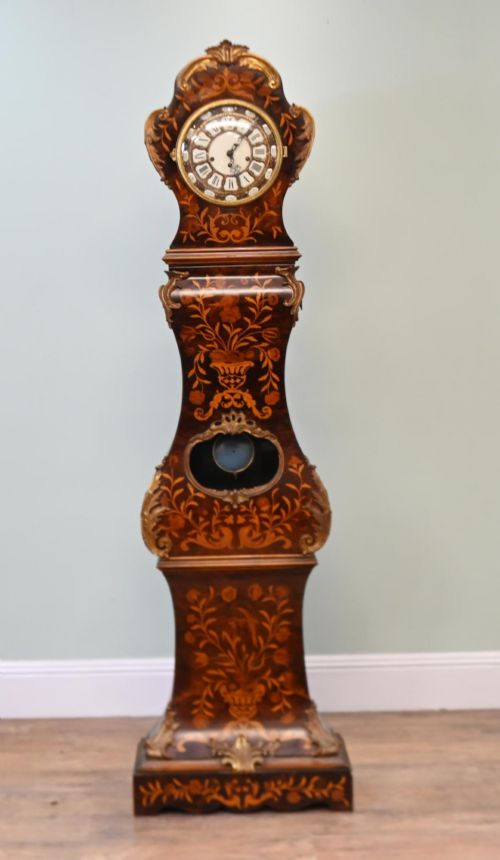
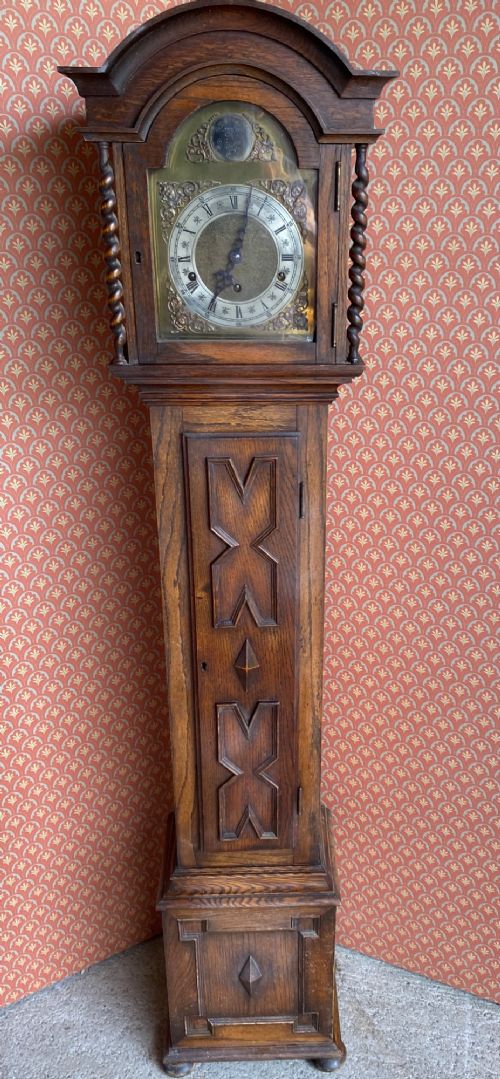
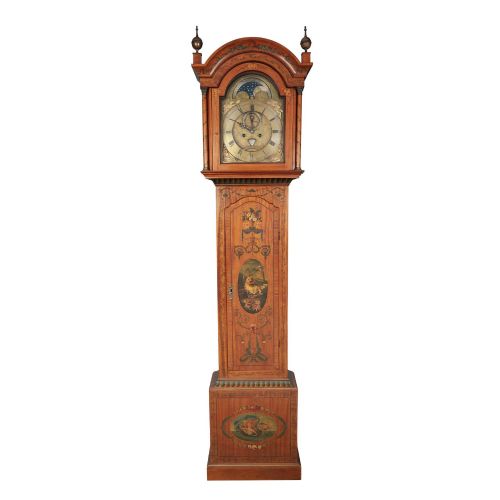
The pieces on this page span the Georgian period, the eighteenth and nineteenth centuries, the Edwardian era, and the nineteen-twenties and thirties. Oak and mahogany serve as the primary timbers, alongside walnut, satinwood, and brass dial components.
Makers from London, provincial English towns, and Scottish burghs signed their dials, recording regional differences in regional case proportions and dial decoration.
How They Were Made
Cabinetmakers constructed tall floor cases using timber planks of oak, mahogany, or walnut, sometimes incorporating floral inlay, burr oak veneers, and brass fittings. These longcase housings required sturdy construction to support the heavy mechanical movements and pendulum swings housed within.
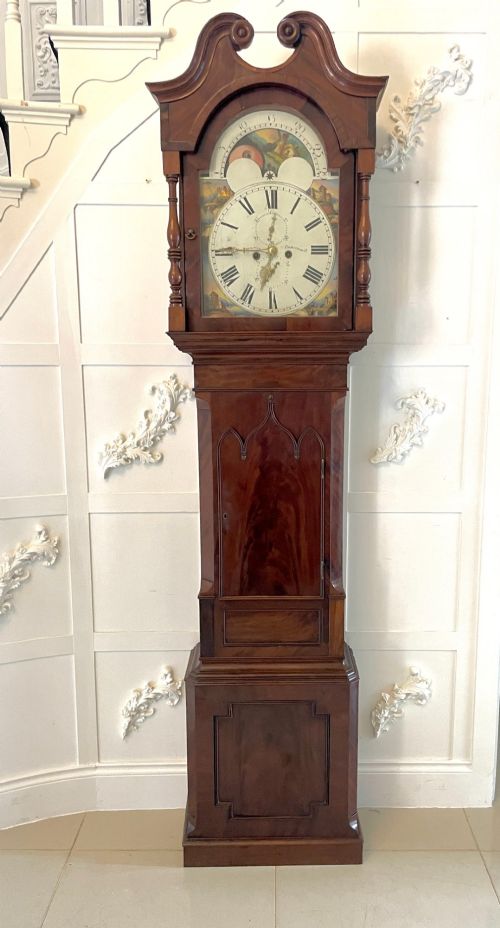
Clockmakers built brass-faced and painted dial movements driven by weights suspended on cords or chains, operating either thirty-hour or eight-day gear trains. Dial faces display engraved brass numerals, painted moon phases, and subsidiary seconds or calendar dials.
Grandfather Floor Clock Retail Price Guide 2026
Typical asking prices for grandfather floor clock among the pieces listed under this phrase on Sellingantiques today, from the lower quarter to the upper quarter. They describe what is for sale here now, not the wider market.
The listings span the Georgian, Victorian, and Edwardian periods, utilising mahogany, oak, walnut, and satinwood.
What Varies in Quality
Quality rests in the precision of the mechanical movement, the complexity of the striking or chiming trains, and the integrity of the dial signatures. Mechanisms produced by noted London or provincial makers command greater attention for their intricate engineering.
Cabinetwork distinguishes the level of craftsmanship, seen in figured mahogany veneers, carved details, and well-proportioned hoods with architectural mouldings. Retaining original dial components, weights, and dial plates separates standard examples from exceptional pieces.
Coats of Wigan·Walker of Nantwich·John Taylor London·Edward White Birmingham·Charles Shuckburgh London·Hendrie Ogg Dunfermline·Gordon of Aberdeen·Gillett and Johnston of Croydon·Lee of Great Marlow·Green of Edinburgh·John Ellicott of London·Jn Smith Macclesfield·Tait Peebles·James Field of Hempstead·Richard Corless of Stockport·Smith of Chester·Robb Montrose·James Hendrie Falkirk
The Grandfather Floor Clock Glossary
- Longcase clock
- A tall pendulum clock enclosed in a wooden floor-standing case, commonly called a grandfather clock.
- Grandmother clock
- A smaller, more slender version of the traditional longcase clock, produced during later periods.
- Moon phase
- A mechanical display on the dial face that tracks the lunar cycle using a rotating painted disc.
- Thirty-hour movement
- A clock mechanism requiring manual winding once a day, usually driven by single-weight or dual-weight systems.
- Eight-day movement
- A clock mechanism requiring winding approximately once a week, utilising heavier weights and longer drops within the case.
- Quarter chiming
- A mechanical capability that sounds a musical sequence on bells or gongs at every quarter hour.
Grandfather Floor Clock: Frequently Asked Questions
What is a grandfather floor clock?
A grandfather floor clock is a tall, weight-driven pendulum clock housed in a wooden case that stands directly on the floor. These pieces combine cabinetmaking with mechanical clockwork.
Most examples feature a glazed hood enclosing the dial, a long trunk protecting the swinging pendulum, and a solid base. They function both as household timepieces and as decorative furniture.
How do eight-hour and thirty-hour movements differ?
Thirty-hour movements require winding once a day and typically use simpler gear trains. They often appear in earlier or more domestic clocks.
Eight-day movements need winding roughly once a week and involve more complex gear configurations. They frequently include striking mechanisms or moon phase displays on the dial.
Where were these clocks made?
Clockmakers operated across London, provincial English towns, and Scottish burghs during the Georgian, Victorian, and Edwardian periods. Local craftsmen often signed the dial faces.
Regional workshops developed distinct styles in timber selection and dial decoration, allowing collectors to trace the geographic origin of a piece.
How do you maintain a floor clock?
Maintaining a floor clock involves regular winding of the weights and careful placement on a stable, level floor surface. The pendulum must hang freely to ensure accurate timekeeping.
Professional servicing helps keep the mechanical gears and pivots clean and functioning properly over long periods of use.