


Grand Tour Watercolour Painting
These grand tour watercolour painting works capture the romantic Italian landscape that travellers brought home from the nineteenth century.
What a grand tour watercolour painting is
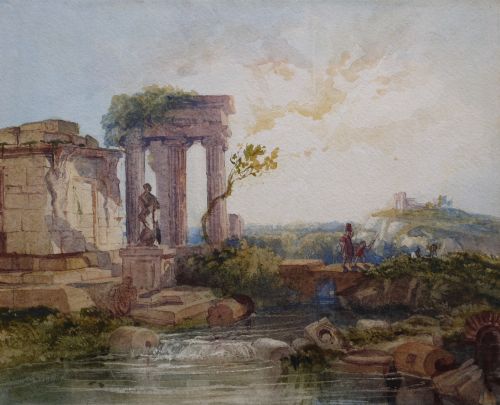
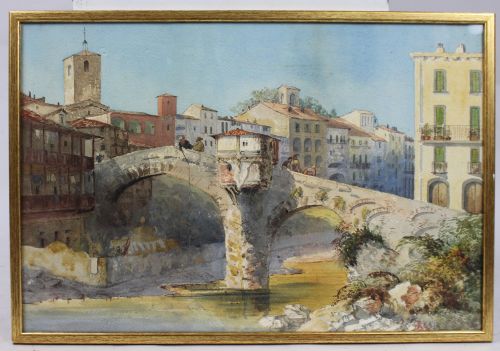
A grand tour watercolour painting records the classic Italian landscape as witnessed by nineteenth century travellers abroad. These works typically depict picturesque countryside views and architectural subjects from northern Italy in a romantic spirit.
Buyers encounter framed examples executed on paper, ranging from finished landscape compositions to rapid grisaille sketches. Some pieces bear attribution to named hands, while others remain unsigned.
Materials and technique
Artists applied watercolour pigments onto paper supports to create these nineteenth century topographical and landscape scenes. Monochrome grisaille techniques also appear among the sketches.
Period framing utilises gilt wood surrounds fitted with protective glass to preserve the delicate paper surfaces.
Some nineteenth century travellers preferred rapid grisaille sketches over finished colour works to capture the Italian light before dinner.
Assessing quality
Quality rests in the precision of the brushwork and the atmospheric capture of light within the Italian landscape. Finer examples display confident handling by known nineteenth century practitioners.
The sophistication of the original gilt wood framing contributes to the overall integrity of the piece.
Charles H Poingdestre
The Grand Tour Watercolour Painting Glossary
- Grisaille
- A painting executed entirely in shades of grey or neutral monochrome. This technique often appears in preparatory sketches.
- Gilt wood
- Wood coated with a thin layer of gold leaf or gilt finish. Period frames utilise this material to enhance the artwork.
- Watercolour
- A painting method in which the paints are made of pigments suspended in a water-based solution. The medium relies on the white of the paper to provide luminosity.
- Romanticism
- An artistic movement emphasising inspiration, subjectivity, and the primacy of individual emotion. Nineteenth century works reflect this aesthetic in their treatment of landscape.
Frequently Asked Questions
What is a grand tour watercolour painting?
These works are nineteenth century paintings on paper depicting Italian landscapes and countryside scenes.
Travellers produced or acquired them as visual records during continental journeys.
How should I hang these paintings?
Keep them away from direct sunlight to prevent the watercolour pigments and paper from fading over time.
Ensure the room maintains stable humidity to protect the gilt wood frames and paper supports.
Are these paintings signed?
Some nineteenth century watercolours bear the signature of the artist, such as Charles H Poingdestre.
Many other period examples remain unsigned by the original hand.
What periods do these pieces date from?
The available evidence places these watercolours firmly within the nineteenth century.
They reflect the romantic and Italianate styles popular among travellers of that era.