




Grand Tour Bronze Vessel
A grand tour bronze vessel brings the classical antiquity of Italy into the Victorian drawing room.
Grand Tour Bronze Vessel
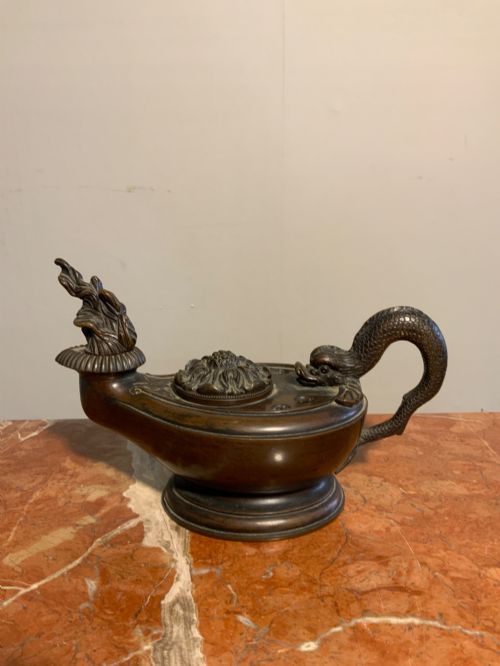
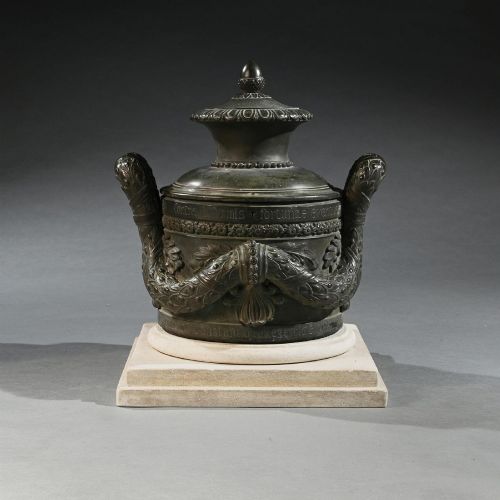
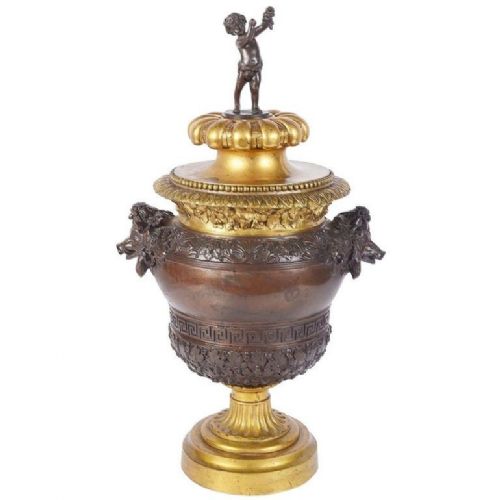
A grand tour bronze vessel is typically a reduction or souvenir after an ancient original, created for travellers touring Italy during the eighteenth and nineteenth centuries. These pieces take the form of campana urns, ewers, inkwells, goblets and jardinières, drawing directly upon classical and neoclassical forms. Most examples encountered here originate from the nineteenth century, including Victorian interpretations and specific Italian souvenirs.
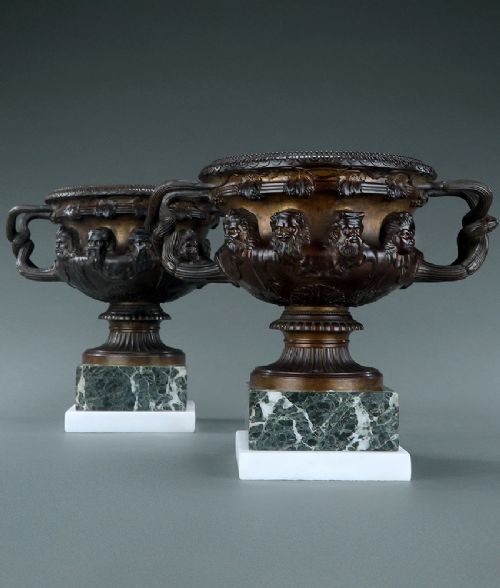
The objects serve as decorative vessels and display pieces rather than functional tableware, often mounted upon pedestals or marble bases. Makers rendered famous antiquities such as the Warwick Vase and the Albani Vase in miniature, allowing collectors to display classical sculpture at home. The selection ranges from small lidded tazzas to large campana-shaped vases in the neoclassical style after Clodion.
What varies in quality
Quality rests in the crispness of the casting and the fidelity of the reduction to the ancient prototype. Superior pieces exhibit sharp relief in figural handles and inscriptions, whereas weaker examples lose definition in the secondary chasing.
The selection of the base material also differentiates the work, with solid mounts of fine marble or stepped wooden pedestals elevating the status of the bronze above simpler utilitarian castings.
Several vessels feature wine gods clutching handles.
Vincenzo Gemito
The Grand Tour Bronze Vessel Glossary
- Campana urn
- A bell-shaped vessel with a flared lip, commonly modelled on ancient pottery and stone finds discovered in Italy. These form a major share of nineteenth-century decorative metalwork.
- Kantharos
- An ancient Greek cup used for drinking, featuring two vertical handles and a deep bowl. Nineteenth-century makers reproduced these forms in brass and bronze.
- Tazza
- A shallow saucer or cup mounted on a stem and foot, often utilised as a lidded souvenir. They frequently sit upon contrasting marble plinths.
- Patination
- The surface coloration and ageing applied to bronze either chemically or through natural wear. Heavy patination mimics the appearance of buried archaeological finds.
- Neoclassical style
- An aesthetic movement reviving the classical art and architecture of ancient Greece and Rome. It dominates the design vocabulary of these souvenir vessels.
Grand Tour Bronze Vessel: Frequently Asked Questions
What is a grand tour bronze vessel?
A grand tour bronze vessel is a nineteenth-century souvenir cast in metal after ancient Greek and Roman antiquities. Travellers collected them across Italy as tangible memories of classical sites.
They represent miniature versions of famous museum pieces, translated into decorative objects for the home.
How were these bronze vessels used?
These items functioned primarily as decorative displays on mantelpieces, desks and cabinets. Some pieces doubled as inkwells, jardinières or wine-coolers.
Their purpose was to signal classical learning and aesthetic refinement to visitors in a Victorian interior.
How do I live with a bronze vessel?
Place the vessel where light catches the patinated bronze and any figural details like handles or cast inscriptions. Ensure the marble or wooden base rests on a stable, level surface.
Keep them away from direct moisture and clean only with a soft, dry cloth to preserve the surface finish.
How do I date a nineteenth-century bronze?
Dating relies on stylistic clues, casting methods, and the materials used for the associated bases, such as specific marbles. Nineteenth-century pieces often reflect Victorian taste or direct Italian souvenir production.
Inscriptions, patination style, and documented associations with known sculptors help narrow the period.