


Grand Tour Bronze Urns
Grand tour bronze urns capture the classical souvenirs collected by travellers journeying through Italy during the nineteenth century.
Grand Tour Bronze Urns
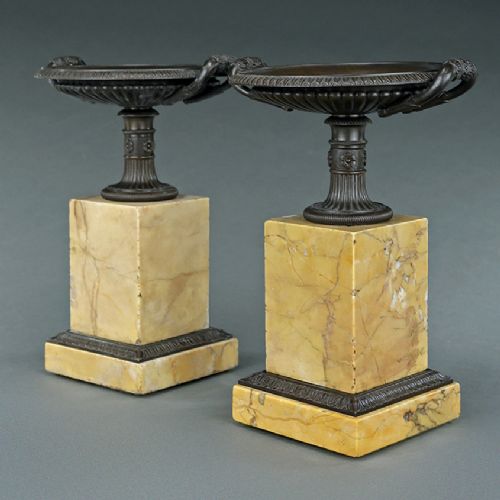
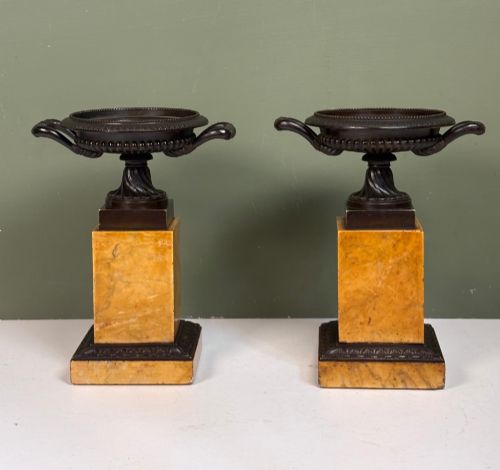
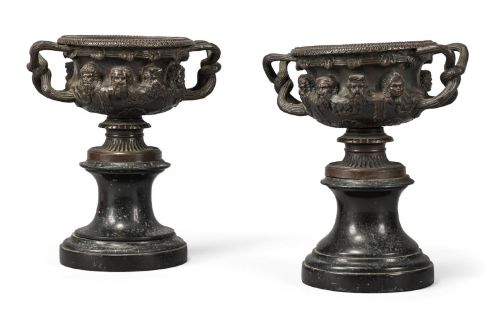
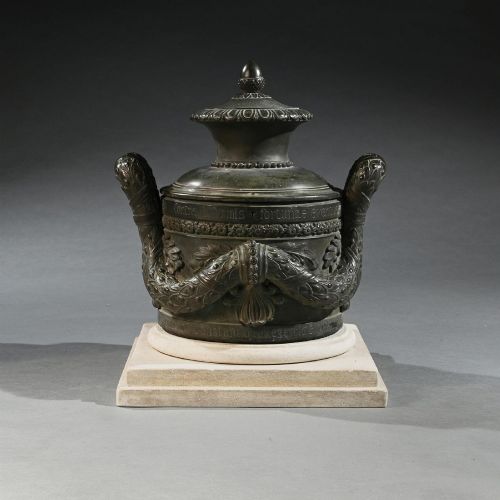
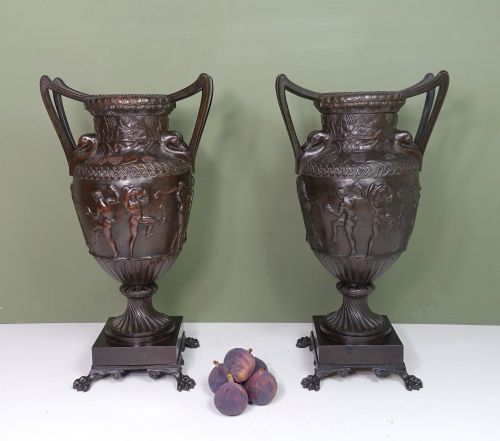
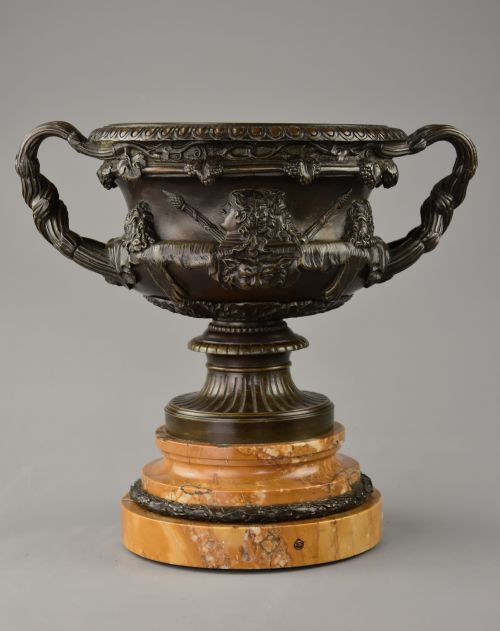
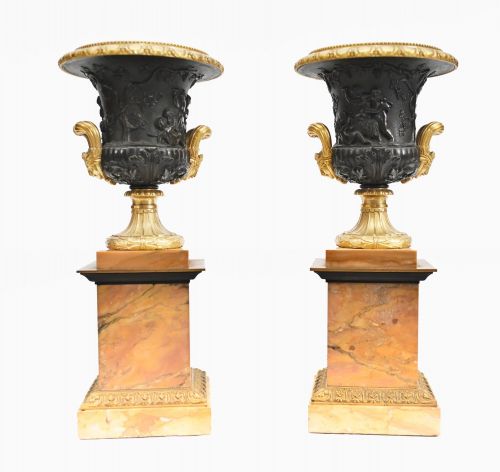
Grand tour bronze urns include decorative vessels, tazzas, and vases modelled after ancient classical antiquities seen during European travels. Buyers regularly encounter nineteenth century examples, particularly Victorian and Regency periods, shaped as campana or Warwick vases.
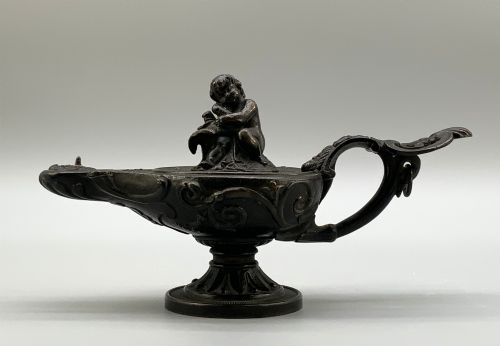
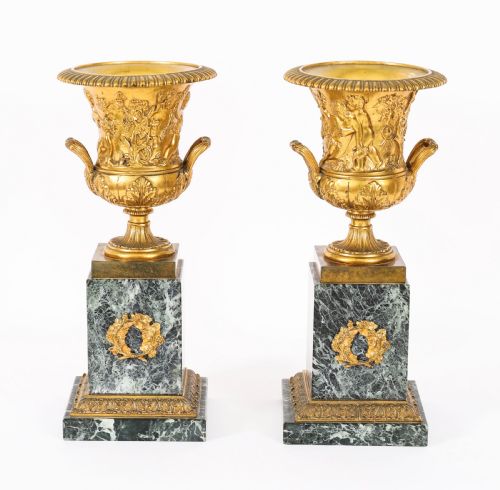
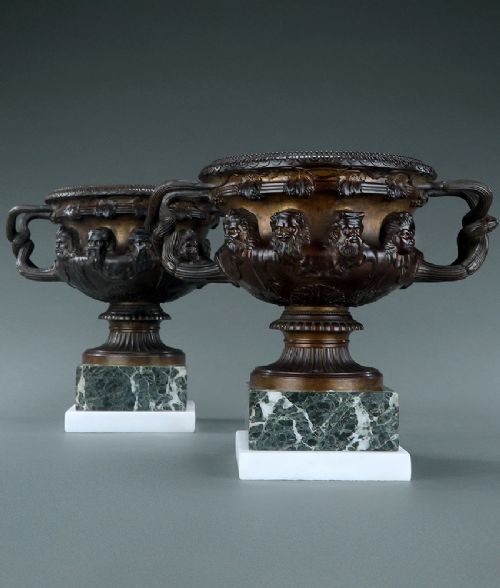
Many pieces incorporate sculptural figures, cherubs, and bacchus motifs, reflecting neoclassical and french empire design influences. These decorative objects frequently appear as matched pairs mounted upon marble pedestals.
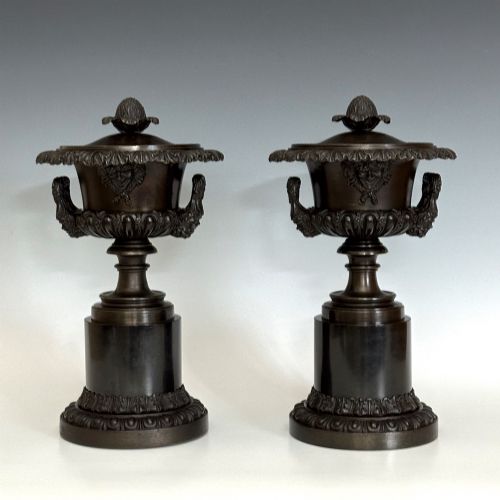
Beyond standard urns, the category encompasses related souvenir forms such as ewers, cassolettes, inkwells, and classical drinking cups. Such items served as ornamental mantel displays or scholarly studies in domestic interiors.
How they were made
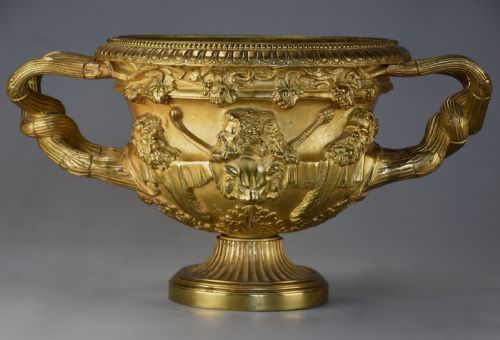
Craftsmen utilised cast bronze, often finished with dark patination or enhanced through gilding, ormolu, and silvered treatments. Metalwork techniques allowed accurate reductions of famous public monuments and excavated artefacts.
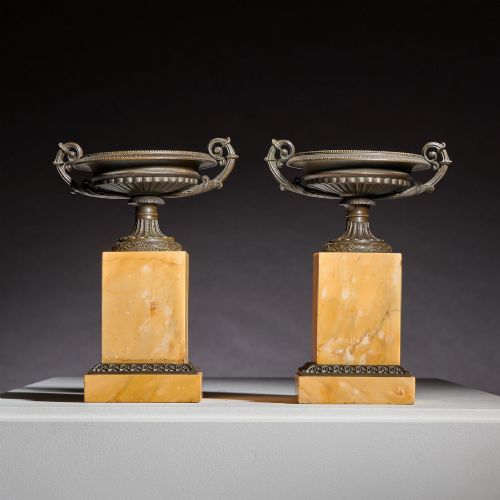
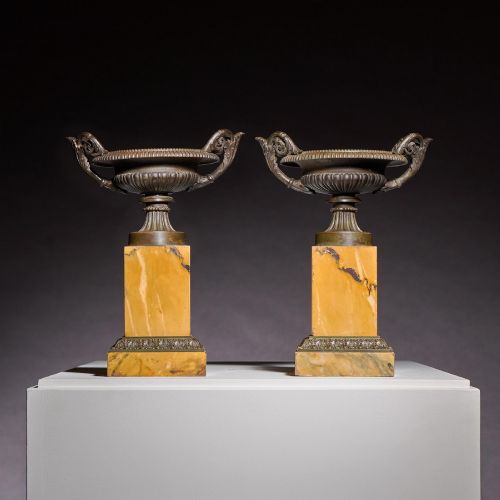
Marble components commonly provide contrasting bases, utilising green marble, siena marble, and rouge griotte. These stone plinths anchor the heavy bronze vessels and elevate the classical proportions.
Object forms span decorative urns, tazzas, campana vases, ewers, and cassolettes created in neoclassical and french empire styles.
What varies in quality
The precision of the casting distinguishes finer reductions from standard souvenir output, particularly in the sharpness of relief work and chased details. Superior examples display crisp handling of classical foliage, figural friezes, and handles.
Material selection dictates overall grade, with dense patinated bronze paired against choice decorative marbles like siena. The harmony between the cast metal vessel and its stone pedestal defines the visual success of the piece.
The Grand Tour Bronze Urns Glossary
- Campana urn
- A bell-shaped vessel with flared rims and looped handles, modelled after ancient garden pots found in Roman ruins. This form remains one of the most common shapes encountered in nineteenth century metalwork.
- Warwick vase
- A large Roman marble crater discovered at Hadrian's Villa and reproduced in bronze reduction for travellers. These vessels typically feature mask handles and deep sculptural friezes.
- Tazza
- A shallow ornamental cup or vase raised upon a stem and foot, frequently mounted on marble. They were utilised as decorative centrepieces during the neoclassical revival.
- Ormolu
- Gilt bronze mounted onto decorative objects, providing bright golden highlights against dark patinated surfaces. The technique involves applying finely ground high-carat gold amalgam to bronze.
- Cassolette
- A dual-purpose decorative vase featuring a reversible lid that functions as a burner or solid vessel. These pieces often incorporate classical maiden figures and marble plinths.
Grand Tour Bronze Urns: Frequently Asked Questions
What are grand tour bronze urns?
Grand tour bronze urns are nineteenth century decorative reductions of ancient Roman and Greek antiquities. Wealthy travellers purchased them as souvenirs during educational journeys across Italy.
These pieces span various vessel forms, including campana shapes, tazzas, and ewers. They served primarily as decorative ornaments within nineteenth century domestic interiors.
How were these urns displayed?
Owners typically placed matching pairs upon mantelpieces, sideboards, or dedicated pedestals within libraries and drawing rooms. Their classical motifs complemented neoclassical and regency interior schemes.
Some smaller examples functioned practically as inkwells, planters, or lidded cassolettes. Their substantial weight allowed them to anchor formal decorative arrangements.
How do I tell periods apart?
Regency and early nineteenth century pieces often exhibit restrained classical proportions and fine siena marble mounts. Later Victorian examples from the eighteen-seventies and eighties frequently display heavier casting and more ornate detailing.
Stylistic shifts between french empire and classical revival help narrow down manufacturing dates. Documentation accompanying archival pieces often points towards specific decades between eighteen-twenty and nineteen-hundred.
Are these pieces solid bronze?
Most items feature cast bronze construction, sometimes paired with applied ormolu, silvering, or gilt elements. Many incorporate distinct stone components, particularly green and siena marble bases.
Inner cavities vary by form, with some vessels designed as solid decorative objects or fitted containers. The combination of patinated metal and carved stone defines their physical structure.