
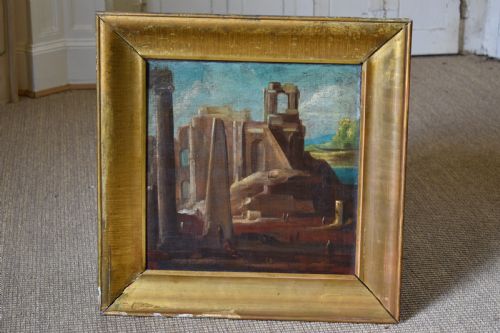
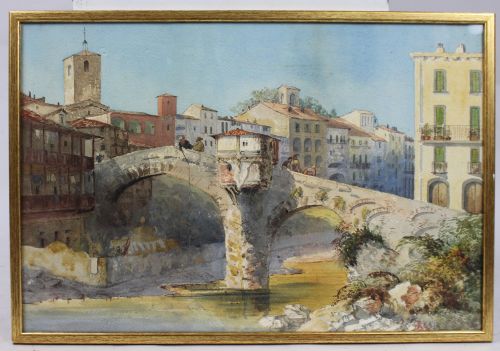
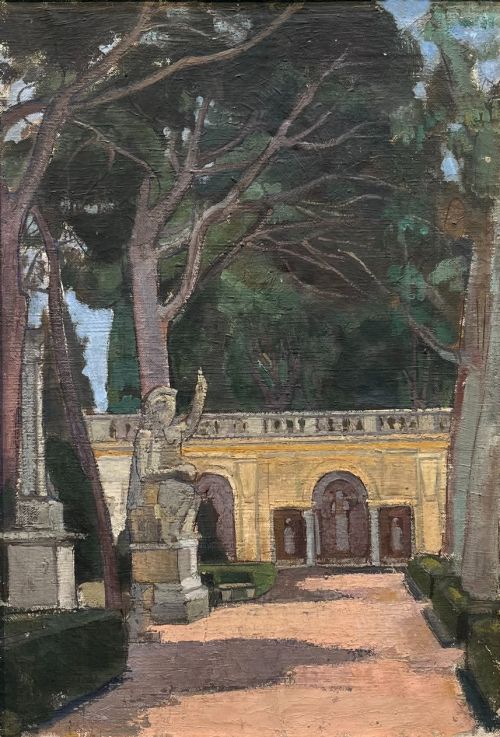


Grand Tour Architectural Art
Grand tour architectural art brings home the classical ruins, ancient monuments and scenic vistas collected by travellers across Europe.
Grand Tour Architectural Art
Grand tour architectural art captures the classical antiquities, Roman ruins and Italian landmarks that travellers encountered abroad. When searching this phrase, buyers encounter works ranging from large framed oil paintings to delicate works on paper.
Watercolours and engravings dominate the selection, often depicting specific sites such as the Colosseum, the Forum of Nerva or the Bridge of Sighs in Venice. These depictions served as permanent records of an educational journey through Italy and Greece.
Pieces span from the eighteenth century through to the early twentieth century, reflecting shifting tastes in travel recording. Engravings after artists like Francesco Piranesi sit alongside original nineteenth-century watercolours and later twentieth-century interpretations.
What varies in quality
The precision of the architectural perspective and the vibrancy of the pigment distinguish finer watercolours from standard decorative prints. Hand-coloured engravings show careful application of tone that enhances the depth of classical ruins.
Attribution to documented artists or schools elevates the standing of a piece, as seen in works linked to known printmakers or regional academies. The preservation of the paper support and the clarity of the plate mark also influence the character of the work.
Listings feature works executed in watercolour, oil on canvas, glass, and marble dust relief across the eighteenth, nineteenth, and twentieth centuries.
Giovanni Paolo Panini·Francesco Piranesi·Vittore Zanetti Zilla·Benedetto Salviati·Edward Rooker·James Basire
The Grand Tour Architectural Art Glossary
- Etchings
- Printmaking methods where lines are bitten into a metal plate with acid before being inked and pressed onto paper. This technique allows for fine, fluid lines well suited to architectural detail.
- Engravings
- Intaglio prints produced by cutting designs directly into a metal plate with a burin. The resulting lines hold ink securely to yield sharp, precise structural representations.
- Watercolours
- Pigments ground in a water-soluble binder and applied to paper. They provide transparent washes of colour ideal for atmospheric Italian landscapes.
- Neoclassical
- A style reviving the architectural forms and aesthetic of classical antiquity. It heavily influences the subject matter found in these travel artworks.
Grand Tour Architectural Art: Frequently Asked Questions
What subjects appear in grand tour architectural art?
These works typically depict ancient Roman ruins, temples, classical statues and famous Italian landmarks like the Colosseum or Venetian bridges.
Travellers commissioned or purchased these views to document specific stops along their European itineraries.
How should I display prints and watercolours?
Works on paper require framing behind glass with acid-free mounts to protect them from environmental damage and fading.
Keep them away from direct sunlight to preserve the integrity of the inks and watercolours.
Are these pieces original period items?
The selection includes eighteenth-century copperplate engravings, nineteenth-century hand-painted watercolours and early twentieth-century interpretations.
Signatures, dates and paper types help establish the historical period of manufacture.
What is the difference between an engraving and an etching?
Engravings use a sharp tool to cut lines directly into metal plates, producing crisp geometric precision for architectural subjects.
Etchings rely on acid to bite lines into the metal, offering a freer, more painterly quality of line.