
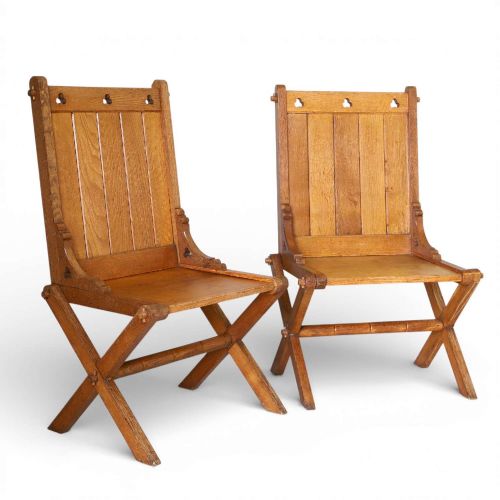
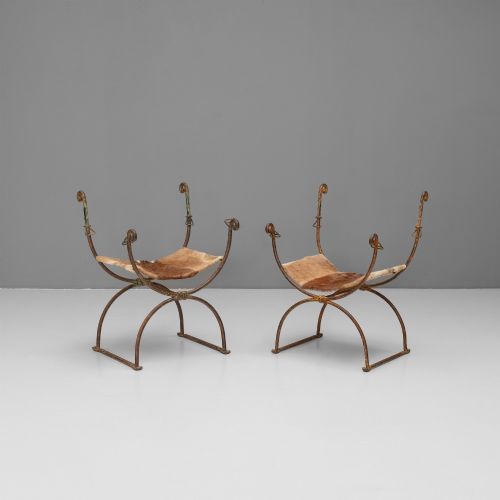


Gothic X Frame Chair
These gothic x frame chair pieces combine intersecting structural supports with pointed arch motifs, offering a sculptural silhouette rooted in medieval design.
Gothic X Frame Chair
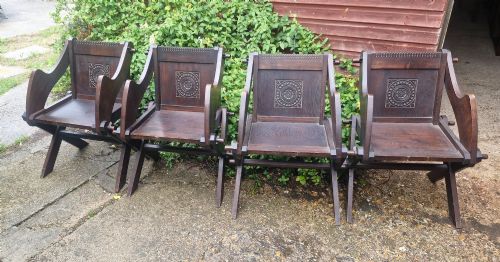
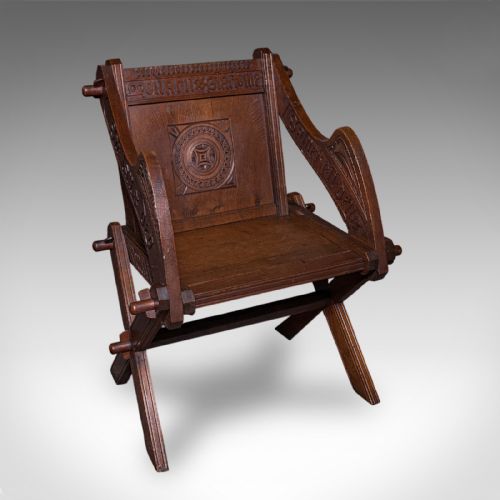
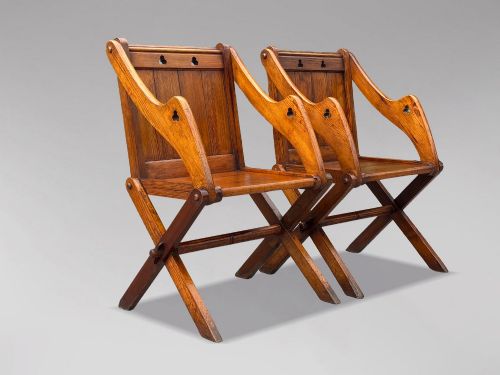
A gothic x frame chair takes several distinct structural forms, most commonly appearing as the folding or rigid Glastonbury armchair with its characteristic panel back and intersecting leg X. Buyers also encounter low stools, window seats, and side chairs employing the same intersecting timber geometry.
The aesthetic bridges several revival movements, drawing heavily on Victorian interpretations of medieval ecclesiastical furniture alongside Renaissance and Carolean influences. Oak remains the predominant timber, shaped into elbow seats, armchairs, and occasional seating.
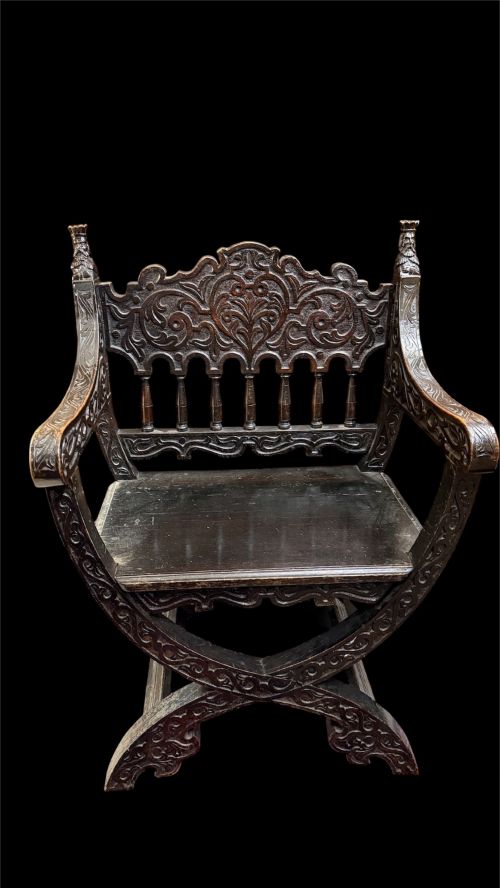
Origins span English, Welsh, and Austro-Hungarian workshops, reflecting a broad nineteenth-century enthusiasm for ecclesiastical and monastic styling. Pieces range from simple pitch pine examples to elaborately carved walnut designs incorporating heraldic details.
Distinguishing Quality
The refinement of the timber carving separates standard production from superior examples, particularly where trefoils and panel details are executed with sharp, crisp depth. Dense hardwoods like oak and walnut show superior longevity compared to softer pitch pine alternatives.
Proportional balance in the intersecting X frame assembly determines structural integrity and visual poise. Original upholstery materials and well-preserved leather or tapestry elements further distinguish pieces that retain their period integrity.
Listings demonstrate a strong preference for oak and walnut timber construction across Victorian Gothic Revival forms.
A. W. N. Pugin
The Gothic X Frame Chair Glossary
- Glastonbury chair
- A traditional folding armchair with an X-frame base and a sloping panel back, often associated with ecclesiastical or medieval revival design.
- X-frame
- A structural support formed by two intersecting members creating a scissor or curule shape. This geometry underpins the entire seating form.
- Trefoil
- A graphic ornament composed of three rounded lobes arranged in a cloverleaf shape. It frequently appears pierced through the wooden backs of revival seating.
- Pitch pine
- A resinous softwood utilised in nineteenth-century furniture production. It offers durability and a distinct grain pattern.
- Carolean style
- A decorative manner originating in the reign of Charles II, characterised by rich carving, scrolling foliage, and turned woodwork.
Gothic X Frame Chair: Frequently Asked Questions
Are these chairs comfortable?
Glastonbury and X-frame chairs were designed with raked wooden backs and broad armrests that support a surprisingly upright posture. Some examples incorporate leather or upholstered pads for added comfort.
Their ergonomics reflect medieval seating customs rather than modern lounge furniture standards.
How do I date a gothic x frame chair?
Dating relies on timber characteristics, tool marks, and stylistic indicators such as the specific form of tracery and linenfold panels. Most pieces originate from the Victorian Gothic Revival period.
Earlier examples from the seventeenth century are exceptionally scarce, while late nineteenth and early twentieth century revival pieces dominate the available inventory.
Where should I place one at home?
These sculptural seats work effectively as accent pieces in hallways, studies, or living rooms where their architectural silhouette can be appreciated from multiple angles. Their strong vertical lines complement period and eclectic interiors alike.
Pairing an armchair with a plain wall or alongside simpler furniture highlights the carved trefoil and intersecting frame details.