

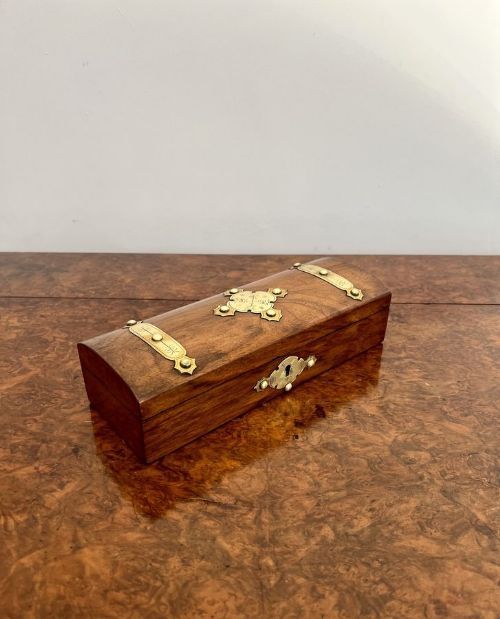


Gothic Trinket Casket
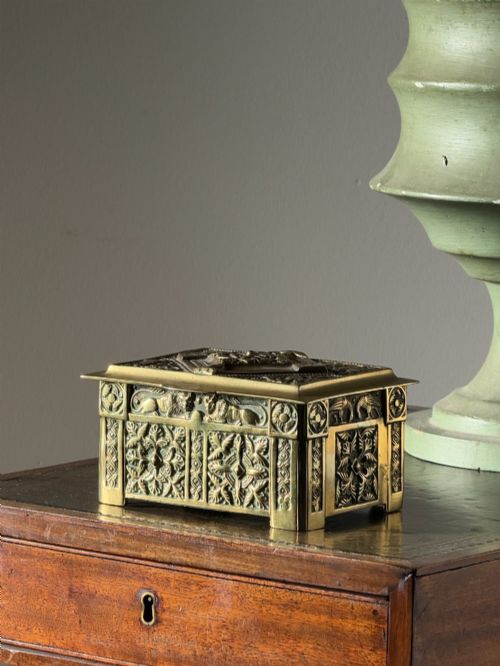
These gothic trinket caskets are small containers crafted in revivalist styles to store valuables, bringing historic architectural motifs directly onto a dressing table.
Gothic Trinket Casket
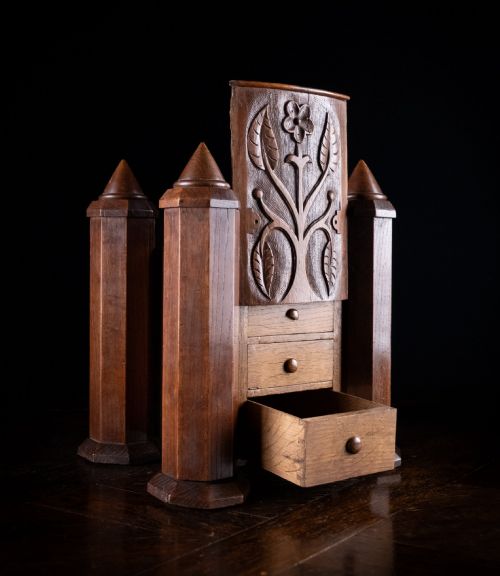
When searching for a gothic trinket casket, collectors encounter boxes primarily from the nineteenth century, including Victorian Gothic Revival and Arts and Crafts examples. These pieces serve as decorative boxes, jewellery boxes, and desk accessories designed to hold small personal items.
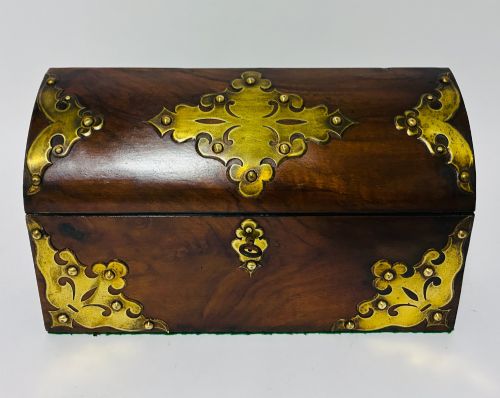
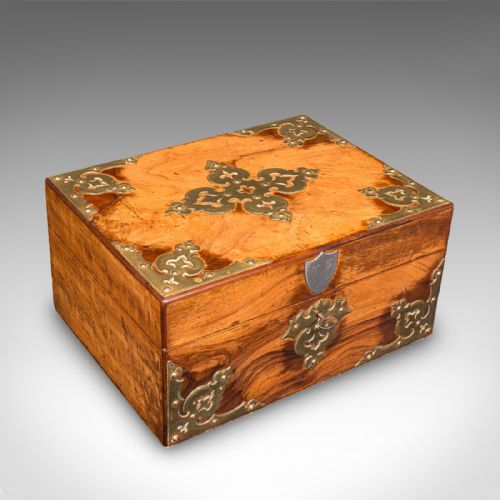
The most common versions met on this page are constructed from walnut, burr walnut, and oak, frequently mounted with brass straps and hinges. Formats range from dome-top boxes and sewing cases to heavy steel caskets and coffin-shaped silver boxes.
Origins span English, Irish, Scottish, and German workshops, reflecting a broad European taste for medieval architectural details during the Victorian era. The selection demonstrates how domestic storage objects adopted ecclesiastical and defensive forms.
How they were made
Maker's workshops built these caskets using solid timbers like oak and walnut, often veneered with burr walnut or amboyna for rich surface figuring. Metal elements such as brass binding, cast iron, and beaten steel provide structural reinforcement and decorative contrast.
Surface decoration incorporates riveted plates, cloisonné enamel, and inset agate cabochons to echo medieval metalwork and stonework. Joinery methods include secure brass straps, corner mounts, and heavy hinges designed to withstand daily use.
Gothic Trinket Casket Retail Price Guide 2026
Typical asking prices for gothic trinket casket among the pieces listed under this phrase on Sellingantiques today, from the lower quarter to the upper quarter. They describe what is for sale here now, not the wider market.
Materials recorded across these boxes include agate, enamel, steel, and diverse woods such as amboyna and burr walnut.
What varies in quality
The distinction between standard pieces and those of higher standing rests on the depth of hand-carving and the weight of the metal mounts. Thick cast brass and heavy riveted steel denote superior construction compared to lighter pressed sheet alternatives.
The Gothic Trinket Casket Glossary
- Gothic Revival
- An architectural and decorative style popular in the nineteenth century that imitates medieval forms, pointed arches, and heavy ironwork. It is frequently seen in ecclesiastical buildings adapted for domestic furnishings.
- Burr Walnut
- A highly prized timber grain obtained from the wart-like growths on walnut trees, yielding intricate swirling patterns. It is typically used as a decorative veneer on Victorian boxes.
- Cabochon
- A gemstone polished to a smooth convex dome rather than faceted, often mounted directly into metalwork. Agate cabochons frequently accent nineteenth-century desk sets and caskets.
- Cloisonné
- An ancient technique for decorating metalwork objects with colourful enamel compartments separated by strips of metal. This method produces vivid, durable patterns on Arts and Crafts metal boxes.
- Cofer
- A strongbox or chest traditionally used for storing valuables, often imitated in miniature form by nineteenth-century box makers. Early coffer designs heavily influenced later gothic trinket caskets.
Gothic Trinket Casket: Frequently Asked Questions
What is a gothic trinket casket?
A gothic trinket casket is a small container designed in a medieval revival style to hold jewellery, stationery, or personal keepsakes.
These pieces borrow architectural and decorative elements from cathedrals and castles to ornament nineteenth-century interiors.
How were these metal caskets used?
Victorian households utilised these metal and wooden boxes on desks, sideboards, and dressing tables to secure small valuables and letters.
Many contained fitted compartments or trays specifically configured for sewing tools, correspondence, or precious rings.
How do I date a Victorian box?
Dating relies on examining the timber veneers, the style of the brass hinges, and the fastening mechanisms used inside.
Victorian Gothic Revival pieces often display characteristic nineteenth-century construction methods combined with medieval-inspired ornamentation.
Are these caskets made of solid wood?
Many caskets feature solid oak or walnut construction, while others utilise decorative burr veneers applied over a stable secondary timber.
Metal-bodied examples employ heavy cast iron, steel, or brass to create sturdy structures that mimic ancient coffers.