


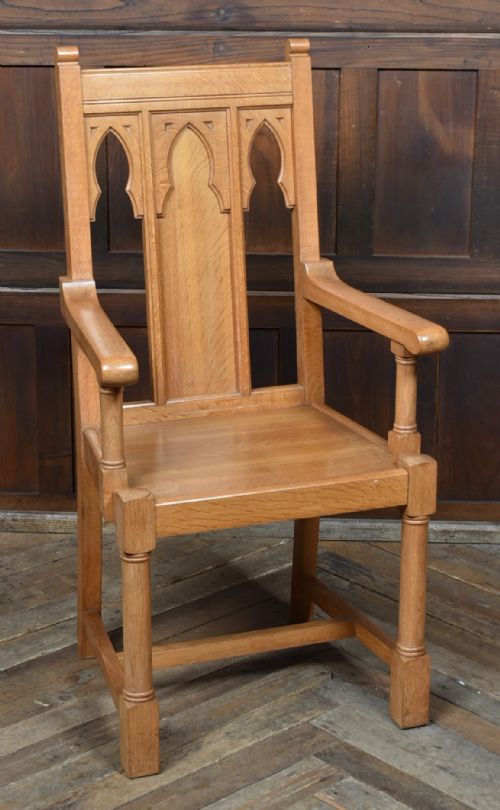

Gothic Throne Chair
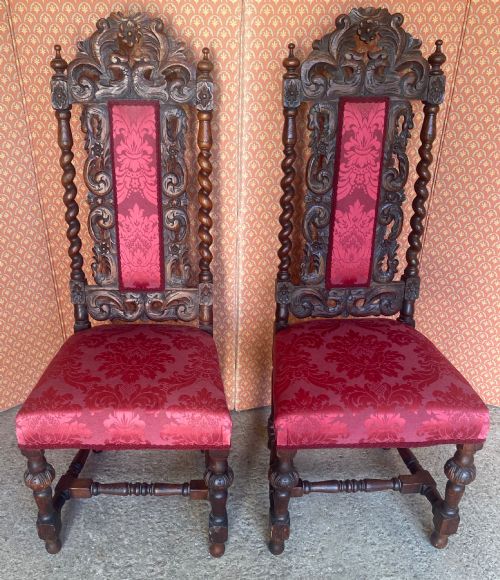
These heavy timber seats carry medieval architecture into domestic rooms, offering towering backs and architectural carving designed to command attention.
Gothic Throne Chair
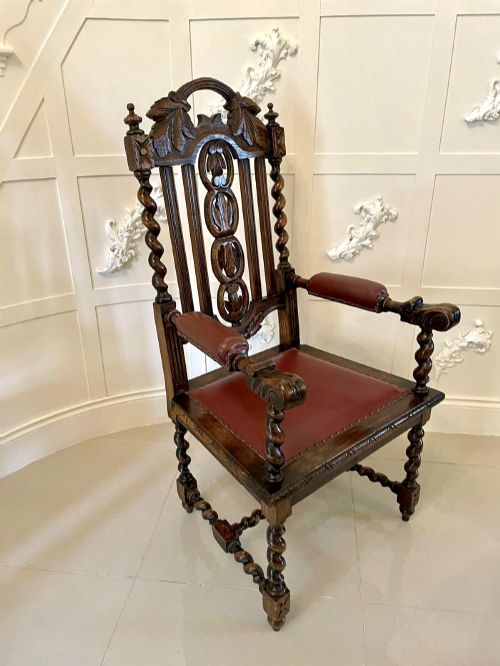
A gothic throne chair combines ecclesiastical authority with domestic seating, presenting high paneled backs, intricate tracery, and solid timber construction.
The pieces seen most often date from the nineteenth century, during revivals that drew heavily on medieval, Tudor, and seventeenth-century joinery traditions.
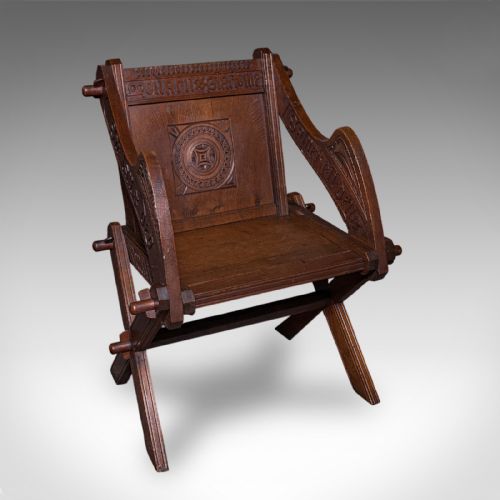
Makers produced these seats in various forms, ranging from monumental bishop's chairs and wainscot seats to X-framed Glastonbury designs and hall armchairs.
Materials and Joinery
Oak dominates the construction, complemented by walnut, pitch pine, and beech, joined through traditional mortise and tenon framing.
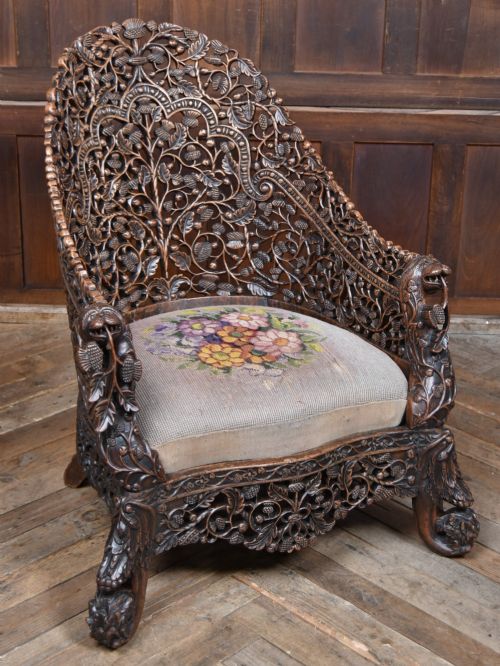
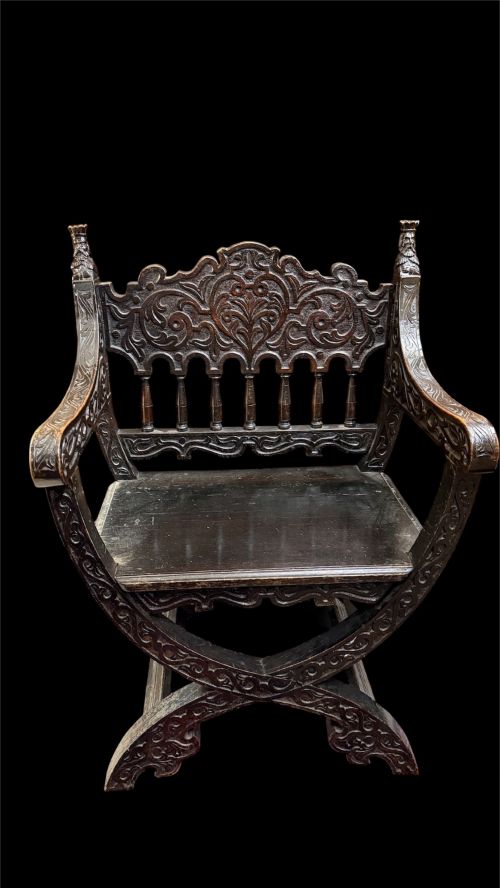
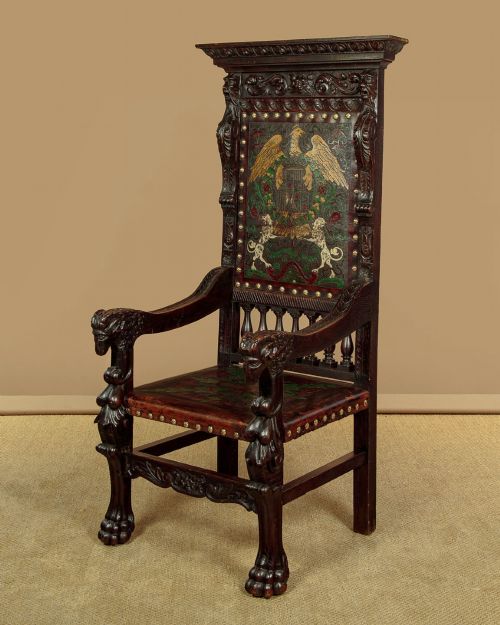
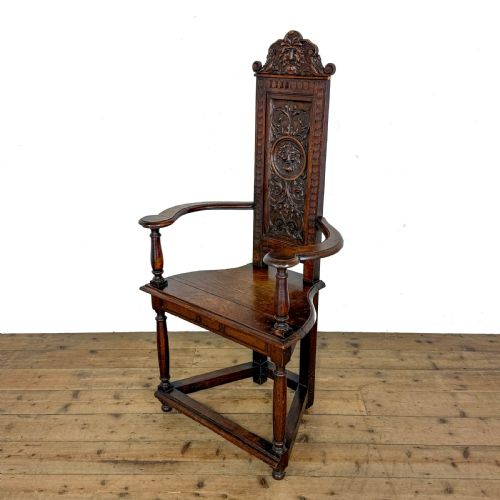
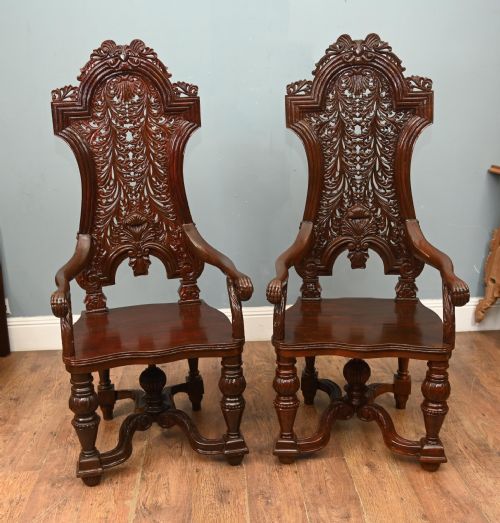
Carvers applied deep relief work directly into the timber, featuring motifs like Green Men, tracery, linenfold panels, and heraldic beasts.
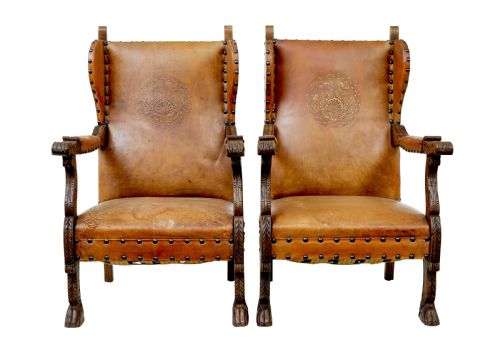
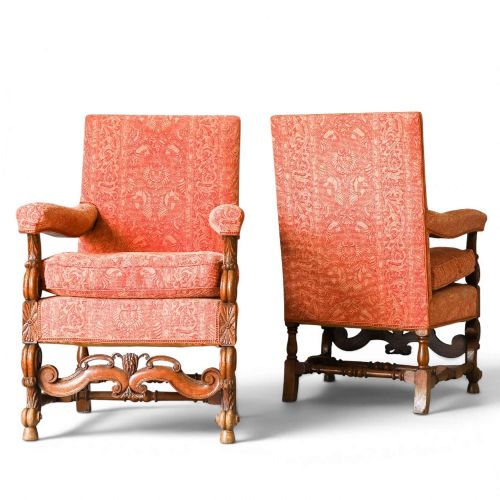
Upholstery relies on embossed leather, buttoned hide, tapestry, or fabric panels secured with brass studs.
Several Victorian oak seats incorporate hidden carvings of dogs, hounds, and Green Men peering out from the tracery.
Assessing Craftsmanship and Proportion
Quality rests on the crispness and depth of the hand-carving, where sharp architectural details separate master joinery from routine workshop output.
Proportion and scale dictate presence, with superior examples maintaining structural integrity across monumental heights without feeling clumsy.
The Gothic Throne Chair Glossary
- Wainscot chair
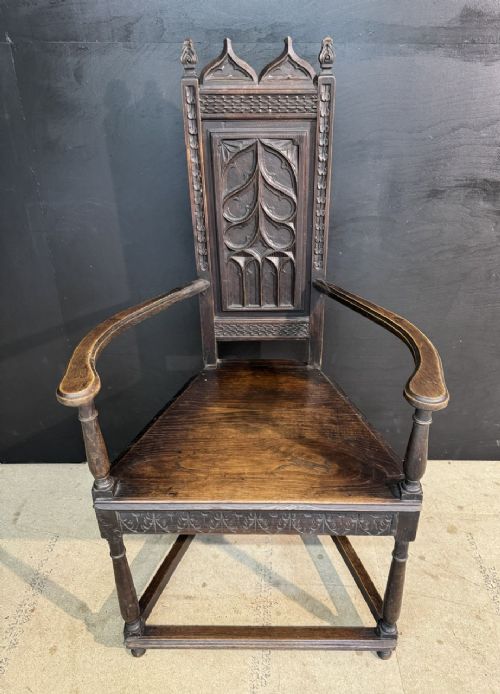
- An early wooden armchair constructed with paneled backboards and solid timber construction. These seats typically feature heavy underframing and low armrests.
- Glastonbury chair
- A folding X-framed seat with a sloping back and broad armrests. This design derives from medieval manuscript illustrations and nineteenth-century revivals.
- Tracery
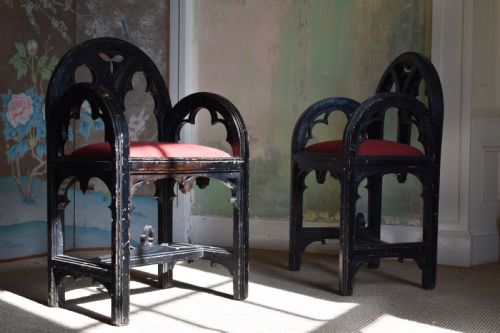
- Stonework-inspired openwork patterns carved into wood. This decorative element mimics the pointed arches and geometric shapes found in cathedral windows.
- Linenfold
- A carved wood panel motif resembling folded cloth. Joiners utilised this technique extensively on sixteenth-century panels and later revival furniture.
- Caquetoire
- A light sixteenth-century conversation chair with a trapezoidal seat. The narrow front allowed women wearing wide farthingales to sit comfortably.
Gothic Throne Chair: Frequently Asked Questions
What is a gothic throne chair?
A gothic throne chair is a heavy wooden seat featuring architectural motifs like pointed arches, high paneled backs, and deep relief carving.
These pieces draw inspiration from medieval ecclesiastical furniture and later revival periods, built primarily to project authority and status within a room.
How were these chairs used historically?
Historically, monumental timber seats served ceremonial purposes in churches, guildhalls, and the principal rooms of large country houses.
Lower-ranking members sat on benches or joint stools, while the head of the household or clergy occupied the high-backed throne.
How do I live with a heavy oak throne?
Living with these chairs requires balancing their visual weight and dark timber tones against modern or traditional interior backgrounds.
Positioning them as statement pieces in hallways, studies, or libraries allows the architectural carving and leather upholstery to anchor the space.
How do I distinguish revival periods?
Distinguishing periods involves examining the sharpness of the hand-carving, tool marks on the timber, and the consistency of revival styles.
Nineteenth-century makers frequently combined Gothic, Jacobean, and Renaissance elements, whereas earlier pieces adhered strictly to the joinery techniques of their specific century.