


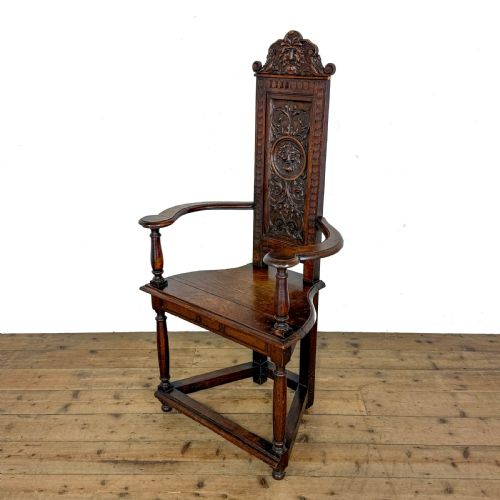
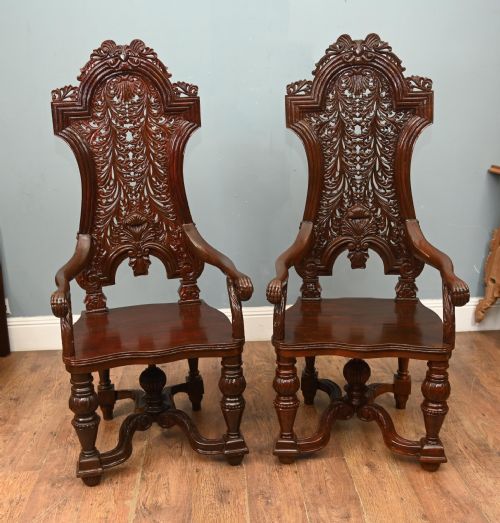


Gothic Style Oak Chair
A gothic style oak chair brings heavy timber, pointed arches and centuries of ecclesiastical revival directly into a modern interior.
Gothic Style Oak Chair
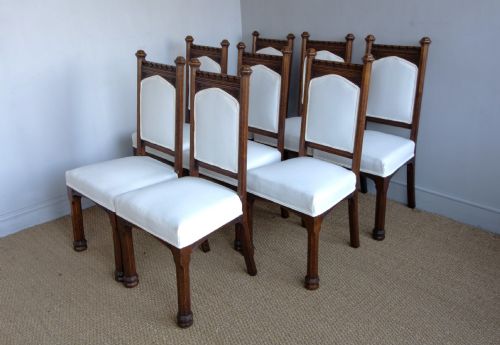
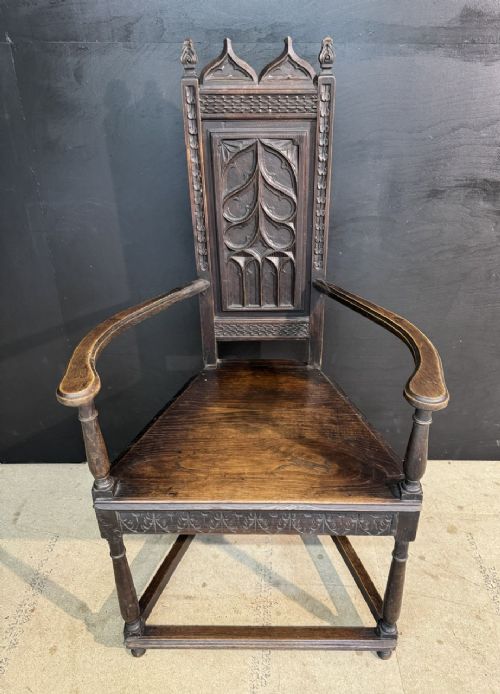
A gothic style oak chair draws on medieval ecclesiastical architecture, translating pointed arches, tracery and linenfold panelling into heavy seating designed for halls, libraries and dining rooms.
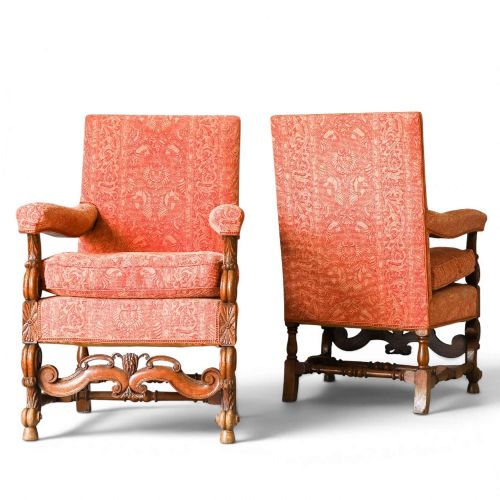
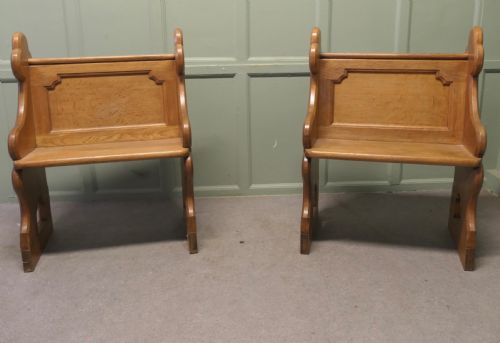
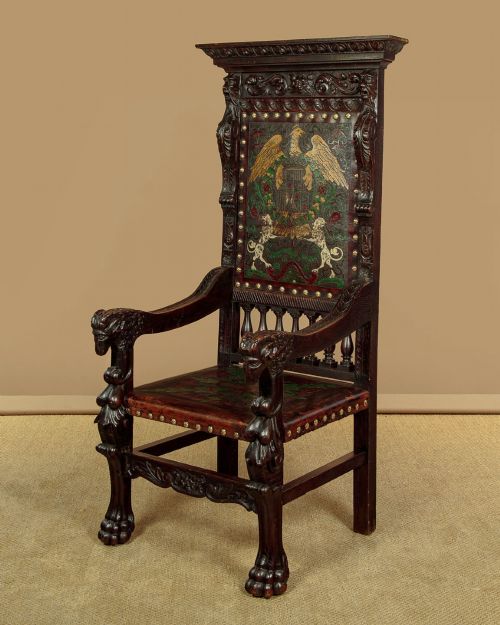
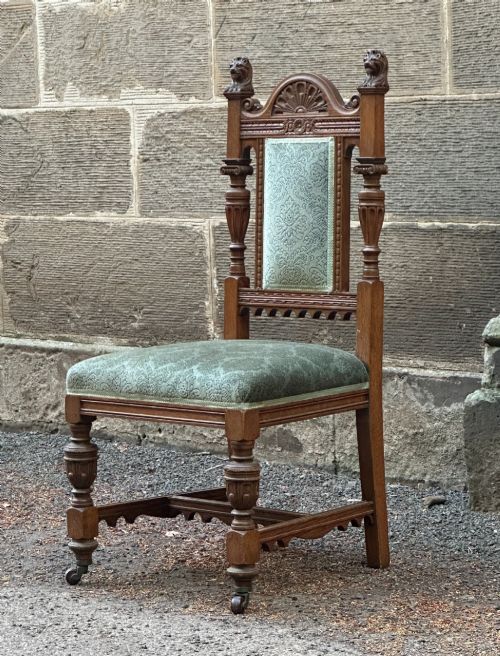
The pieces appearing most frequently across these records are nineteenth-century revival pieces, ranging from sturdy dining sets to monumental library armchairs and high-backed throne chairs.
Makers often drew inspiration from earlier seventeenth-century forms like wainscot and turner's chairs, combining oak frames with leather upholstery, brass studs or turned spindle work.
Materials and Construction Methods
Solid oak forms the structural core of nearly every piece in this category, providing the dense grain and substantial weight required for deep relief carving and architectural joinery.
Secondary materials such as tooled Spanish leather, velvet and brass buttoning provide contrast to the dark timber, often secured with decorative brass tacks along the seat rails and backrests.
Assessing Craftsmanship and Execution
Quality rests primarily in the depth and crispness of the hand carving, where sharper architectural details and well-defined tracery distinguish superior workshop production from simpler commercial output.
The integrity of the timber frame, including traditional mortise and tenon joinery and the selection of figured oak boards, determines the long-term structural stability of heavier pieces like throne chairs and monks benches.
Bruce Talbert·Gillows
The Gothic Style Oak Chair Glossary
- Wainscot chair
- A heavy wooden armchair with a solid panel back, box seat and turned legs, popular in the seventeenth century and frequently revived during the Victorian period. These pieces rely on pegged joinery rather than metal fasteners.
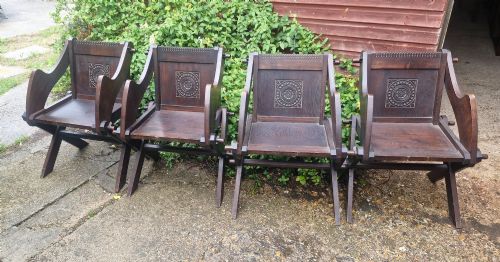
- Glastonbury chair
- A distinctive ecclesiastical armchair with an X-frame base and a sloping panel back, based on a medieval design preserved at Glastonbury Abbey. This form folds via a central pivot.
- Curule
- An ancient X-frame chair design adapted during the nineteenth-century revival periods into heavy, cross-supported armchairs. The intersecting legs create a curule base that supports substantial upholstered or carved seating.
- Linenfold
- A style of wood carving that imitates folded parchment or linen, commonly used to decorate the solid back panels of oak chairs. This motif stems directly from late medieval church woodwork.
- Tracery
- Openwork ornamentation in stone or wood featuring intersecting ribs, frequently translated into the pierced splats and backrests of gothic revival seating. It mimics the stone window patterns of medieval cathedrals.
Gothic Style Oak Chair: Frequently Asked Questions
How do I identify a genuine nineteenth-century revival piece?
Examine the construction methods visible underneath the seat and along the back panels for hand-cut joinery, pegged tenons and the natural patina of nineteenth-century oak.
Machine-cut timber, modern Phillips screws and uniform factory distressing generally indicate a twentieth-century reproduction rather than a period revival piece.
Were these chairs used for everyday dining?
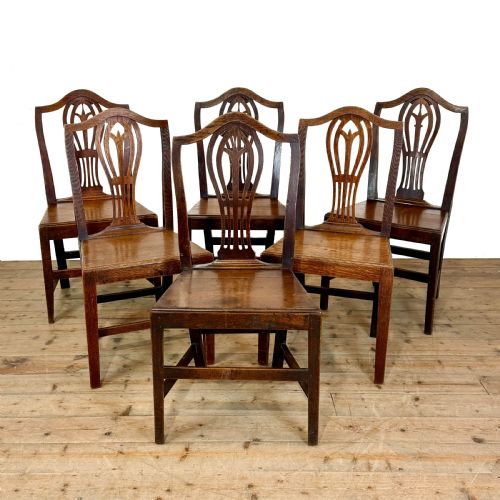
Many sets found in these records were built specifically as heavy dining chairs for large Victorian and Edwardian dining rooms, paired with substantial refectory tables.
Purchasers also selected lighter side and hall chairs for occasional seating in entryways, libraries and drawing rooms.
How should I care for the leather and oak?
Feed the leather periodically with a neutral wax or leather conditioner to prevent cracking, especially on pieces featuring brass-studded upholstery.
Keep solid oak timber away from direct heat sources and apply a traditional beeswax polish to maintain the natural finish without building up synthetic residues.