


Gothic Style Oak Buffet
A gothic style oak buffet brings heavy architectural presence and deep historical craft directly into a room.
Gothic Style Oak Buffet
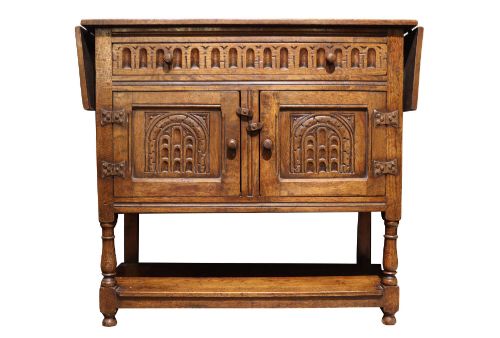
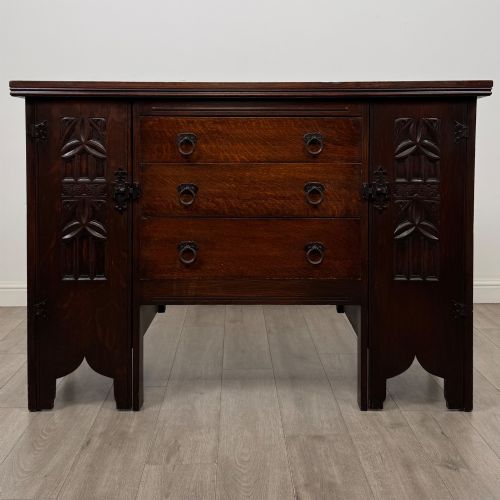
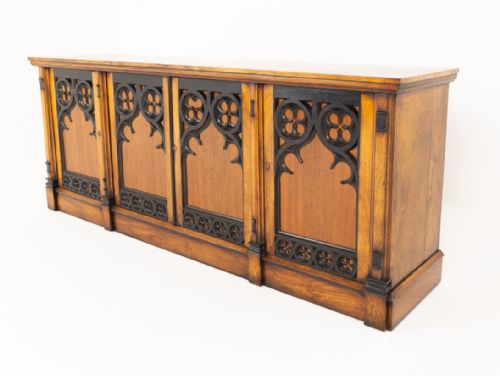
A gothic style oak buffet combines heavy storage capacity with medieval architectural details, most commonly appearing as carved cupboards, sideboards, and side cabinets dating from the mid-nineteenth century up through the nineteen-thirties. These forms draw heavily on historical revivals, utilising solid timber construction to create substantial dining room and hall furniture.
Buyers will encounter various revival interpretations on this page, ranging from strict Victorian gothic revival and flamboyant gothic to arts and crafts and renaissance revival pieces. Examples span from nineteenth-century productions by notable designers to twentieth-century utility adaptations, each retaining characteristic pointed arches and linenfold panelling.
How they were made
Makers built these pieces predominantly using solid oak, occasionally incorporating pollard oak or ebonised wood highlights alongside specimen wood inlay to create textural contrast across doors and fascias. Timber selection prioritised heavy grain and durability, ensuring the substantial frames could support deep carving and panel assembly.
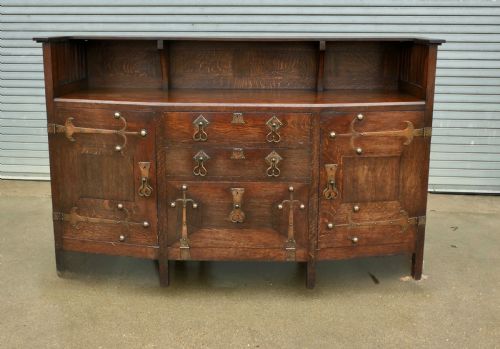
Metalwork played a structural and decorative role, with wrought iron, copper, and standard iron used for strap hinges, handles, and key escutcheons. These hardware elements were often hand-beaten or cast to complement the medieval aesthetic of the woodwork.
Some nineteenth-century makers borrowed medieval church architecture so literally that your dining room sideboard might secretly possess the structural soul of a cathedral.
What varies in quality
The depth and crispness of the hand-carved detail separate standard commercial production from exceptional cabinet work, particularly in the rendering of tracery, cusps, and figurative motifs. Finer pieces demonstrate careful attention to timber selection, where the grain matches across multiple doors and drawers.
The integration of secondary materials such as pollard oak veneers, specimen wood inlay, and original wrought iron or copper hardware elevates the sophistication of a piece. Structural integrity relies upon traditional joinery methods that allow solid oak to move naturally over time without compromising the alignment of heavy doors.
Leonard Wyburd·A W N Pugin
The Gothic Style Oak Buffet Glossary
- Gothic Revival
- An architectural and decorative style that draws inspiration from medieval design, featuring pointed arches and heavy timber work. This movement experienced major revivals throughout the nineteenth century.
- Flamboyant Gothic
- A late medieval phase of gothic architecture characterised by flame-like tracery patterns and exuberant curved lines. It translates into furniture through ornate, flowing surface carving.
- Pollard Oak
- Timber harvested from trees that have been pollarded, producing a dense, highly figured grain pattern with clustered knots. Cabinet makers used it to create decorative panels with distinctive visual movement.
- Renaissance Revival
- A nineteenth-century design movement incorporating classical architectural motifs alongside heavy sculptural carving. Pieces in this style often mix classical symmetry with medieval proportions.
- Specimen Wood Inlay
- The decorative technique of embedding small pieces of various contrasting timber species into a wood surface to form geometric or pictorial patterns. It adds distinct colour variation to otherwise uniform oak furniture.
Gothic Style Oak Buffet: Frequently Asked Questions
What is a gothic style oak buffet?
A gothic style oak buffet is a substantial storage piece of furniture built from solid oak and decorated with medieval architectural motifs such as pointed arches, tracery, and heavy carving. These pieces function primarily as sideboards, serving tables, or large cupboards designed for dining rooms and grand halls.
Most surviving examples date from the Victorian and Edwardian eras, though earlier sixteenth-century elements and later twentieth-century interpretations also appear. They serve both a practical storage purpose and a strong decorative role within an interior scheme.
How do I tell Victorian gothic from later pieces?
Victorian gothic revival pieces generally feature deeper, more sculptural hand-carving and heavier architectural proportions, often incorporating wrought iron hardware or elaborate mirror backs. They reflect a nineteenth-century obsession with authentic medieval construction methods and historicism.
Later pieces from the twentieth century tend to show simplified lines, sometimes influenced by the Arts and Crafts movement or stripped-back revivalism. Examining the construction of the interior drawers and the backing boards helps establish the likely period of manufacture.
How do I live with a heavy oak buffet?
Living with a heavy oak buffet requires careful placement to allow the substantial proportions and dark wood tones to anchor the room without overpowering smaller spaces. These pieces suit dining rooms, large hallways, or living areas where they can function as a focal point for displaying ceramics or serving food.
Maintenance involves keeping the timber nourished with appropriate wax and avoiding direct placement near heat sources that could cause the solid oak to dry out and split. The durable nature of the wood makes these pieces well suited for everyday domestic use.
What materials are used besides oak?
While oak forms the primary structural timber, makers frequently incorporated secondary materials to add contrast and decorative interest. Pollard oak veneers and specimen wood inlay appear on more decorative surfaces, while ebonised wood provides dark structural framing.
Metal components typically include wrought iron, standard iron, and copper used for hinges, handles, and escutcheons. Glass panels also feature in upper cabinet doors on select hybrid sideboard designs.