





Gothic Stick Stand
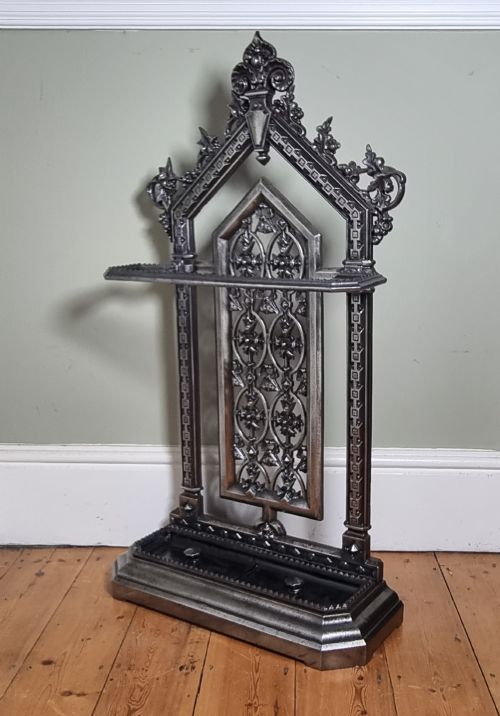
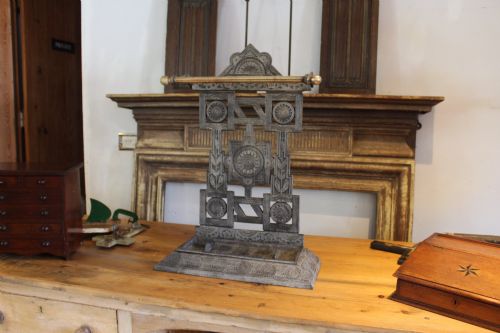
These gothic stick stand examples bring architectural ironwork and carved timber directly into the hallway, offering robust utility with medieval character.
Gothic Stick Stand
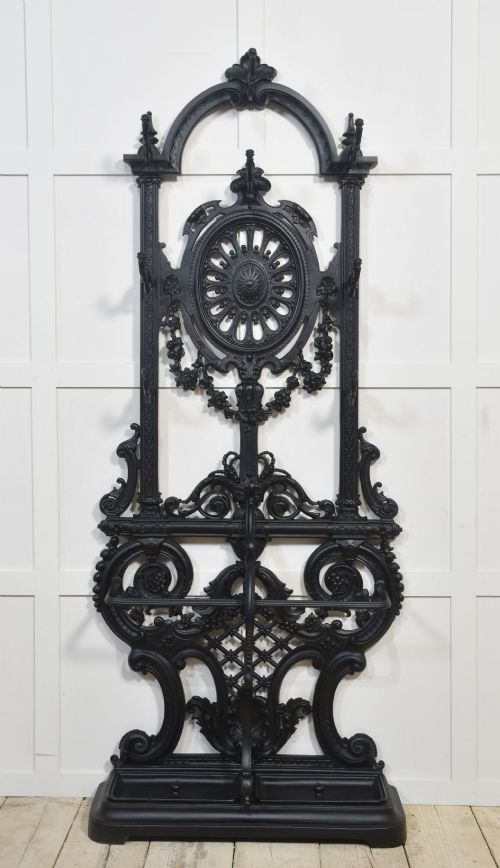
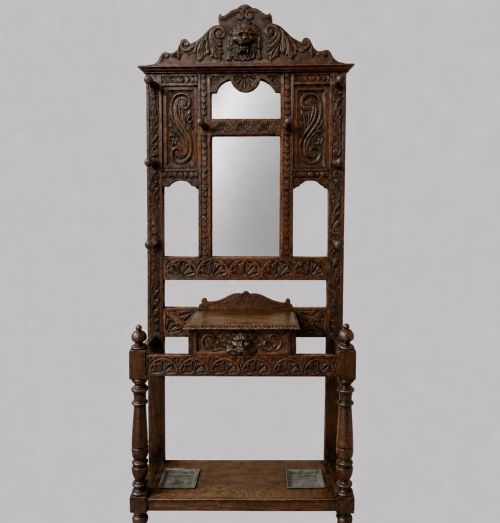
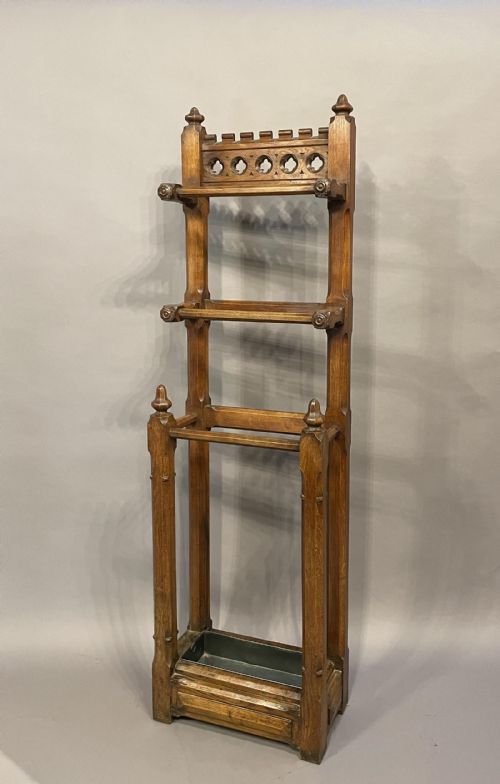
A gothic stick stand serves as a dedicated hallway repository for walking canes and umbrellas, adopting the pointed arches, quatrefoils, and heavy ornament of medieval ecclesiastical architecture. You will most frequently encounter these pieces rendered in heavy cast iron dating from the Victorian period, alongside substantial examples carved from oak.
The objects span umbrella stands, combined hall stands incorporating coat hooks and mirrors, and dedicated rack designs. Origins are predominantly British, with many pieces emerging from the prolific foundries and workshops of the nineteenth century.
Makers and foundries utilised durable metals to create open-work lattice patterns and structural trefoils that could withstand the damp weight of country house walking gear. Oak versions often display deep relief carving, including mythical motifs such as the Green Man.
Materials and Technique
Cast iron production relied on detailed sand moulds to achieve the intricate tracery, panels, and drip pans characteristic of gothic revival metalwork. Foundries poured molten iron to form rigid frames that often integrated manufacturer registry marks or serial numbers into the reverse.
Timber examples utilise solid oak, carved with hand chisels to render linenfold panels, tracery, and figurative grotesques. Joinery methods in these hall pieces combine traditional mortise and tenon construction with heavy pegged joints to support the downward pressure of heavy walking sticks.
Listings demonstrate a strong predominance of nineteenth-century cast iron and carved oak, spanning the height of the Gothic Revival.
Judging Quality
Quality rests upon the crispness of the casting or the depth of the timber carving, separating sharp architectural definition from softened secondary production. Superior ironwork exhibits clean, undercut details without the blurring common in later or derivative castings.
Proportion and structural integrity dictate the standing of a piece within the range, particularly where heavy iron frames meet their original drip trays. Pieces retaining their matching base trays and structural rigidity demonstrate superior preservation through generations of domestic use.
Thomas Jeckyll·Coalbrookdale·Falkirk Foundry
The Gothic Stick Stand Glossary
- Gothic Revival
- An architectural and decorative style popular in the nineteenth century that revived medieval forms such as pointed arches, lancets, and heavy masonry motifs in domestic furniture and metalwork.
- Drip Pan
- The removable metal or zinc tray positioned at the base of a stick stand to catch moisture from wet umbrellas and protect hallway floors.
- Tracery
- Openwork ornamentation in metal or stone, composed of intersecting ribs that form geometric patterns characteristic of gothic church windows.
- Green Man
- A sculptural architectural ornament depicting a human face surrounded by or sprouting from foliage, frequently found carved into nineteenth-century oak hall furniture.
- Hall Stand
- A larger piece of hallway furniture combining a stick stand with a mirror, coat hooks, and occasionally glove boxes or small seat compartments.
Gothic Stick Stand: Frequently Asked Questions
How do I clean a cast iron stick stand?
Dust the intricate metalwork regularly with a soft brush to prevent grime accumulation in the recessed tracery. Apply a light microcrystalline wax to finished surfaces to preserve the metal without darkening the tone.
Avoid using abrasive water solutions or harsh chemical polishes that strip protective historic patination from the iron casting.
Where should I place a heavy hallway stand?
Position the piece against a sturdy load-bearing wall in an entrance hall or boot room where adequate floor support exists for heavy iron and oak structures. Ensure it sits on level flooring so the weight of walking sticks distributes evenly across the base.
Keep the stand away from direct and intense heat sources such as radiators to prevent timber panels from drying and splitting over time.
How can I date a nineteenth-century stick stand?
Examine the casting quality, registration diamonds, and stylistic markers to establish a manufacturing window within the Victorian period. Earlier mid-nineteenth-century examples often feature sharper sand-cast detailing and heavier structural mass.
Cross-reference any visible foundry stamps or design lozenges with historical registry archives to pinpoint the exact year of production.
Are these stands suitable for modern umbrellas?
Most antique stands accommodate standard walking sticks and slim umbrella shafts comfortably within their cast iron or wooden rings. Check the internal diameter of the base rings to ensure modern oversized golf umbrellas will fit without jamming.
Verify that the original removable metal drip tray is intact at the bottom to protect your floors from residual rainwater.