


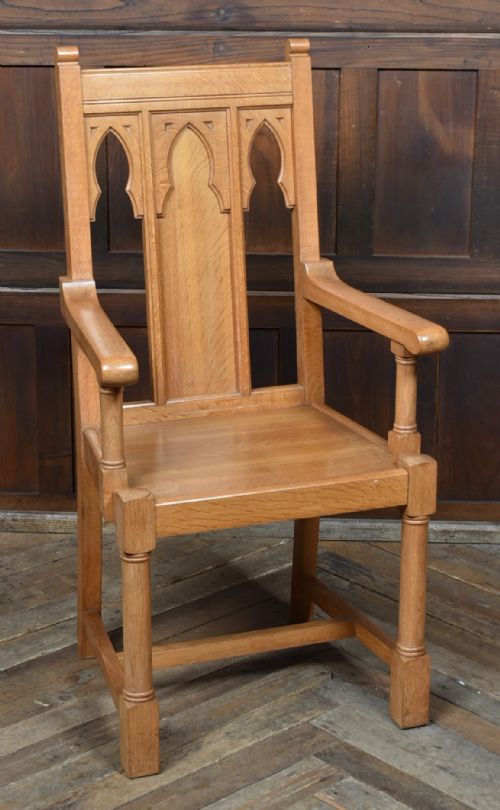

Gothic Revival Throne Chair
A gothic revival throne chair brings heavy timber, ecclesiastical carving and imposing vertical lines straight from monastic halls into a modern interior.
Gothic Revival Throne Chair
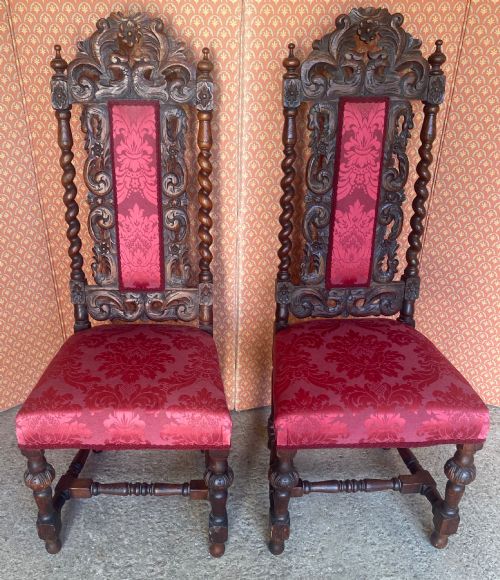
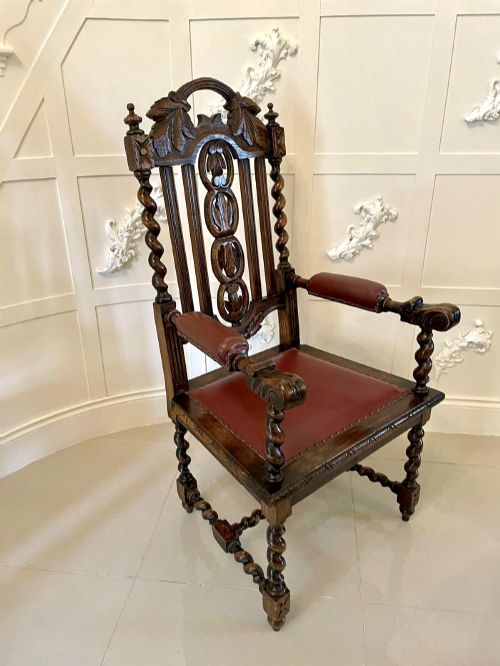
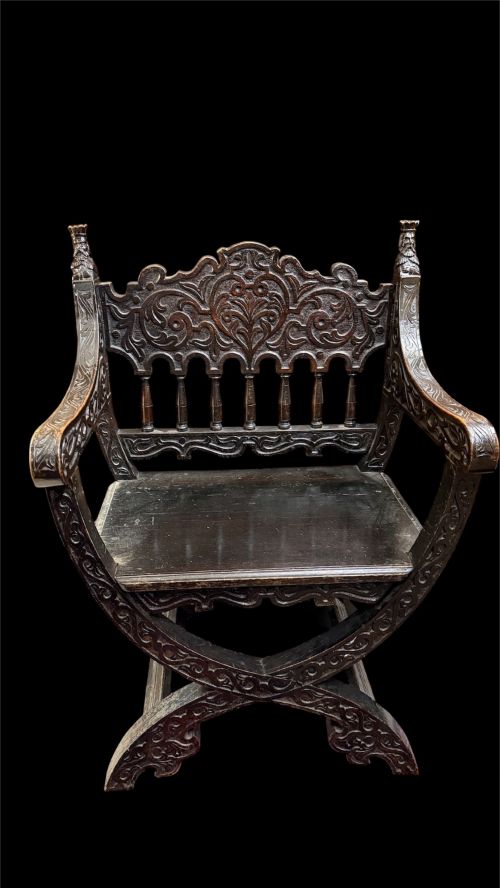
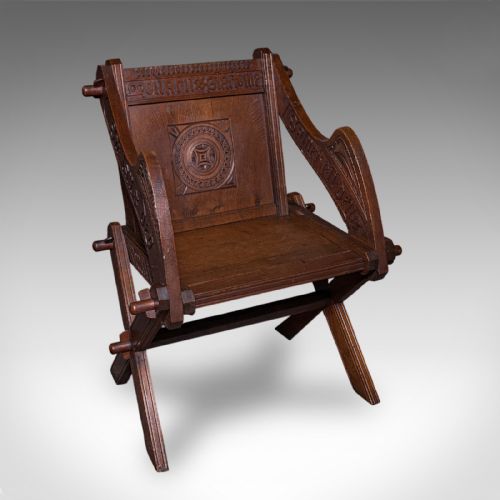
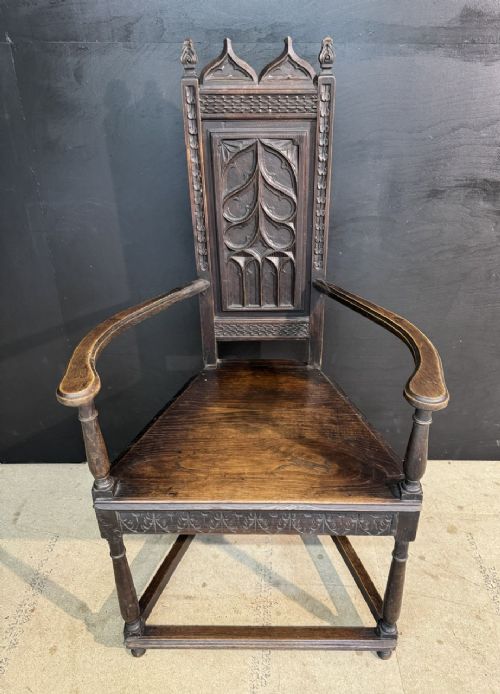
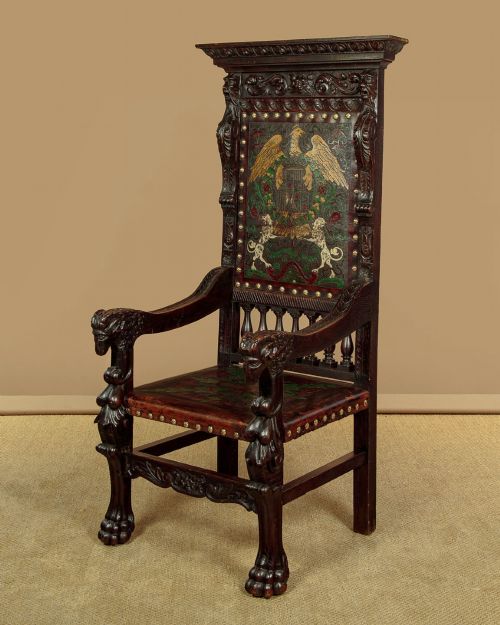
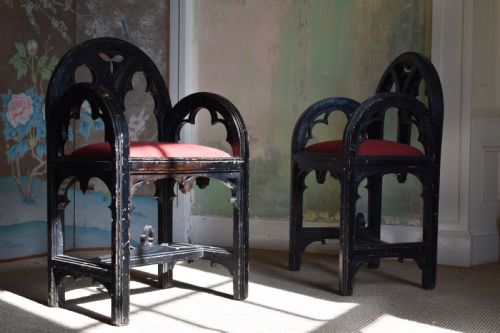
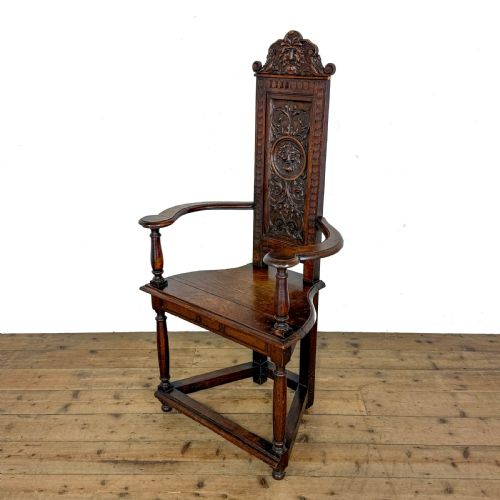
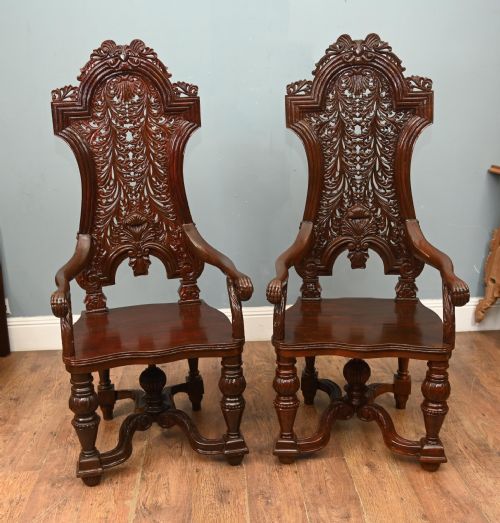
When you search for a gothic revival throne chair, you encounter substantial seating built primarily during the nineteenth century, drawing heavily on medieval church architecture and vernacular timber traditions. The pieces appearing here range from tall oak wainscot chairs and Glastonbury designs to expansive Victorian armchairs decorated with green man carvings, heraldic motifs and high backs.
Most examples date from the Victorian era, particularly the latter half of the nineteenth century, though earlier vernacular forms and occasional twentieth-century revivals also surface. Makers frequently adapted historical formats like the Glastonbury chair or the heavy ecclesiastical throne, translating medieval joinery into domestic or institutional seating.
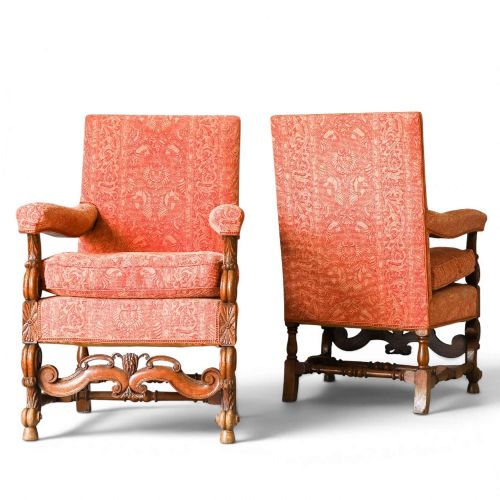
The inventory on this page spans distinct regional interpretations, including English, Scottish, Welsh and continental European pieces. Forms vary from simple dug-out seats and elbow chairs to large pairs of ceremonial throne chairs intended for prominent display in a hall or library.
Materials and Technique
The construction relies heavily on solid timber, with oak dominating the selection alongside walnut, beech, pitch pine and painted wood. Joinery techniques draw on traditional framing methods, utilising pegged mortise and tenon joints to support the immense weight and structural demands of deep, high-backed seating.
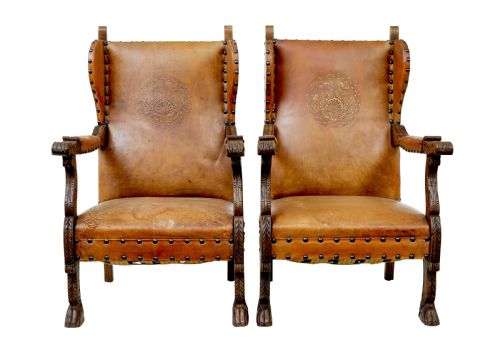
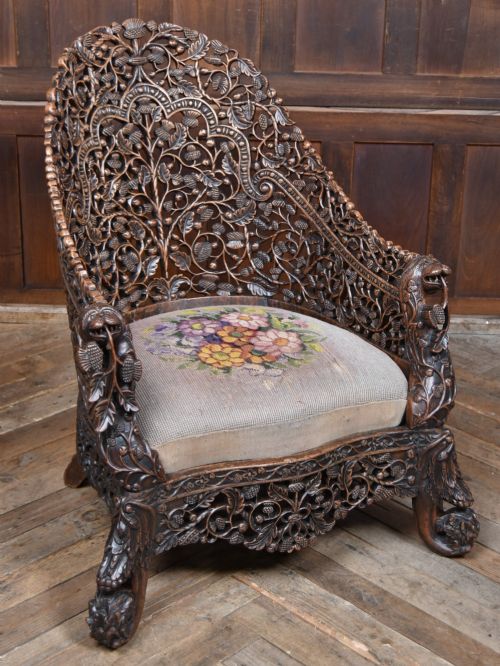
Carving defines the visual language of these seats, executed by hand directly into the dense wood to produce tracery, linenfold panels, grotesque faces and botanical details. Upholstery, where present, typically consists of embossed leather, buttoned leather, tapestry or heavy woven fabric, secured with brass tacks.
The archive and current inventory show these chairs appearing in regional variants from England, Scotland, Wales and continental Europe.
Gradations in Quality
Quality rests primarily on the depth and ambition of the carving and the integrity of the timber used in construction. Pieces originating from known exhibitions or bearing attribution to specific designers display superior sculptural confidence and crisper detailing in motifs such as heraldry or foliage.
The choice of secondary materials also separates standard production from exceptional examples, with heavy quarter-sawn oak, thick structural leather and original brass detailing elevating a piece. Proportions play a significant role, as master carvers maintained architectural balance across towering backrests and substantial arm supports.
A W N Pugin
The Gothic Revival Throne Chair Glossary
- Glastonbury chair
- A type of folding or X-framed wooden armchair with a sloping back and panel arms, revived during the nineteenth century from sixteenth-century ecclesiastical examples.
- Wainscot chair
- A heavy wooden armchair constructed with panelled backrests and solid timber seats, popular in seventeenth-century vernacular rooms and frequently reinterpreted during later revivals.
- Green man
- A sculptural architectural motif representing a human face surrounded by or sprouting foliage, commonly carved into the woodwork of nineteenth-century revival seating.
- Caquetoire
- A light, high-backed armchair originating in sixteenth-century France, featuring a trapezoidal seat designed to accommodate contemporary ladies' wide garments.
- Linenfold
- A style of wood carving used to panel flat surfaces, designed to resemble folded vertical sheets of linen fabric.
Gothic Revival Throne Chair: Frequently Asked Questions
What is a gothic revival throne chair?
These pieces are heavy wooden seats inspired by medieval church architecture, cathedrals and monastic furniture, built largely during the nineteenth century to satisfy a Victorian appetite for historicism.
They combine architectural elements like pointed arches, tracery and deep relief carvings with functional domestic seating forms.
How were these chairs used historically?
Originally, such monumental seating was reserved for figures of authority, clergy or heads of households, placed at the head of a long table or in a chapel.
During the nineteenth century, owners placed them in entrance halls, libraries and morning rooms to project status, learning and an appreciation for medieval heritage.
How do you style a gothic revival chair at home?
Because of their visual weight and dark timber tones, these chairs anchor a room effectively when given sufficient space to stand as focal points.
They pair well with neutral walls, plain stone floors and simple contemporary furnishings that allow the intricate woodcarving and leather detailing to command attention.
How can you tell a Victorian piece from an older one?
Nineteenth-century revival pieces often feature machine-assisted preparation combined with hand-finished carving, alongside standardised joinery methods characteristic of Victorian workshops.
True early examples display the tool marks, timber shrinkage patterns and construction quirks typical of pre-industrial joinery and vernacular hand tools.