



Gothic Revival Side Desk
These gothic revival side desk pieces combine ecclesiastical timberwork with functional writing surfaces, bringing architectural geometry to smaller rooms.
Gothic Revival Side Desk
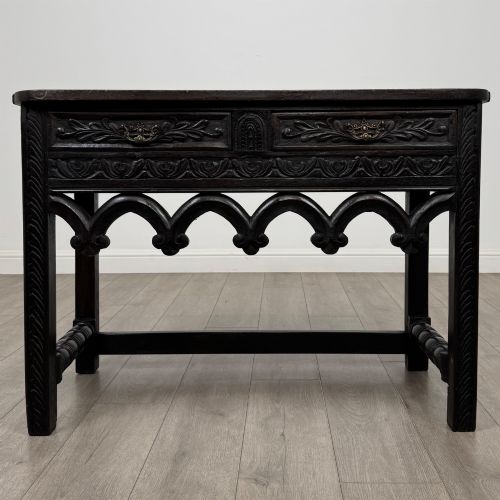
A gothic revival side desk takes its cues from medieval ecclesiastical architecture, translating pointed arches and tracery into domestic furniture. When searching this phrase, buyers encounter practical writing tables, console surfaces and compact desks produced during the Victorian period.
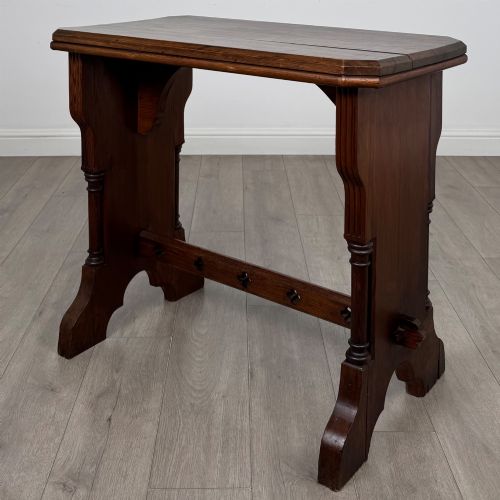
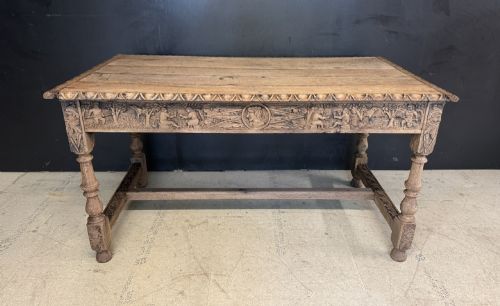
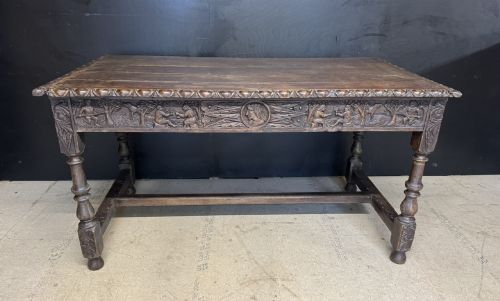
The selection spans tables and writing furniture constructed mainly in the nineteenth century, utilising robust timbers like oak and pitch pine. Surviving examples often incorporate carved details such as trefoils, linenfold panels and green man motifs derived from medieval stone and wood carving traditions.
Makers of the period adapted architectural idioms for smaller domestic spaces, resulting in tables and desks designed to sit against walls or function as auxiliary writing surfaces. These pieces bridge the gap between heavy library furniture and domestic utility.
What varies in quality
The depth and crispness of the hand-carving distinguish standard production from exceptional examples, particularly in motifs like green men and trefoils. Relief work that retains sharp edges and undercut details demonstrates superior craftsmanship by the woodcarver.
Timber selection and structural integrity also separate pieces within this category. Desks utilising quarter-sawn oak with medullary rays or dense, unblemished pitch pine maintain greater stability and visual richness over time.
Listings feature oak, pitch pine and mahogany furniture spanning the Victorian period, alongside earlier eighteenth-century examples.
Lamb Of Manchester·Collier and Plucknett
The Gothic Revival Side Desk Glossary
- Trefoil
- A three-lobed ornamental design resembling clover leaves, frequently pierced through chair backs or carved into table rails. This architectural motif echoes medieval window tracery.
- Green Man
- A sculptural face carved from foliage or branches, symbolizing rebirth and springtime. It appears commonly on the aprons of Victorian gothic tables.
- Pitch Pine
- A resinous softwood utilised in nineteenth-century ecclesiastical and domestic furniture. It offers a pronounced grain pattern when finished.
- Ebonised Wood
- Timber treated with chemical stains or paint to imitate ebony. This technique gained popularity during the nineteenth century for aesthetic movement designs.
- Linenfold
- A style of wood carving that imitates folded linen panels. It is often found on the sides and modesty panels of gothic revival desks.
Gothic Revival Side Desk: Frequently Asked Questions
What is a gothic revival side desk?
A gothic revival side desk is a nineteenth-century writing table or console featuring medieval architectural motifs like pointed arches, heavy mouldings and hand-carved details. These pieces were designed to bring the solemnity of ecclesiastical architecture into domestic interiors.
Unlike massive partner desks meant for the centre of a library, these smaller desks were intended for side placement against walls or in studies. They combine practical writing surfaces with the decorative vocabulary of the gothic revival style.
What woods were used for these desks?
Makers relied heavily on native and imported timbers, with solid oak being the predominant choice for its durability and traditional association with medieval architecture. Pitch pine also appears frequently, particularly in pieces with ecclesiastical origins or from the later nineteenth century.
Other materials seen in the construction include mahogany, walnut and occasionally ebonised wood or rosewood. Tops frequently incorporate contrasting inserts such as tooled leather or fabric to provide a functional writing surface.
How do I date a gothic revival desk?
Dating relies on examining the timber preparation, construction techniques, and stylistic markers within the revival movement. The majority of these pieces originate from the Victorian era, specifically between eighteen-fifty and nineteen-hundred, following revivals sparked by architects like A. W. N. Pugin.
Later nineteenth-century examples often feature machine assistance alongside hand carving, while mid-century pieces tend to show heavier structural framing and deep relief work. Secondary woods and fastener types further help narrow down the period of manufacture.
Where should I place a side desk?
These desks suit studies, living rooms or hallways where a compact surface is needed without dominating the floor plan. Their decorative backs and carved aprons allow them to be placed against walls or left partially visible in a room.
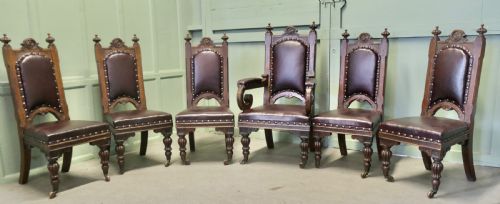
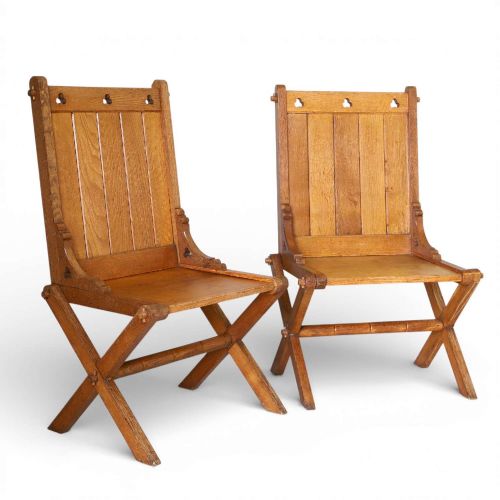
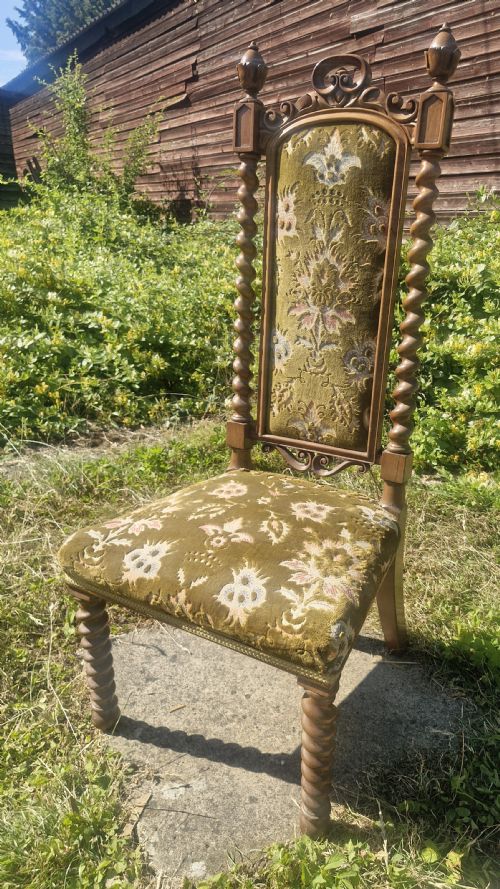
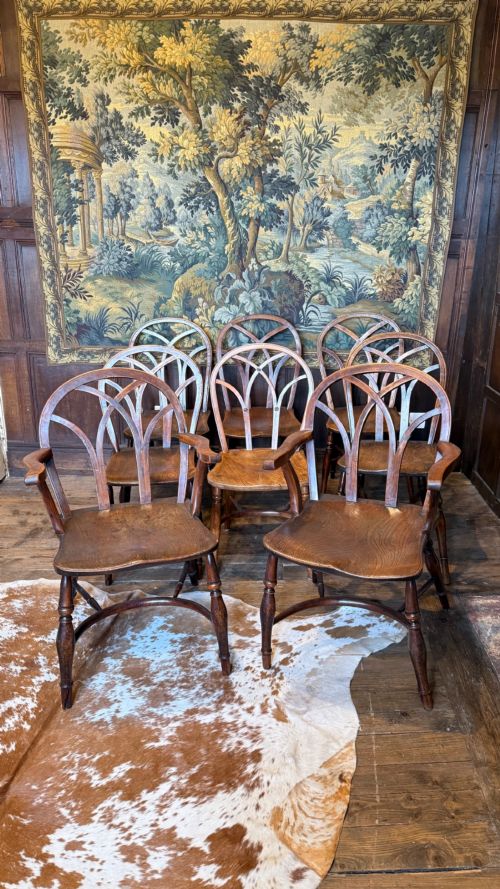
Pairing the desk with appropriate seating, such as a carved oak side chair or an upholstered armchair, maintains the historical aesthetic. Proper placement protects antique timber from direct heat sources and excessive sunlight.