

Gothic Revival Server
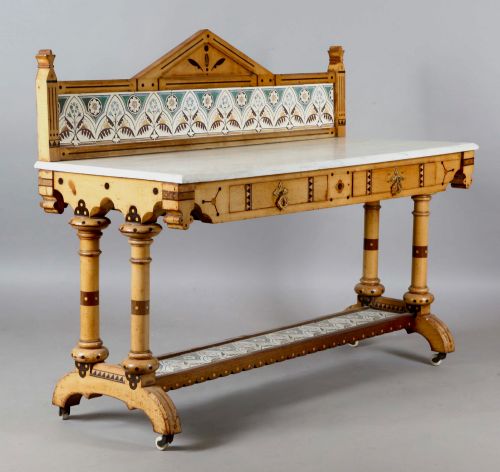
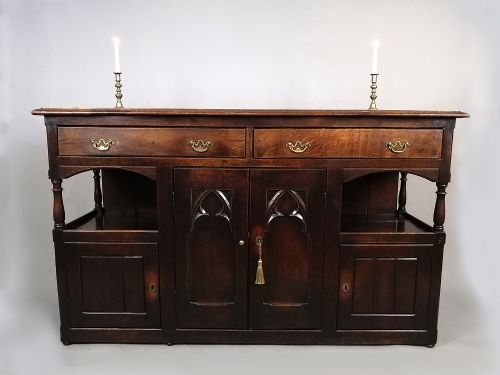
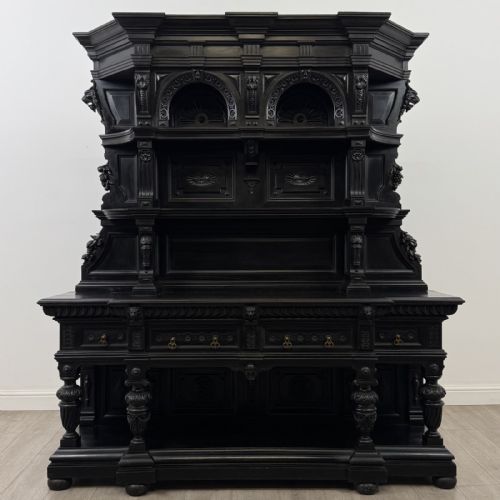
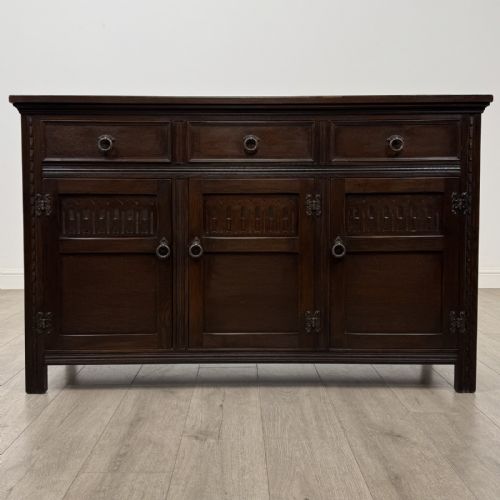
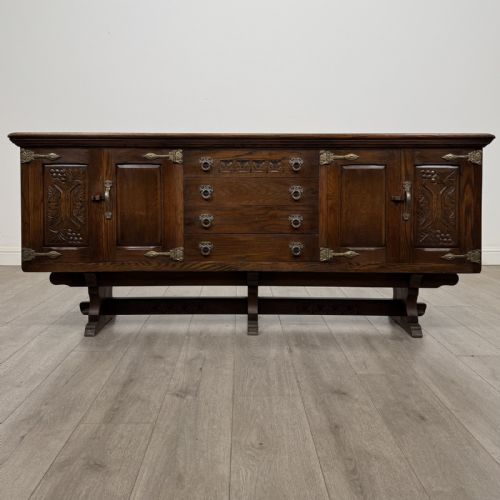
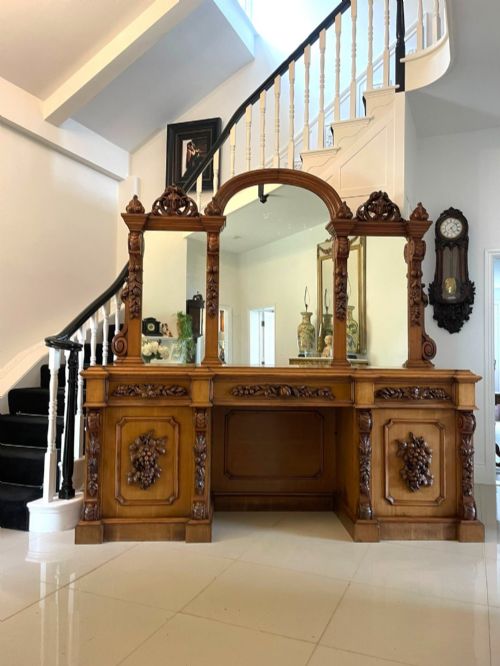
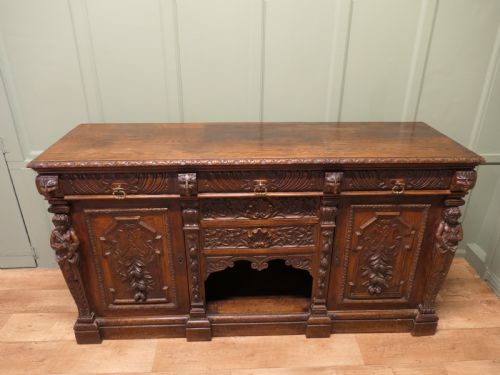
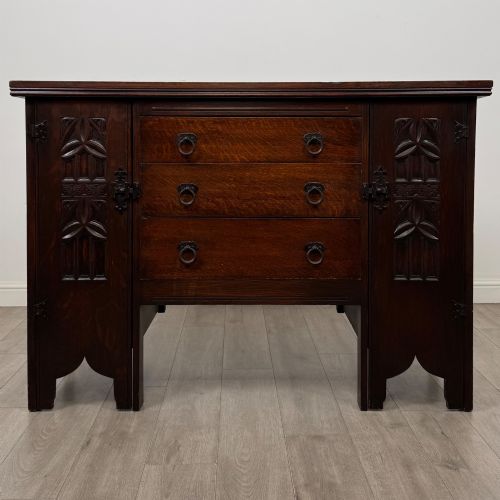
A gothic revival server anchors a dining room with serious architectural presence and deep, carved timber character.
Gothic Revival Server
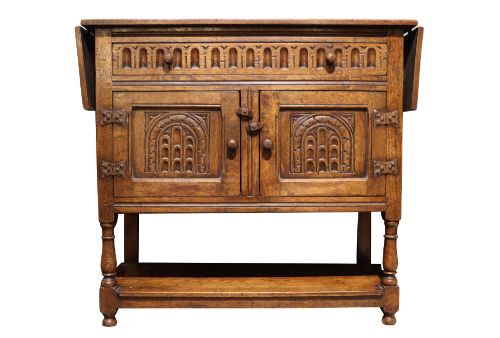
A gothic revival server brings architectural mass and ecclesiastical motifs into the domestic interior through heavy timber construction. Pieces in this category appear as sideboards, serving tables, consoles, and dresser bases designed for formal dining and entertaining.
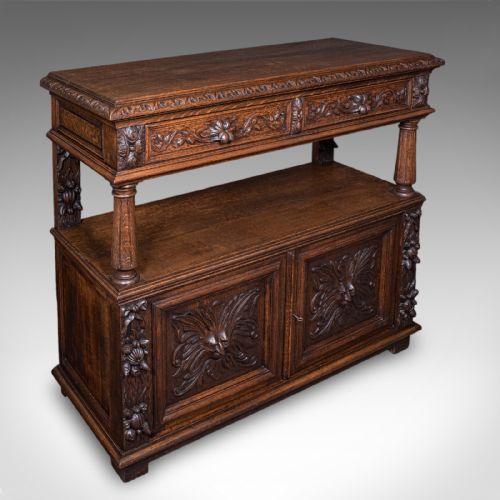
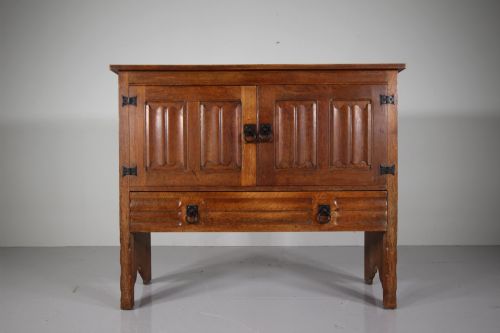
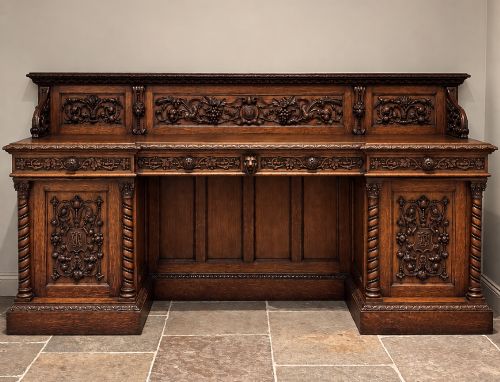
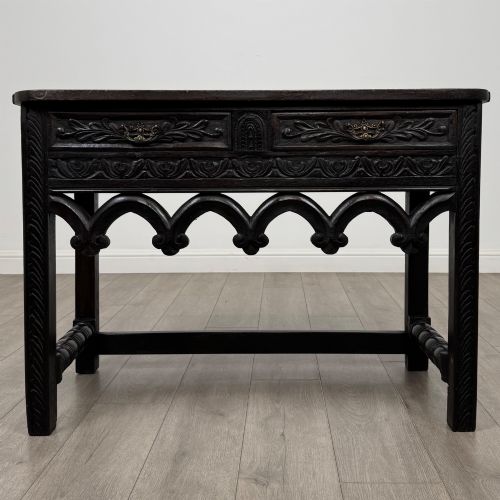
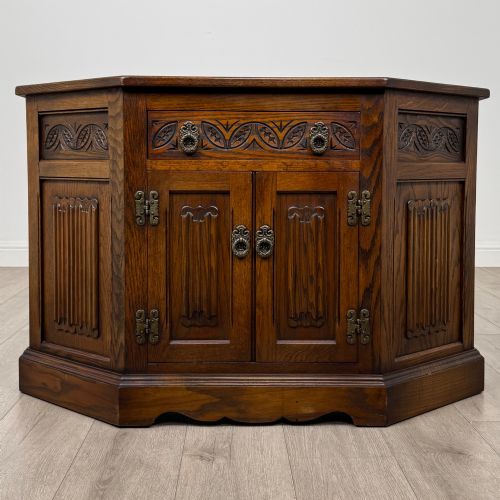
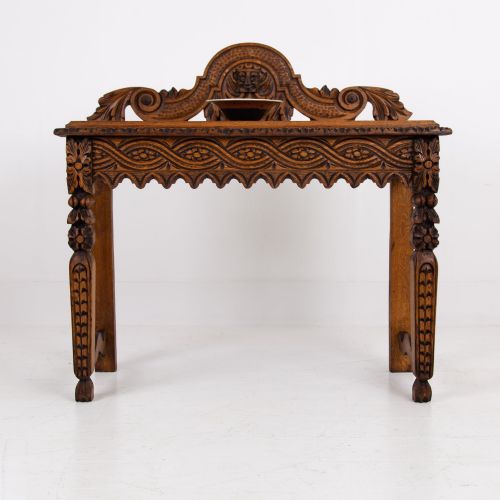
The version met most frequently on this page is the 19th-century carved oak sideboard or buffet, often displaying characteristic pointed arches, linenfold panels, or green man masks. These forms originate primarily from Victorian production, ranging from compact hall tables to grand mirror-backed sideboards.
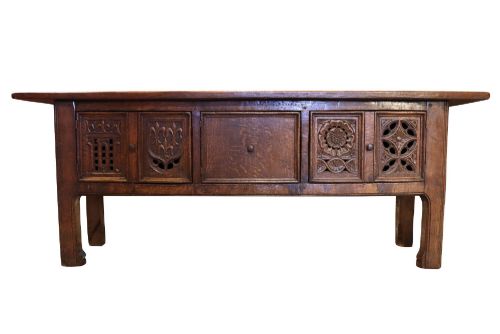
Makers and designers working in this idiom drew inspiration from medieval stonework and ecclesiastical joinery, adapting structural tracery for secular dining spaces. Alongside sideboards, the selection encompasses narrow pitch pine tables and painted consoles reflecting the gothic taste.
How they were made
Oak dominates the material record for these servers, providing the structural integrity needed for deep relief carving and heavy proportions. Cabinetmakers utilised solid timber frames alongside applied mouldings to create robust sideboards, buffets, and cupboards.
Construction techniques rely heavily on traditional joinery, including pegged mortise and tenon joints that support substantial weight. Secondary materials such as brass fittings, iron hardware, and glass elements appear selectively on doors, mirrors, and gallery rails.
Surface finish is achieved through hand-carving and polishing, bringing out the natural grain of oak and pitch pine. Certain items feature painted wood treatments or rich dark patination that accentuates the gothic architectural details.
Gothic Revival Server Retail Price Guide 2026
Typical asking prices for gothic revival server among the pieces listed under this phrase on Sellingantiques today, from the lower quarter to the upper quarter. They describe what is for sale here now, not the wider market.
Recorded periods span the 19th century through the Edwardian era, featuring Victorian Gothic and Arts and Crafts styles.
What varies in quality
Depth and crispness of the timber carving set the standard for quality across these servers. Superior pieces exhibit hand-chiselled details with sharp undercuts on green man masks, linenfold panels, and tracery, whereas lesser examples rely on shallow mechanical stamping.
Proportion and scale dictate the visual success of each piece, ranging from narrow console tables to grand mirror-backed sideboards of imposing presence. Master cabinetmakers balanced heavy architectural elements with harmonious dimensions, avoiding clumsy joints or awkward bulk.
Integrity of the timber and original hardware distinguish high-grade examples from later adaptations. The best survivals retain their original brass or iron mounts, well-figured oak boards, and stable structural frames without excessive timber shrinkage.
Leonard Wyburd·Phillips Bristol
The Gothic Revival Server Glossary
- Gothic Revival
- An architectural and decorative style drawing on medieval forms such as pointed arches, quatrefoils, and tracery. This aesthetic dominated Victorian public and domestic design.
- Dresser Base
- A low rectangular cabinet or table with drawers and cupboards, used for serving food and storing dining ware. It forms a primary precursor to the modern sideboard.
- Linenfold
- A style of wood carving that imitates folded parchment or linen cloth. It appears frequently on the door panels of 19th-century cupboards and sideboards.
- Green Man
- A sculptural motif depicting a human face emerging from or entwined with foliage and vines. It represents rebirth and appears prominently on carved oak furniture.
- Buffet
- A sideboard or serving table designed for displaying plate and serving meals. Large examples often feature tiered shelving or mirrored backs.
Gothic Revival Server: Frequently Asked Questions
What is a gothic revival server used for?
These servers provide sturdy surface space for presenting food and drink during formal dining occasions. Below the top surface, integrated cupboards and drawers offer practical storage for linens, cutlery, and serving vessels.
In contemporary interiors, they function equally well as hallway consoles or living room display surfaces. Their substantial proportions make them ideal statement pieces for anchoring a large wall.
How do I date a 19th-century oak server?
Dating relies on examining the construction methods, handle hardware, and stylistic combinations present in the carving. Mid-Victorian pieces often display crisp ecclesiastical tracery and heavy applied mouldings.
Later Victorian and Edwardian examples may incorporate lighter proportions or transitional Arts and Crafts influences. Comparing the secondary timbers and backboards helps confirm the period of manufacture.
Are these servers made of solid oak?
Most pieces recorded in these listings utilise solid oak for the primary framework, carved panels, and top surfaces. Cabinetmakers occasionally employed secondary softwoods for internal drawer linings and backboards to manage weight.
Pitch pine also appears in specific regional tables, providing a lighter alternative to dark oak. Every piece relies on natural timber rather than modern laminates.
How do I care for antique carved timber?
Maintain antique oak and pitch pine by keeping furniture away from direct heat sources and dramatic humidity fluctuations. Regular dusting with a soft cloth prevents particle buildup in deep carvings.
Apply a traditional beeswax polish sparingly to nourish the wood and preserve the surface sheen. Avoid silicone-based sprays that can penetrate the historic grain.