




Gothic Revival Relief Panel
These gothic revival relief panel examples bring medieval architectural depth indoors, offering heavy timber carving and cast metal detail for serious period interiors.
Gothic Revival Relief Panel
A gothic revival relief panel translates medieval architectural ornamentation into portable wall plaques, architectural salvage, and furniture insets. When you search for a gothic revival relief panel, you encounter predominantly nineteenth-century items created during periods of intense architectural restoration and historicism.
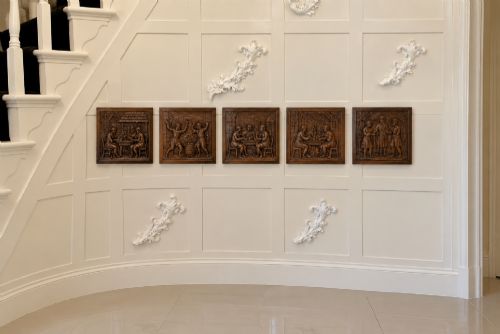
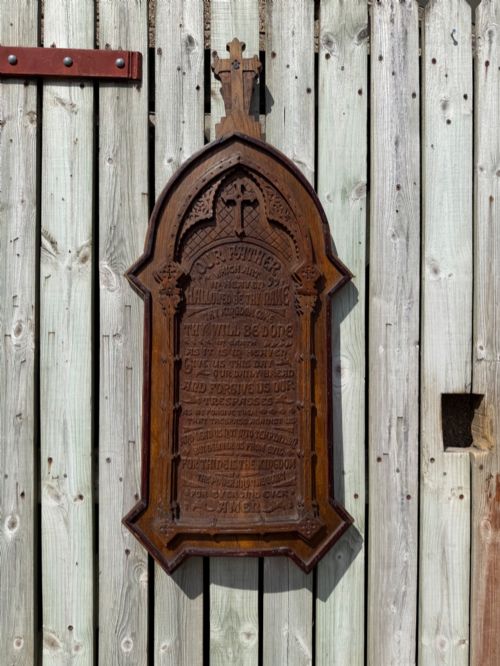
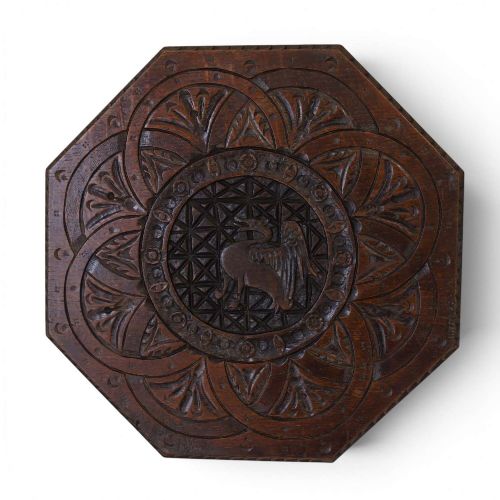
The objects on this page range from architectural fragments and wall plaques to converted tabletops and sculptural armorial panels. Oak and fruitwood predominate, often featuring traditional motifs like linenfold, Tudor roses, and portrait profiles.
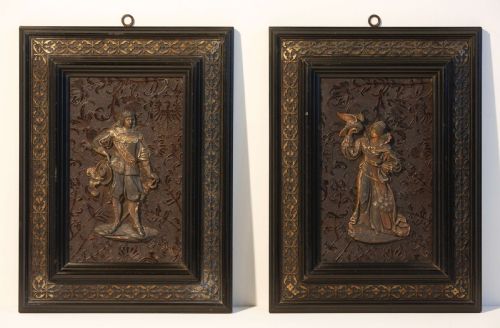
Victorian workshops produced many of these pieces, drawing on seventeenth-century precedents and baroque influences. You also find white metal and gilded bronze plaques alongside lighter leathermaché wall decorations.
Materials and construction methods
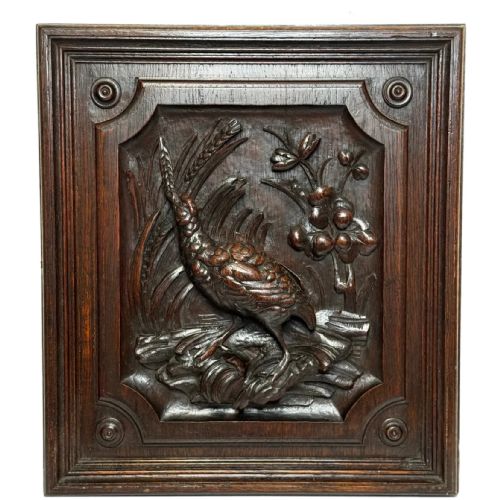
Makers shaped these panels using dense hardwoods like oak, walnut, and fruitwood, which accepted deep, chiselled undercutting. Carvers built up strong sculptural relief by working directly into the grain of tiger oak or ebonised wood.
Alternative items utilise cast white metal and gilded bronze, or moulded leathermaché and painted plaster for lighter architectural ornaments. Gilt and gold leaf frequently highlight raised details against darker timber grounds.
Colonel Sir Edward Massey shares space on this page with anonymous putti, ceiling roses, and a grouse in full portrait relief.
Assessing craftsmanship and depth
The choice of timber and the integrity of the original ground dictate the piece's character. Sound structural joinery in composite panels and well-preserved surface patination separate standard production from exceptional work.
The Gothic Revival Relief Panel Glossary
- Linenfold
- A style of wood carving that imitates folded linen, commonly seen on fifteenth- and sixteenth-century panels. Nineteenth-century revivalists frequently copied this motif for wall panels and furniture.
- Armorial
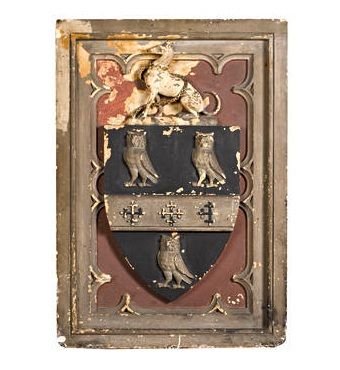
- Relating to heraldry and family coats of arms, often carved into wood or cast in plaster. These panels display specific lineage and familial symbols.
- Leathermaché
- A composite material made from pulp and leather fibres pressed into moulds to create decorative architectural elements. It offered a lightweight alternative to carved timber.
- Undercutting
- A carving technique where the material is cut away beneath a raised motif to create deep shadows and high relief. It requires considerable skill to avoid splitting the wood.
Gothic Revival Relief Panel: Frequently Asked Questions
Where were these panels originally placed?
Many of these pieces served as architectural salvage from churches, institutional buildings, and large country houses during the nineteenth century. Others functioned as specific furniture insets, ceiling decorations, or dedicated wall plaques.
Over time, owners repurposed elements like former tabletops and architectural fragments for display as standalone wall art in domestic interiors.
How do I hang a heavy wooden panel?
Due to the substantial weight of dense timbers like oak and walnut, secure wall fixings are essential. Professional framing or heavy-duty mirror plates screwed directly into the structural wooden frame work best.
Consult a restorer or professional installer to assess the back of the panel and ensure the weight distributes evenly against a solid wall.
Are metal plaques genuine gothic items?
Most metal relief plaques associated with this style date from the nineteenth-century revival periods rather than the medieval era. Manufacturers often incorporated earlier stylistic figures and motifs into nineteenth-century bronze and white metal castings.
Examining the casting technique, alloy composition, and surface wear helps determine the exact period of manufacture.
How should I clean carved oak panels?
Dust the carved recesses regularly with a soft, dry bristle brush to prevent particle buildup in deep undercutting. Avoid using wet cloths, modern household sprays, or abrasive polishes on historic wood surfaces.
An occasional application of high-quality microcrystalline wax helps nourish the timber and protect the original patinated finish.