


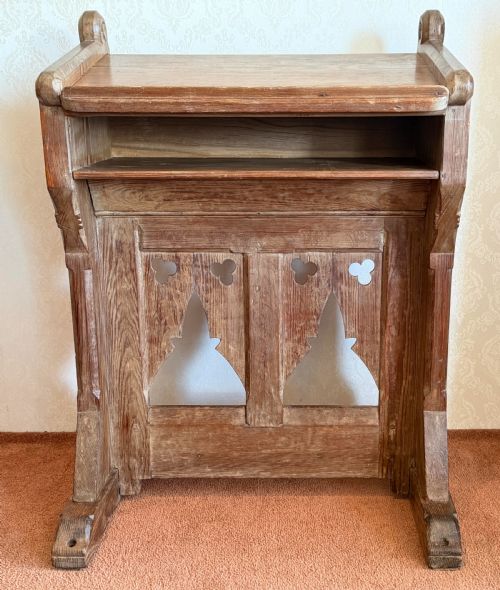


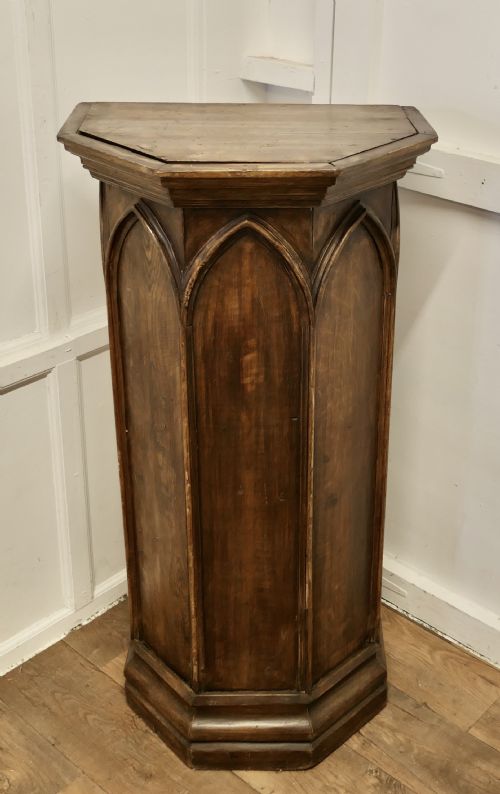


Gothic Revival Reading Desk
These gothic revival reading desk pieces bring heavy architectural timber and ecclesiastical gravitas directly into domestic studies.
Gothic Revival Reading Desk
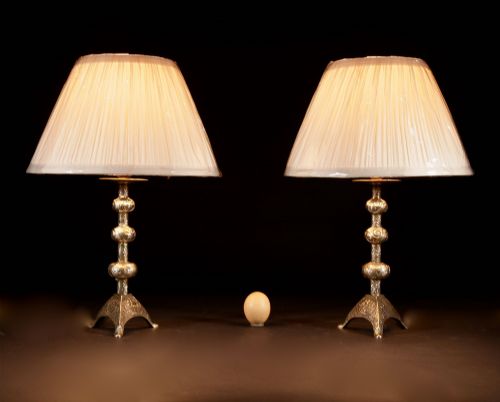
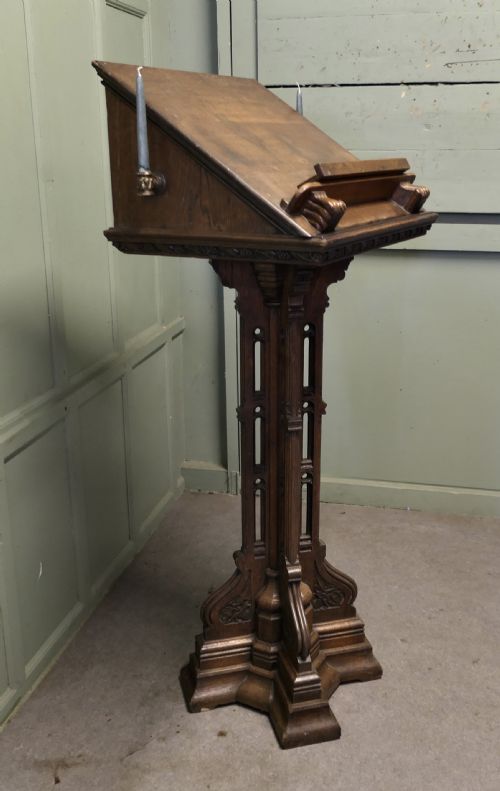
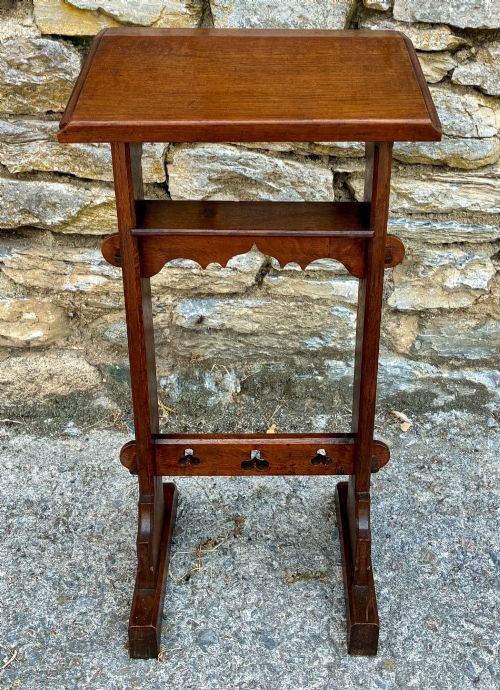
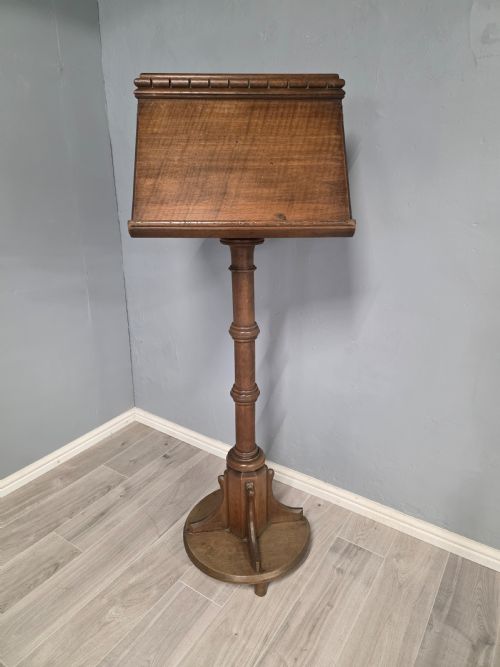
When searching for a gothic revival reading desk, buyers encounter robust ecclesiastical furniture designed for elevated reading and study. The selections on this page span the nineteenth century into the early twentieth century, taking the form of church lecterns, library armchairs, reading stands, and brass table lamps.
Oak dominates the timber selections, appearing alongside walnut, pine, and wood, while brass and iron provide structural contrast. Pieces display styles ranging from Victorian Gothic Revival and Romanesque Revival to Arts and Crafts, creating functional writing and reading stations with distinct medieval architectural influences.
How they were made
Carpenters constructed these items primarily from solid oak, walnut, and pine, employing deep hand-carving techniques to render tracery, linenfold panels, and figural eagle supports. Timber surfaces often display rich natural grain emphasised through traditional polishing methods.
Metal components utilise cast brass and iron, particularly for adjustable book stands and table lamps, providing durable mechanical joints and heavy bases. Leather and fabric upholstery frequently pad the library armchairs, secured with traditional studwork.
Object forms span armchairs, lecterns, table lamps, book stands, and podiums.
What varies in quality
The standard of carving defines the upper tier of these pieces, distinguishing crisp, deep relief work on oak lecterns and library armchairs from simpler, mechanical shaping. Superior examples maintain structural integrity across heavy timbers without excessive drying splits.
Material selection separates ordinary utility pieces from finer commissions, particularly where dense golden oak or substantial brass work is employed. The integration of original leather upholstery and functional adjustment mechanisms further elevates a piece.
The Gothic Revival Reading Desk Glossary
- Gothic Revival
- An architectural and decorative style drawing inspiration from medieval forms, pointed arches, and ecclesiastical motifs. It experienced a major resurgence during the nineteenth century.
- Lectern
- A raised stand with a slanted top designed to hold a book or notes for a standing reader. These often feature carved wooden eagles or sloping desk surfaces.
- Romanesque Revival
- A architectural style echoing eleventh and twelfth-century round-arched building traditions. Pieces in this idiom display heavy proportions and rounded decorative arches.
- Arts and Crafts
- A design movement valuing hand craftsmanship and traditional materials over mass production. Objects from this tradition emphasise plain utility and visible construction.
- Library armchair
- A heavy, substantial seating form designed for prolonged study and reading. They frequently incorporate carved oak frames and button leather upholstery.
Gothic Revival Reading Desk: Frequently Asked Questions
How do I date a gothic revival piece?
Dating relies on examining the timber preparation, joinery methods, and stylistic markers recorded across nineteenth and early twentieth-century examples. Victorian and Arts and Crafts pieces often show specific tool marks and material combinations unique to their decade of production.
Changes in hardware, such as brass fittings and iron brackets, help narrow down the period between eighteen-fifty and nineteen-twenty. Comparing the depth of the hand-carving to known ecclesiastical patterns also guides accurate dating.
Were these desks meant for churches?
Many items designed as church lecterns or podiums served ecclesiastical functions for holding service books and scriptures. Other variations, such as library armchairs and reading stands, were built specifically for domestic studies and large home libraries.
Ecclesiastical forms were frequently adapted for secular interiors during the nineteenth-century revival periods. Their sturdy construction made them equally suited for reading large volumes in private homes.
What woods were commonly used?
Oak is the predominant timber found in these listings, valued for its strength and traditional association with medieval architecture. Walnut and pine also appear frequently in library armchairs and reading stands.
Golden oak varieties were particularly favoured during the later Victorian period to brighten domestic interiors. Wood finishes range from dark ecclesiastical polishes to natural golden tones.
How do I care for leather upholstery?
Button leather upholstery on library armchairs requires gentle cleaning to preserve the historical surface without stripping the patina. Regular dusting prevents debris from settling into the deep button tufts.
Applying specialised leather balms helps maintain flexibility in nineteenth-century hides. Keeping the furniture away from direct heat sources prevents the leather from drying and cracking.