
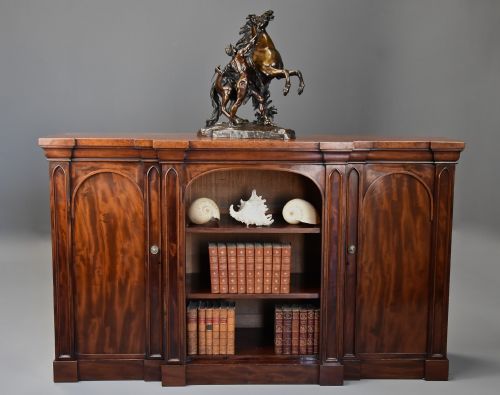


Gothic Revival Low Bookcase
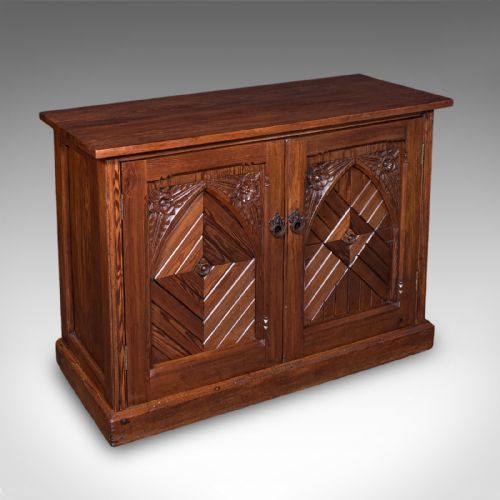
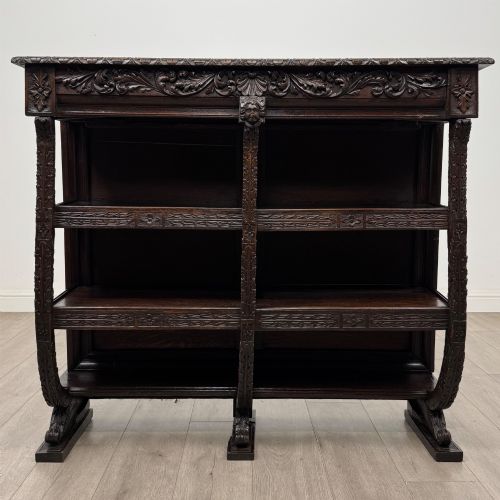
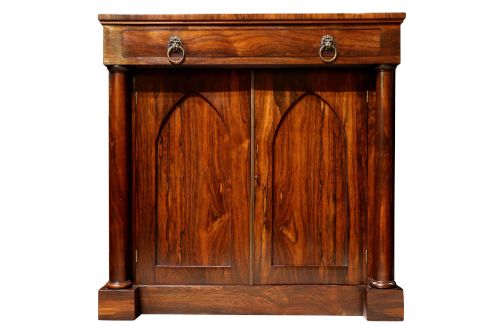
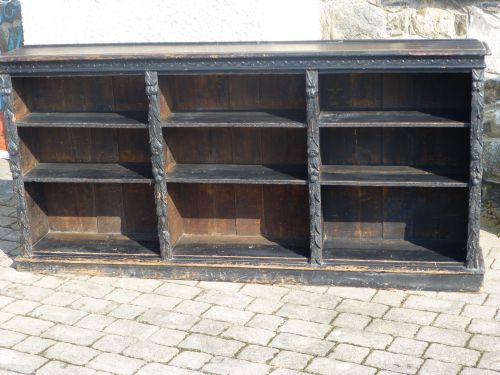
These gothic revival low bookcase examples bring architectural presence and heavy timber character directly into domestic rooms.
Gothic Revival Low Bookcase
A gothic revival low bookcase combines sturdy storage with pointed arches, tracery and solid timber construction rooted in nineteenth century design. Most pieces met here date from the Victorian period, emerging from the middle decades onwards alongside related storage cupboards and chiffoniers.
Makers drew heavily on medieval ecclesiastical architecture, translating cathedral motifs into domestic proportions that fit beneath standard windows. Open dwarf formats sit alongside glazed cabinets and breakfront designs, offering adaptable shelving for libraries and studies.
Materials and Construction
Carpenters relied predominantly on solid oak and mahogany, often shaping dense timber with deep relief carving, linenfold panelling and applied mouldings. Walnut and rosewood also appear, sometimes paired with ebonised finishes to heighten the medieval aesthetic.
Hardware typically involves cast brass and iron fittings, securing panelled doors and supporting adjustable shelving systems. Glazed sections use timber astragals arranged in geometric or pointed arch patterns to echo stone window tracery.
Listings feature nineteen century oak and mahogany alongside rarer rosewood, walnut and ebonised finishes.
Distinguishing Quality
Superior examples display crisp, hand-carved detail across the friezes and panels, demonstrating deep relief rather than shallow machine stamping. The architectural elements align harmoniously with the overall proportions rather than appearing as tacked-on ornamentation.
Timber selection dictates longevity, with well-figured oak, rich mahogany and stable secondary woods ensuring the structure remains true. Finishes that retain a mellow, patinated depth indicate careful handling over generations compared to flat, modern surfaces.
Richard Bridgens
The Gothic Revival Low Bookcase Glossary
- Gothic Revival
- An architectural and decorative style that revives medieval forms, featuring pointed arches, quatrefoils and heavy timber detailing. It dominated nineteenth century church design and domestic furniture.
- Breakfront
- A piece of furniture where the central section projects forward from the flanking wings. This creates visual depth and allows for varied internal storage configurations.
- Chiffonier
- A low cabinet featuring cupboards beneath open or enclosed shelving, developed during the nineteenth century. They provide compact storage suited to smaller living spaces.
- Linenfold
- A style of wood carving that mimics folded fabric, commonly used on fifteenth century church panels and revived by Victorian cabinetmakers. It adds texture to cupboard doors and cupboard sides.
- Ebonised
- Timber treated with a chemical stain or dark pigment to imitate ebony. The technique creates a striking, dark surface popular in nineteenth century decorative arts.
Gothic Revival Low Bookcase: Frequently Asked Questions
What periods do these bookcases span?
The pieces available range across the nineteenth century, with a strong concentration of Victorian examples produced from the middle decades up to nineteen hundred. Styles stretch from early nineteenth century regency interpretations through to later arts and crafts influences.
Craftsmen drew inspiration from medieval architecture throughout this entire span, resulting in consistent architectural motifs applied to varying domestic forms.
How were these low bookcases used originally?
These cabinets served primarily in libraries, studies and parlours to house growing collections of books while keeping windows unobstructed. Their low profile allowed homeowners to display decorative objects or busts on the top surface.
Vestries and domestic halls also utilised similar cupboards for storing papers, linens and household ledgers behind secure, panelled doors.
How do I style a gothic revival piece at home?
Pairing heavy oak and carved timber with neutral walls lets the architectural lines and deep patination stand out. These low units anchor a room visually, making them ideal surfaces for lamps, ceramics or framed artwork.
They mix surprisingly well with modern minimalist interiors, where the dark wood and historic carving introduce warmth and textural contrast.
How do open bookcases differ from cabinet versions?
Open dwarf bookcases provide immediate access to book collections with adjustable shelves tailored for varied volumes. They emphasise the vertical grain and carving of the timber frame.
Closed cabinets and storage cupboards use panelled or glazed doors to protect contents from dust and light, often incorporating elaborate locks and brass hardware.