

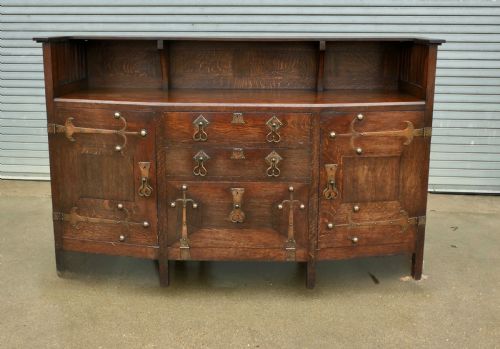


Gothic Revival Buffet Server
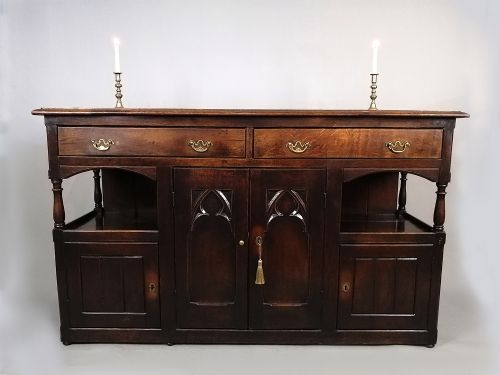
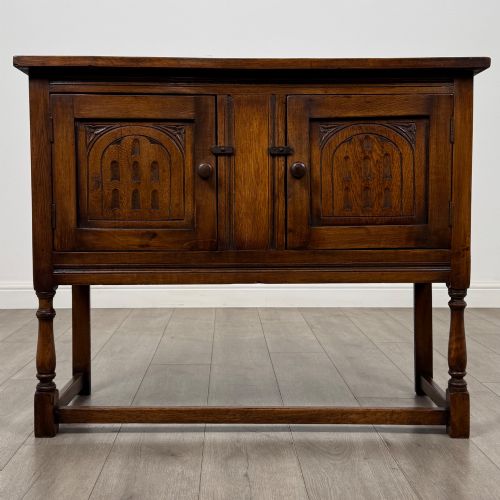
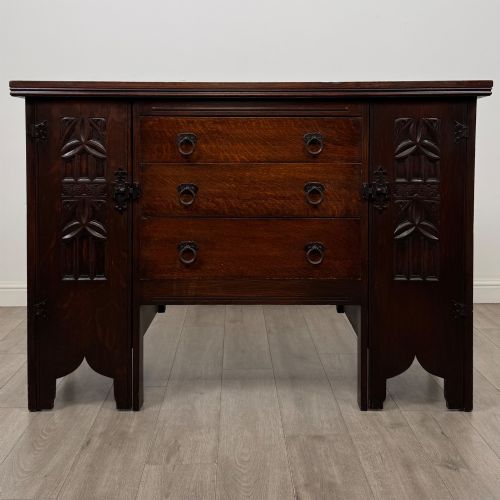
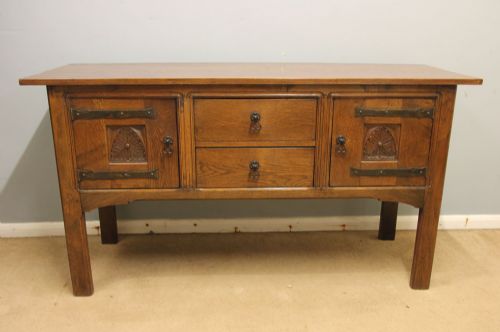
These gothic revival buffet server pieces combine heavy architectural presence with practical storage, offering a commanding focal point for a dining room or hall.
Gothic Revival Buffet Server
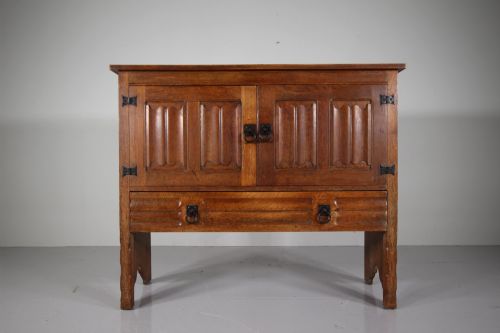
A gothic revival buffet server takes many forms across the selection here, appearing as sideboards, dresser bases, cupboards and serving tables. These substantial pieces provide surface space for serving and enclosed storage for dining ware beneath.
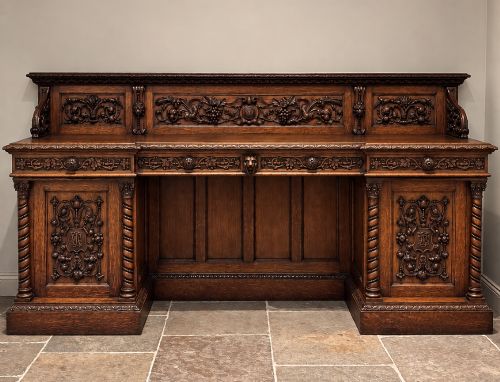
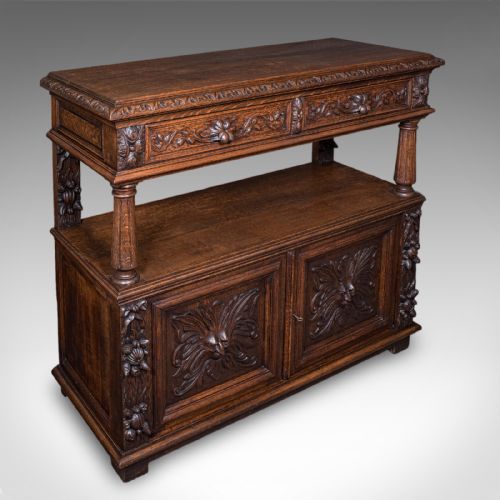
The version most commonly met on this page is a carved oak sideboard or dresser base dating from the nineteenth century or the Victorian period. Examples range from narrow proportions to grand mirrored backs and elaborate Green Man carvings.
Origins span English, Scottish and continental workshops, incorporating styles such as Arts and Crafts alongside Victorian Gothic Revival. Pieces date from the early nineteenth century through to the Edwardian era and the nineteen-thirties.
Construction and Materials
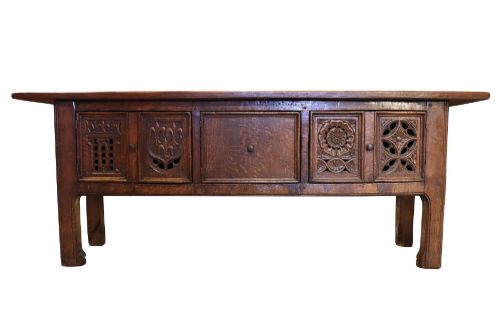
Oak dominates the evidence, frequently carved deeply with tracery, linenfold panels and figural motifs. Pollard oak and walnut appear alongside iron, brass and copper hardware.
Several pieces feature a watchful Green Man staring out from the sideboard doors, bringing a touch of medieval woodland folklore straight into the dining room.
Assessing Quality
Quality rests upon the depth and crispness of the carving, particularly on architectural mouldings, panel work and figural details like Green Man masks. Heavy timber construction with well-fitted doors and drawers indicates superior cabinetmaking.
The choice of materials elevates certain pieces, such as pollard oak or specialised specimen wood inlays combined with mirror glass. Provenance to specific designers or makers, including Liberty or regional firms like Phillips of Bristol, distinguishes exceptional output from standard workshop production.
Leonard Wyburd·Phillips Bristol
The Gothic Revival Buffet Server Glossary
- Gothic Revival
- An architectural and decorative style drawing inspiration from medieval forms, pointed arches and ecclesiastical motifs. It manifested across furniture design during the nineteenth century.
- Dresser Base
- A low sideboard or cabinet featuring cupboards and drawers beneath a serving surface, often lacking the upper plate racks of a traditional kitchen dresser.
- Green Man
- A sculptural architectural motif depicting a human face entwined with foliage, leaves or vines. It appears frequently in carved woodwork of this period.
- Pollard Oak
- Timber harvested from trees that have been pollarded, producing wood with dense, highly figured grain patterns. Cabinetmakers used it for decorative veneer and panel faces.
Gothic Revival Buffet Server: Frequently Asked Questions
What is a gothic revival buffet server?
A gothic revival buffet server is a heavy storage piece designed for dining rooms, featuring medieval architectural motifs like pointed arches and tracery.
These pieces function as sideboards, serving tables or dresser bases with enclosed cupboard space.
How do I date a gothic revival sideboard?
Dating relies on timber selection, carving style, hardware and structural assembly methods recorded in the piece.
Nineteenth-century examples often display deep hand-carved oak with iron or brass fittings, while later twentieth-century pieces show simplified forms.
Where were these servers originally used?
These servers stood in the dining rooms and halls of Victorian and Edwardian homes to hold serving dishes and silverware.
Their robust construction and large proportions suited grand domestic interiors of the period.
How do I care for antique oak furniture?
Protect antique oak surfaces by maintaining steady room humidity and avoiding direct placement near heat sources.
Regular dusting with a dry cloth preserves the finish without requiring heavy polishes.