
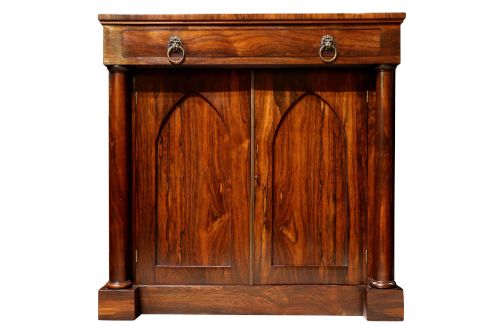
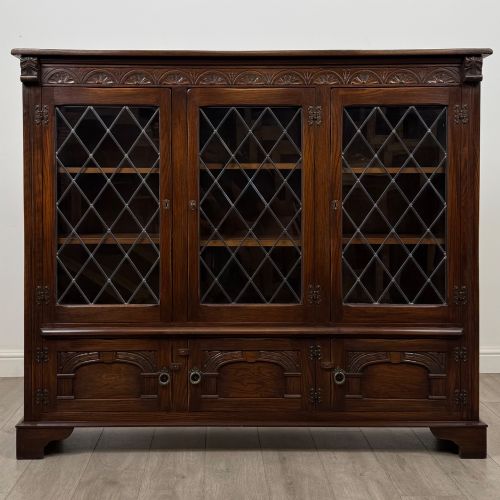
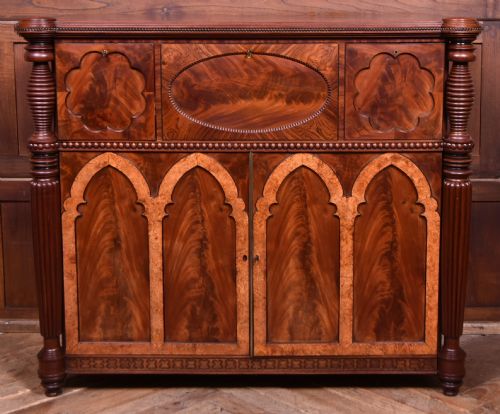
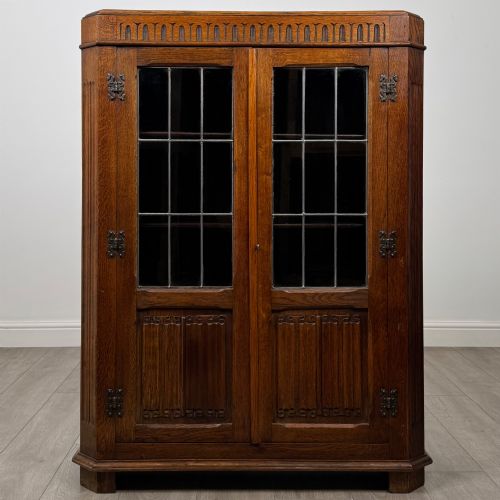
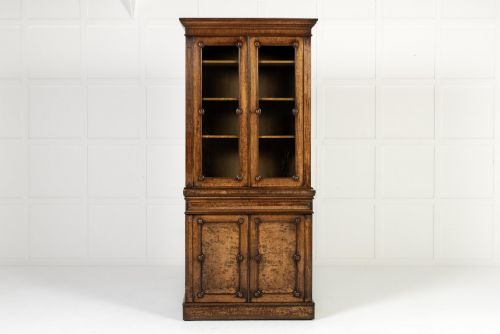
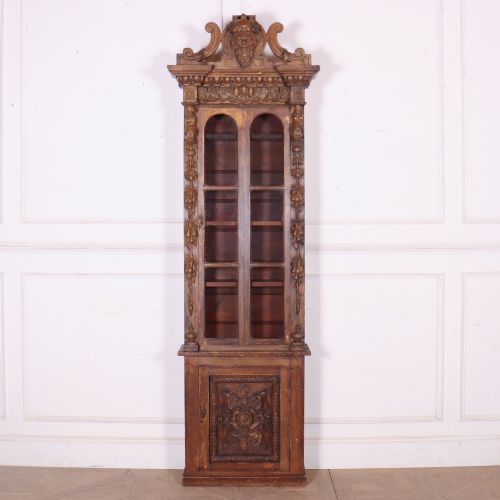
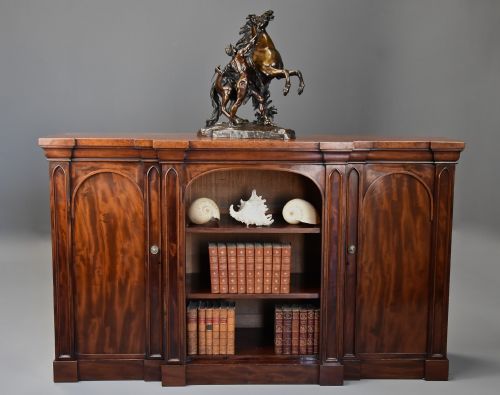

Gothic Revival Bookcase Cabinet
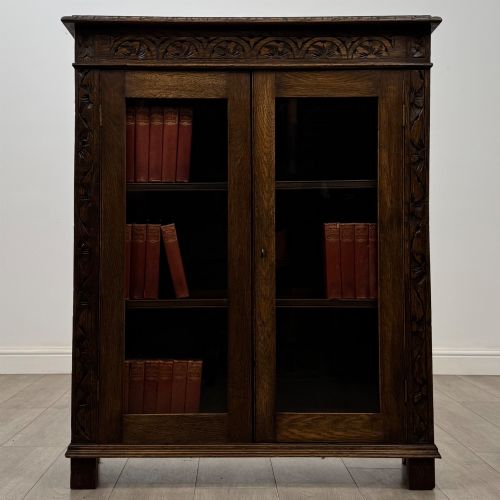
A gothic revival bookcase cabinet brings architectural drama and substantial timber storage into a room, combining pointed arches and tracery with functional shelving.
Gothic Revival Bookcase Cabinet
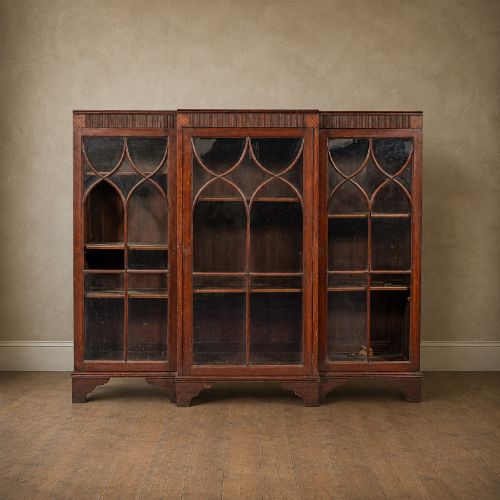
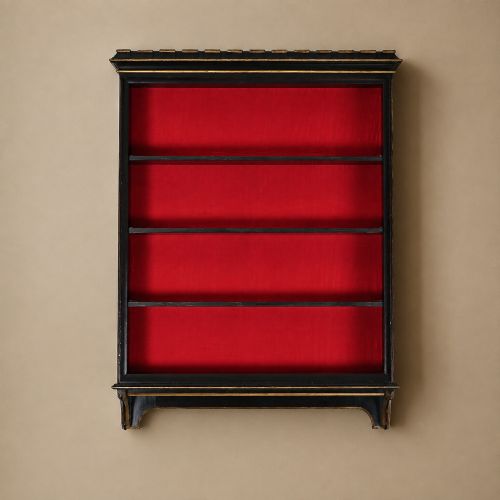
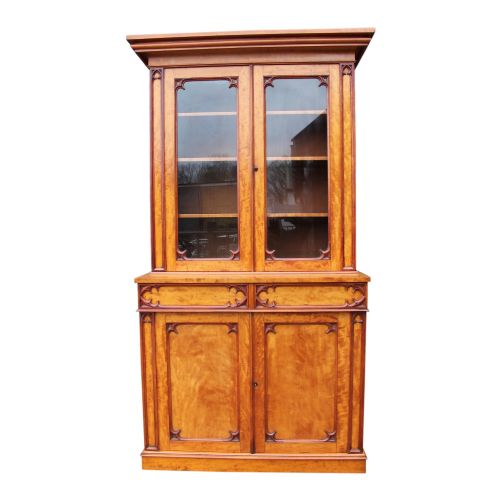
A gothic revival bookcase cabinet combines architectural motifs with functional storage, offering a commanding presence in any room. These pieces range from tall breakfront designs to smaller wall-mounted units and display cabinets.
Buyers encountering this phrase will frequently find nineteenth-century and Victorian examples constructed primarily in oak, mahogany, and walnut. Styles often overlap with Jacobean Revival, Arts and Crafts, and Renaissance Revival influences.
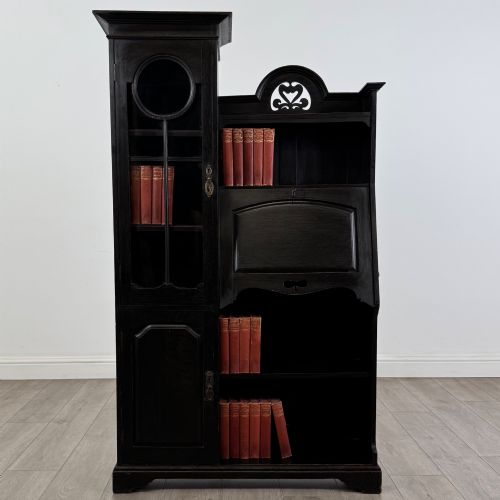
The form serves both as a library repository and a display space, often featuring glazed doors, carved panels, and specialised compartments such as secretaire drawers or adjustable shelving.
Materials and Construction Techniques
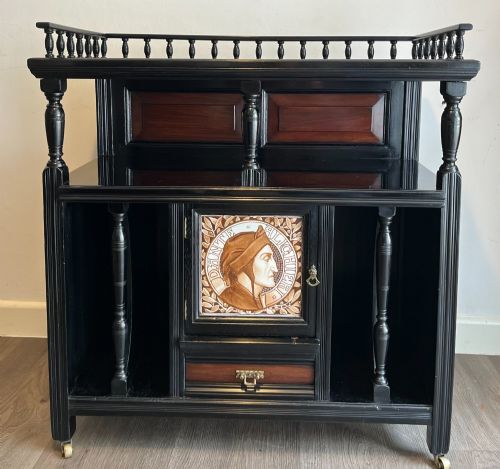
Cabinetmakers relied heavily on solid oak, mahogany, and walnut, frequently enhancing the architectural lines with pollard oak, satinwood, or ebonised finishes. Timber selection dictated the structural integrity and the depth of the carved ornamentation.
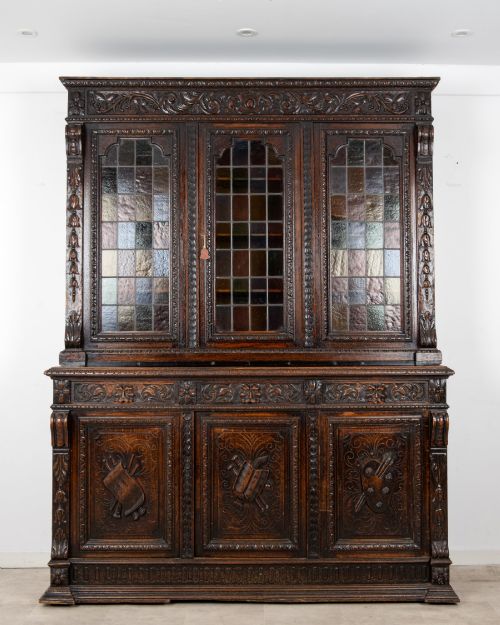
Glazing often incorporated lead or stained glass to accentuate the ecclesiastical aesthetic, while brass hardware, such as hinges and grilles, added functional contrast to the heavy woodwork.
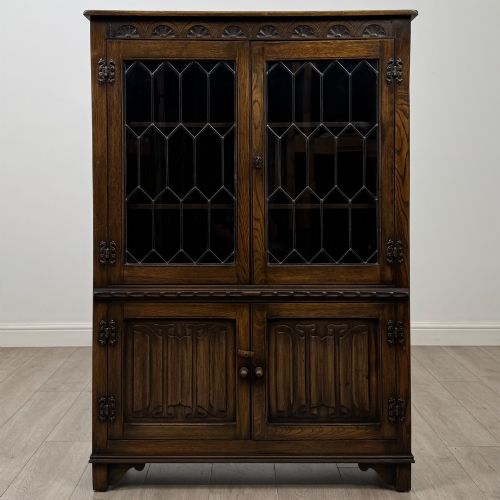
Joinery techniques included substantial linenfold panels, intricate fretwork, and deep relief carving, executed to mimic medieval stonework and ecclesiastical joinery.
Listings feature nineteenth-century and Edwardian examples utilising oak, mahogany, walnut, and satinwood alongside decorative glass and brass elements.
Assessing Quality and Execution
The distinction between standard production and the finest output rests in the depth and crispness of the hand-carving, particularly around cornices, pilasters, and door panels. Superior examples exhibit intricate detailing such as Green Man motifs or crisp tracery rather than shallow machine stamping.
Material selection significantly impacts the hierarchy of these cabinets, where figured timbers like pollard oak, burr walnut, or satinwood elevate a piece far above standard pine or basic oak carcases.
Structural ambition separates the ordinary from the exceptional, visible in monumental breakfront configurations, multi-part construction, and integrated architectural elements like crenellated cornices.
Gillows·George Edmund Street·John Moyr Smith·James Winter And Sons
The Gothic Revival Bookcase Cabinet Glossary
- Breakfront
- A cabinet design where the central section projects forward from the flanking wings, creating a pronounced architectural facade. This layout adds visual depth to large library bookcases.
- Linenfold
- A style of wood carving that mimics the appearance of folded vertical folds of fabric. It frequently decorates the lower doors of period cupboards and cabinets.
- Secretaire
- A desk component featuring a drop-front writing surface that conceals small drawers and pigeonholes. It integrates a practical writing space directly into the bookcase structure.
- Tracery
- Ornamental intersecting stonework-style patterns in the upper wooden framework of glass doors. It defines the ecclesiastical aesthetic of the revival style.
- Crenellated
- A battlement pattern forming the top cornice of a cabinet, borrowed from medieval fortifications. This detail reinforces the architectural theme of the piece.
Gothic Revival Bookcase Cabinet: Frequently Asked Questions
What is a gothic revival bookcase cabinet?
A gothic revival bookcase cabinet is a large storage piece decorated with medieval architectural elements like pointed arches, tracery, and heavy mouldings. These items were built to house libraries while serving as focal points in Victorian interiors.
They combine display glazing with concealed shelving and frequently feature deep wood carving executed in oak, walnut, or mahogany.
How do I date a Victorian gothic cabinet?
Dating relies on examining the secondary timbers, the style of the hardware, and the specific revival influences present in the carving. Mid-nineteenth-century examples often lean toward heavy architectural proportions, while later Victorian pieces incorporate Arts and Crafts or aesthetic movement linear details.
Maker signatures, stamps, and construction methods inside the drawers offer further clues to the exact decade of manufacture.
Where should I place a large bookcase cabinet?
These substantial cabinets require generous wall space and strong floor support due to their solid timber construction. They anchor a home library, dining room, or large study effectively.
Keep them away from direct heat sources and strong sunlight to protect the aged wood finishes and delicate stained glass or leaded panels.
Are the shelves usually adjustable?
Many period bookcases feature adjustable shelving systems utilising wooden ratchets or metal pins to accommodate volumes of varying heights. This adaptability made them practical for working libraries.
Original interiors often retain their matching timber shelves, which should match the primary wood of the cabinet interior.